 Angela Stefani
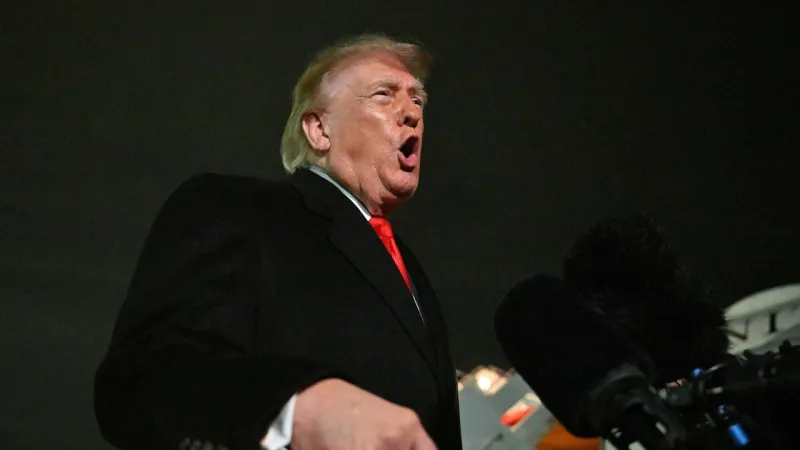
President Donald Trump recently declared that an 'energy truce' is currently active in the ongoing conflict between Russia and Ukraine, simultaneously urging Kyiv to proceed with elections. Ukrainian President Volodymyr Zelensky swiftly rebutted the suggestion, emphasizing that the decision regarding his nation's leadership rests solely with its citizens, a stance immediately echoed by strong solidarity from leaders in Berlin and Warsaw.
The assertion of an 'energy truce' by President Trump suggests a tacit understanding or arrangement influencing crucial energy supplies amidst the protracted hostilities. While specific details of such a truce remain undisclosed, it potentially pertains to the transit of natural gas or oil, a lifeline for parts of Europe, through Ukrainian pipelines without direct targeting or disruption by belligerents. This proposition arrives as global energy markets continually navigate the complexities introduced by the ongoing conflict.
President Trump's call for Ukraine to hold elections signals a desire for a return to conventional democratic processes, even as the nation remains under siege. His administration has consistently underscored the importance of democratic transitions and stable governance in conflict zones. The suggestion implicitly pressures Kyiv to prioritize political normalization, a move that could potentially redefine international support dynamics for Ukraine. For further context on this developing situation, readers may consult Trump Calls for Ukraine Elections Amid Kyivs Conditional Truce Offer.
In a forthright response, President Zelensky unequivocally stated that any decision concerning leadership elections rests exclusively with the Ukrainian people. "It is up to Ukrainians to choose their own leader," President Zelensky affirmed, underscoring the nation's sovereign right to self-determination, particularly in times of conflict. His statement highlighted the deeply held belief that external dictation on internal political matters is unacceptable.
The leaders of Germany and Poland quickly aligned themselves with President Zelensky's position, reinforcing a united European front against perceived foreign interference in Ukraine's internal affairs. Statements from Berlin and Warsaw emphasized unwavering support for Ukraine's sovereignty and its right to determine its own political future without external duress. This joint European stance solidifies diplomatic backing for Kyiv amid challenging geopolitical pressures.
The concept of an 'energy truce' is not without historical precedent in zones of conflict, where mutual economic interests sometimes override immediate military objectives. For Russia, maintaining energy export routes, particularly through Ukraine, can be vital for revenue, while European nations rely on these same routes for critical supplies. Whether such an arrangement is formally recognized or an informal de-escalation remains a critical point of inquiry for international observers.
Conducting national elections in a country actively engaged in defensive warfare presents monumental logistical and security challenges. Issues of voter registration, safe polling locations, ensuring participation of displaced populations, and preventing electoral interference are formidable. Critics of holding wartime elections often cite concerns over legitimacy, fairness, and the potential for increased instability.
International calls for elections in conflict-ridden nations have historically been met with mixed results. While proponents argue for democratic legitimacy, opponents emphasize that genuine democratic processes are difficult to ensure under duress. Ukraine has faced various pressures regarding its political calendar since the full-scale invasion, consistently asserting that wartime conditions preclude free and fair elections.
The statements from President Trump, juxtaposed with Kyivs resolute response and European solidarity, illuminate the complex geopolitical landscape surrounding the Russia-Ukraine conflict. The United States, under President Trump, continues to navigate its foreign policy objectives, balancing support for allies with overtures towards de-escalation and political resolution. European partners, conversely, remain acutely aware of the immediate security implications for the continent.
Ultimately, the exchange underscores a significant diplomatic divergence. While President Trump's remarks suggest pathways for both economic stability through an energy truce and political resolution via elections, Ukraine and its European allies prioritize national sovereignty and the right to self-determination above all. This evolving dialogue continues to shape the international approach to ending the prolonged conflict and securing a lasting peace.
Observers will closely monitor any further developments regarding the purported 'energy truce' and the ongoing debate over wartime elections. The assertions and counter-assertions mark another pivotal moment in the complex international efforts to address the profound humanitarian and geopolitical consequences of the war in Ukraine.