 Angela Stefani
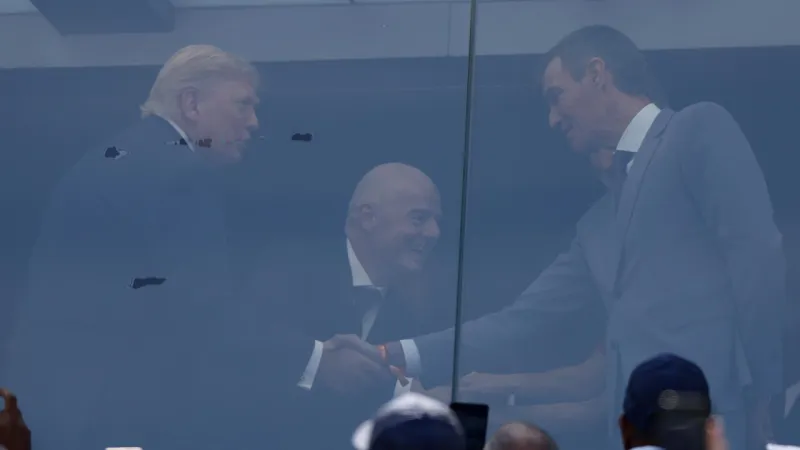
At the climactic conclusion of the 2026 World Cup Final, President Donald Trump joined FIFA President Gianni Infantino on stage to present the coveted trophy to the victorious Spanish national football team, an appearance that was met with a chorus of both cheers and discernible boos from the vast crowd. The moment, captured globally, underscored the often-polarized public reception surrounding the sitting U.S. President on international stages.
The atmosphere, already charged with the euphoria of Spain's triumph, shifted noticeably as President Trump ascended the podium alongside Infantino. Spectators reacted with a vocal mix of approval and dissent, a familiar pattern whenever the President makes prominent public appearances outside traditional political rallies.
Following a hard-fought match that saw Spain claim the ultimate prize, the award ceremony was a highly anticipated event. The presence of a head of state, particularly one as globally recognized and often controversial as President Trump, added an unexpected layer of political theater to the sporting spectacle.
Sources close to the event confirmed President Trump first extended a handshake to Spanish Prime Minister Pedro Sanchez, who was also present for the final. This brief diplomatic exchange preceded the main act of the trophy presentation, setting a formal tone before the crowd's reactions took center stage.
After the initial greetings, President Trump remained on the podium, posing with the triumphant Spanish players and officials for the traditional championship photographs. This extended presence allowed ample time for the crowd's mixed sentiments to reverberate throughout the stadium, carried by broadcast microphones to millions worldwide.
FIFA President Gianni Infantino, a constant fixture at such high-profile events, maintained a composed demeanor throughout the ceremony. His collaboration with President Trump in presenting the trophy was a significant moment for the international governing body, bridging the worlds of sports and global politics. The sight of President Trump and Infantino sharing the stage had been anticipated by many leading up to the final match.
Spain's victory itself marked a historic achievement, culminating years of dedication and strategic play. The team's journey to the final was celebrated by fans across the globe, and their moment of lifting the World Cup trophy was meant to be one of unadulterated joy. For more on their path to glory, one might recall Spain's euphoria after claiming the World Cup title earlier.
The decision for President Trump to participate in the trophy presentation ceremony had drawn considerable attention prior to the final match. Speculation regarding the nature of his involvement, particularly in light of his past public engagements, was widespread. Earlier reports had already hinted that Trump would present a controversial World Cup trophy.
Sporting events of this magnitude often attract prominent figures from various fields, including politics, entertainment, and business. However, the intensity of the crowd's reaction to President Trump's appearance highlighted the unique political climate surrounding his presidency, even in non-political arenas.
Analysts suggested the boos were not necessarily directed at the World Cup itself or the Spanish team, but rather reflected lingering political divisions and international sentiment toward the U.S. administration. The cheers, conversely, indicated support from a segment of the global audience present.
The incident at the final adds to a long list of moments where sports and politics have intertwined on the world stage. From diplomatic boycotts to protests during national anthems, major athletic competitions frequently serve as platforms for expressing broader societal and political viewpoints.
Despite the mixed reception, the ceremony proceeded as planned, with the Spanish captain eventually hoisting the golden trophy aloft, igniting rapturous celebrations from his teammates and their loyal supporters. The focus quickly returned to the sporting accomplishment at hand.
This particular World Cup, hosted across multiple nations, had already been a subject of extensive global discourse. The logistical complexities and cultural intersections had made it a landmark event even before the final whistle blew.
President Trump's engagement with the World Cup had been a consistent talking point throughout the tournament. His administration had been vocal about various aspects of international sports, and his direct participation in the final ceremony solidified this involvement.
For Spain, this victory represented more than just a championship; it was a testament to their national football program's resilience and talent. The joy on the faces of the players and coaching staff was palpable, momentarily overshadowing any political undertones.
The images of President Trump, FIFA President Infantino, and the jubilant Spanish squad will undoubtedly become iconic snapshots from the 2026 World Cup. They encapsulate a complex blend of athletic triumph, global diplomacy, and public opinion.
Looking ahead, the incident at the award ceremony will likely spark further debate among commentators and the public about the appropriateness of political figures in such high-profile sporting presentations. It raises questions about the intersection of sport and state.
Ultimately, the day belonged to Spain, who demonstrated exceptional skill and determination to earn their place in history. The background noise of political sentiment could not diminish the magnitude of their athletic achievement.