 Stefani Rindus

In a stark divergence from the open-door policy of 2015, the Spanish autonomous city of Ceuta has implemented swift returns of illegal migrants, triggering significant criticism within the European Union even as German political discourse, spearheaded by CDU leader Friedrich Merz, grapples with its own evolving migration stance. This assertive border control by Madrid, reminiscent of calls for tighter regulation following the previous decade's crisis, highlights a deepening schism in Europe's approach to human mobility in 2026.
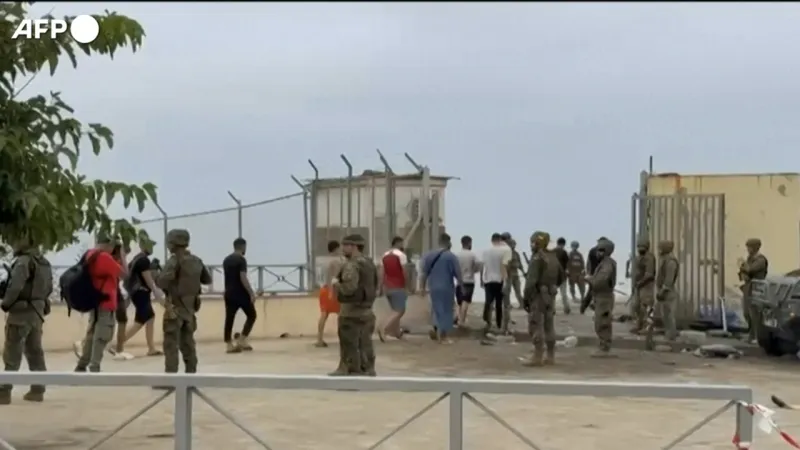
Authorities in Ceuta, a Spanish enclave bordering Morocco, recently moved decisively to repatriate migrants who had crossed its fortified perimeters. This rapid response contrasts sharply with the protracted processes and political debates that characterized earlier waves of migration into the continent. The actions underscored a clear intent to reinforce external borders, directly addressing a sensitive issue that has long vexed European capitals.
Despite Madrid's firm action to secure its borders, Spain's government finds itself under scrutiny from various quarters within the European Union. Critics argue that while national sovereignty dictates certain responses, humanitarian concerns and established international norms for processing asylum claims must be upheld. This tension between national security and shared European values continues to be a defining feature of the bloc's migration discussions.
The comparison to Angela Merkel's 2015 decision not to close Germany's borders remains a potent touchstone in the current debate. That period saw hundreds of thousands of migrants enter Germany, profoundly reshaping its social and political landscape. The current approach in Ceuta, prioritizing rapid expulsion, represents a significant policy shift from the era of welcoming refugees, reflecting a hardening stance across parts of Europe.
Meanwhile, in Germany, Friedrich Merz, leader of the Christian Democratic Union (CDU), has actively leveraged the Ceuta situation to underscore his party's long-standing calls for stricter migration controls. Merz has consistently advocated for a more restrictive immigration policy, emphasizing the need for robust border protection and efficient deportation mechanisms for those not granted asylum.
Merz's commentary on the Ceuta events has, according to observers, yielded an unexpected outcome within the German political sphere. While his stance resonates with a segment of the electorate concerned about integration and resource strain, it also intensifies pressure on the current coalition government, which often navigates a more complex and nuanced approach to migration. The CDU's persistent focus on this issue aims to differentiate itself ahead of upcoming elections.
The developments in Ceuta and the subsequent EU reaction are emblematic of a wider recalibration of European migration policy in 2026. Many member states, facing domestic political pressures and public anxiety, are increasingly leaning towards stricter border management and greater emphasis on returns. The unified front often sought by Brussels on migration remains elusive, fractured by national interests and diverse interpretations of responsibility.
The effectiveness and ethics of rapid repatriations are at the heart of the current European debate. Human rights organizations express alarm over potential due process violations and the safety of returning individuals, while some governments assert the necessity of such measures to maintain control and deter further illegal crossings. This ideological divide underscores the profound challenge facing the continent.
Germany itself is no stranger to the complexities of deportations. Cities like Cologne have notably rejected state aid for migrant deportations, citing concerns over legal processes and humanitarian considerations. These internal German disagreements highlight the national ramifications of a European debate, with Merz's party pushing for a more unified and forceful approach from the federal government.
The urgency surrounding border control is further amplified by tragic events, such as when Ceuta saw its first aerial migrant death in a desperate paragliding attempt. Such incidents starkly illustrate the life-or-death stakes involved for those attempting to cross and the profound moral and practical dilemmas confronting border authorities.
As Europe moves deeper into 2026, the Ceuta model, whether praised or condemned, is setting a precedent for how individual nations might unilaterally address migration flows. The ensuing political fallout and policy adjustments will likely define the direction of European migration strategy for years to come, forcing the EU to confront its internal divisions and seek a more cohesive, albeit potentially stricter, framework.