 Dorry Archiles
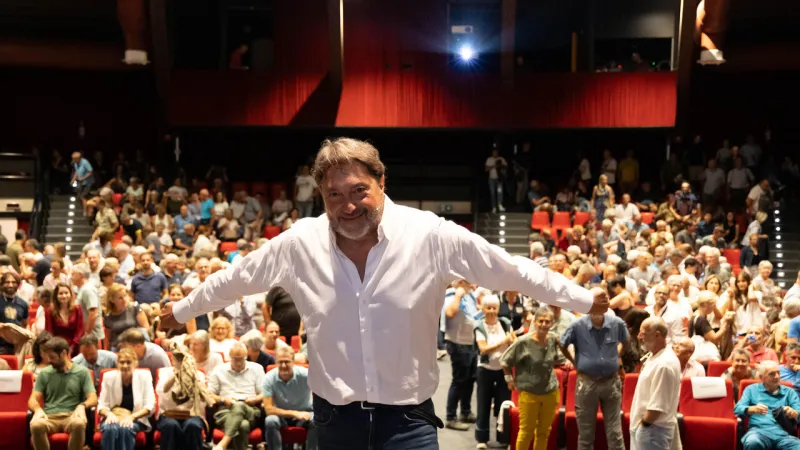
Asiago, Italy – Prominent Italian investigative journalist Sigfrido Ranucci recently confronted renewed harassment allegations head-on, delivering a powerful defense that directly referenced a significant professional challenge from 2000. During a public appearance in Asiago, Ranucci stated, "When they asked to fire me in 2000, Zaccaria defended me." This rare public reflection unfolded amid an aggressive political offensive launched by Italy's center-right faction, which has consistently targeted Ranucci and his work.
The journalist, widely known for his incisive reporting on critical national issues, currently faces unspecified harassment allegations that have been amplified by Italy's conservative political bloc. While the precise nature of these recent claims remains largely undetailed by his political adversaries, the center-right's push to discredit Ranucci appears to be a calculated maneuver.
Ranucci's decision to publicly recount the 2000 incident serves as a strategic counter-narrative, positioning the current attacks within a broader history of political pressure against his journalistic endeavors. By invoking Zaccaria's past support, he underscores a narrative of professional integrity and resilience.
The event in 2000, as recalled by Ranucci, involved direct calls for his dismissal from his journalistic post. The details of these earlier dismissal demands have not been elaborated upon in his recent remarks, but the implication is a pattern of attempts to remove him from influential media roles.
Zaccaria, identified by Ranucci as his defender during that critical juncture, reportedly stood firm against those advocating for his termination. This act of solidarity from a colleague, now decades old, is presented as evidence of Ranucci's enduring professional standing and the perceived injustices he has faced.
The current political backdrop for these intensified attacks is Italy's volatile media environment. Prominent investigative journalists often find themselves as lightning rods for political factions seeking to control or influence public discourse.
Critics of Ranucci, particularly from the center-right, frequently point to the often confrontational nature of his investigative programs. These shows, primarily broadcast on the state television network RAI, have consistently probed powerful political and economic interests, earning him both widespread accolades and significant political backlash.
The public forum in Asiago provided Ranucci with a platform to transform a potentially damaging personal attack into a public reaffirmation of his career and commitment to journalistic ethics. His address sought to frame the current harassment allegations as politically motivated rather than substantively grounded.
For seasoned observers of Italian politics and media, the ongoing confrontation between Ranucci and the center-right is emblematic of the persistent struggle for media influence and the challenges of maintaining journalistic independence within a highly polarized national landscape.
The political parties forming the center-right faction have not yet issued a specific response to Ranucci's recounting of the 2000 incident. However, their broader campaign against him suggests a sustained intent to maintain pressure on his professional activities and public image.
These harassment accusations, coupled with Ranucci's forceful and public defense, ensure that the contentious debate over media integrity, political accountability, and the role of investigative journalism will continue to command significant attention across Italy in the weeks to come.
Media watchdogs and journalistic organizations are closely monitoring the developments, expressing concerns about the potential implications for freedom of the press and the operational autonomy of investigative reporters in the face of political interference.