 Dorry Archiles
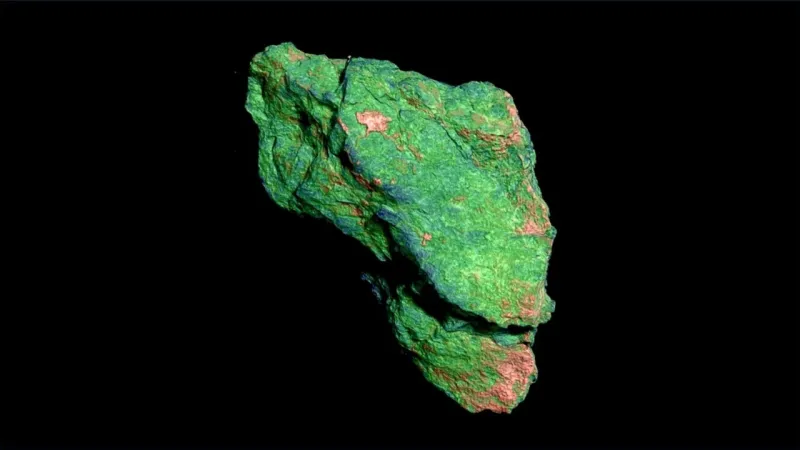
New research analyzing the enigmatic Hypatia stone has unveiled a composition fundamentally divergent from all previously known meteorites, compelling astronomers and planetary scientists to re-evaluate established theories concerning the early formation and evolution of our solar system. This remarkable discovery challenges the long-held assumption of a relatively homogenous proto-solar nebula, suggesting a far more complex and varied primordial cosmic environment than previously imagined.
The Hypatia stone, named after the ancient Alexandrian mathematician and philosopher, stands apart as an extraordinary cosmic artifact. Its distinct mineralogical makeup, characterized by a unique array of carbon-rich compounds and micro-minerals not typically found in terrestrial rocks or known meteorites, signals an origin story unlike any other studied to date.
For decades, meteorites have served as invaluable time capsules, preserving clues about the conditions present during the birth of our stellar neighborhood. These celestial wanderers, remnants of planetesimals and asteroids, largely conform to a compositional fingerprint consistent with the condensation of elements from a uniform cloud of gas and dust. Hypatia, however, presents a confounding anomaly.
Discovered in 1996 in the vast, remote expanse of the Great Sand Sea in Southwest Egypt, within the Libyan Desert Glass field, the stone initially puzzled researchers due to its unusual appearance. Only later, through meticulous laboratory analysis, did its true scientific significance begin to emerge, revealing a suite of elements and structures that defied conventional classification.
Detailed spectroscopic and chemical analyses have shown that Hypatia contains a high abundance of carbonaceous material interspersed with various silicates and metallic grains. Crucially, the ratios of certain noble gases and the presence of micro-inclusions of iron-nickel sulfide and phosphide indicate a formation process distinct from the condensation sequences typically associated with the solar nebula.
This compositional divergence suggests that the Hypatia parent body might have formed in an environment significantly different from the asteroid belt, where most meteorites originate. Scientists are now postulating scenarios involving material from outside the nascent solar system or perhaps a region within it that experienced drastically different temperatures, pressures, and chemical gradients.
One leading hypothesis considers the possibility that Hypatia originated from a cometary body, a type of celestial object known for its volatile-rich and often primitive composition. However, even this explanation struggles to fully account for the stones precise mineralogy and isotopic signatures, pushing the boundaries of our current understanding of comet formation.
The implications of the Hypatia stone extend beyond simply adding another type of extraterrestrial rock to our catalog. Its existence forces a critical re-examination of the initial conditions that governed the genesis of the Solar System, questioning the uniformity of the protoplanetary disk and potentially revealing the presence of exotic materials that played a role in planetary accretion.
Dr. Anya Sharma, a leading astrophysicist not directly involved with the Hypatia research but familiar with its impact, noted, "This discovery challenges our comfortable assumptions. It suggests that the early solar system was a much more chemically diverse and perhaps even chaotic environment than we once believed, necessitating a recalibration of our models for planet formation."
Future research will undoubtedly focus on identifying the precise astrophysical environment capable of producing such a unique specimen. Scientists plan further isotopic analysis and comparative studies with material from other celestial bodies to pinpoint Hypatias elusive cosmic origins and its relationship to the broader narrative of solar system evolution.
Understanding the provenance of the Hypatia stone is paramount to piecing together the full cosmic tapestry of our solar system. It may represent a window into the primordial dust and gas cloud, offering direct evidence of materials that predate the suns formation or originate from interstellar space, providing new perspectives on the very building blocks of planets.
The unexpected nature of Hypatia serves as a potent reminder that the universe continues to hold profound secrets, often hidden in the most unassuming fragments of cosmic debris. Each new anomaly, like this remarkable stone, pushes the frontiers of human knowledge and compels a deeper, more nuanced understanding of our place in the vast cosmos.