 Chris Robert
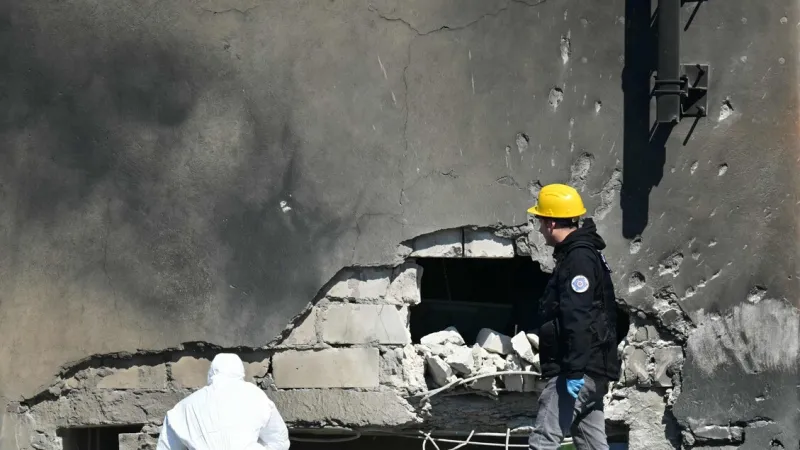
Romania experienced a significant security breach recently when a Russian drone struck a building within its territory, triggering a heightened state of alert across NATO member nations. The incident has intensified the already volatile security landscape in Eastern Europe, drawing immediate condemnation and prompting Moscow to issue veiled threats against European states, while President Vladimir Putin provocatively suggested the drone could be Ukrainian in origin.
The strike, which occurred in the early hours, did not result in casualties but caused structural damage to a civilian property. Authorities in Bucharest swiftly launched an investigation, working in conjunction with NATO allies to ascertain the full extent of the intrusion and its implications for regional stability.
The deployment of a Russian drone into NATO airspace, irrespective of its intended target, represents a direct challenge to the alliance's collective defense principle, enshrined in Article 5. Although no immediate Article 5 consultations were invoked, the seriousness of a military asset from an adversarial power crossing a NATO border cannot be overstated.
NATO Secretary General Jens Stoltenberg, speaking from Brussels, reiterated the alliance's unwavering commitment to protect all members. He stated, “Any violation of NATO airspace is unacceptable. We are closely monitoring the situation and remain in constant communication with our Romanian allies to ensure their security.”
Compounding the gravity of the event, President Putin offered a contentious explanation, asserting that the drone could have been operated by Ukrainian forces. This claim, widely viewed as an attempt to deflect responsibility and sow discord among Ukraine's allies, has been vehemently rejected by Kyiv and dismissed by most Western observers as disinformation.
Moscow, through its Ministry of Foreign Affairs, issued a separate statement warning European nations against further involvement in the ongoing regional conflict, hinting at unspecified consequences should their support for Ukraine continue. These remarks have been interpreted as an escalation of rhetorical aggression following the physical breach of a NATO member's border.
The incident in Romania is not an isolated event, with previous reports detailing similar concerns about Russian military actions near NATO borders. Analysts point to a pattern of deliberate provocations designed to test NATO's resolve and expose perceived vulnerabilities. For more context on previous incidents, see our earlier coverage on Russian Drone Strikes Romania, NATO Air Defense Effectiveness Questioned.
Romanian President Klaus Iohannis condemned the drone strike as a serious and unacceptable violation of his nation's sovereignty and territorial integrity. He emphasized Romania's commitment to its NATO obligations and its determination to defend its borders with the support of the alliance.
European leaders also weighed in on the development. Italian Prime Minister Giorgia Meloni described the Russian drone strike in Romania as a grave threat to European security, underscoring the continent's collective vulnerability. Her sentiments echoed widespread concern across the European Union, which has been grappling with the broader implications of regional instability. Readers can find more details in our article: Russian Drone Strike Hits Romania; Meloni Decries Grave European Security Threat.
The event underscores the persistent threat posed by the ongoing conflict and the critical importance of robust air defense systems for NATO's eastern flank. The alliance is expected to review its defensive posture in the region in light of this new development, potentially leading to further deployments and enhanced surveillance capabilities.
The geopolitical ramifications extend beyond immediate security concerns, impacting energy markets and diplomatic relations across Europe. The incident serves as a stark reminder of the fragile peace and the constant vigilance required to maintain stability in the face of persistent aggression.
As investigations continue, the international community watches closely, anticipating NATO's consolidated response to what many view as a deliberate act of intimidation by the Russian Federation against the Western alliance. The question of accountability and the need for de-escalation remain paramount in an increasingly tense international arena.