 Dorry Archiles
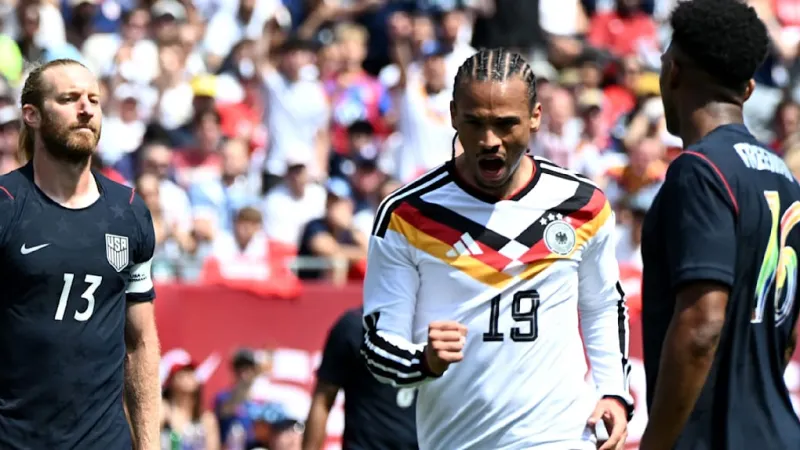
Germany's Bundestrainer Julian Nagelsmann has officially designated star winger Leroy Sané as the pivotal replacement for the injured young talent Lennart Karl ahead of the eagerly anticipated World Cup campaign. The decision, revealed following Germany's decisive victory in its final warm-up match against the United States, places significant responsibility on Sané to fill the void left by Karl's absence.
The national team's victory against the USA served as a crucial litmus test for Nagelsmann's strategic adjustments and player evaluations. While the result itself provided a confidence boost, the underlying narrative revolved around identifying a successor capable of replicating Karl's unique blend of athleticism and creativity on the global stage.
Lennart Karl, a rising star in German football, sustained an injury earlier this season that prematurely ended his World Cup aspirations. His absence represents a considerable blow to the German squad, given his recent impressive performances and his potential to be a breakout player in the tournament. News of his injury had previously prompted calls for resilience and unity within the German squad from prominent figures.
Nagelsmann utilized the final preparatory game to experiment with various formations and personnel combinations, ultimately concluding that Sané possessed the requisite qualities and current form to step into the crucial role. Sané's versatility, pace, and ability to create goal-scoring opportunities from wide positions were reportedly key factors in the Bundestrainer's decision.
For Sané, this appointment signifies a renewed opportunity to solidify his standing as a central figure in the German national team. Despite his undeniable talent, his international career has at times been characterized by flashes of brilliance interspersed with periods of inconsistency. This World Cup presents a chance for him to deliver sustained elite performance when it matters most.
The tactical implications of Sané's elevated role are substantial. Nagelsmann's system often thrives on dynamic wing play and quick transitions, areas where Sané excels. His ability to dribble past defenders and unleash powerful shots from distance adds a new dimension to Germany's attacking arsenal. The expectation is that he will provide the necessary offensive impetus from the flanks, directly influencing crucial matches.
Germany enters the World Cup with a mix of seasoned veterans and promising young talents. The blend of experience and youthful exuberance is often cited as a strength, but managing expectations and integrating new leadership roles are critical for tournament success. The team's performance against the United States offered a glimpse into their current readiness and potential synergies.
Observers note that Nagelsmann has consistently emphasized adaptability and tactical flexibility since taking the helm. His decision to entrust Sané with this vital responsibility underscores his belief in the player's capacity to rise to the occasion under immense pressure. It also reflects a strategic imperative to maintain a dynamic and unpredictable offensive threat.
The history of German football is replete with examples of players stepping up in moments of crisis, filling unexpected voids to lead their nation to glory. While Karl's injury is unfortunate, it creates a narrative arc for Sané to etch his name into this storied tradition. The focus will now be on how he embraces this challenge and performs when the tournament kicks off.
As the World Cup draws nearer, the German camp will intensify its preparations, refining tactical schemes and fostering team cohesion. All eyes will be on Sané, whose performances will be closely scrutinized by fans and critics alike. His ability to consistently deliver impactful contributions will be paramount to Germany's aspirations of hoisting the coveted trophy.
The move also signals Nagelsmann's confidence in the depth of his squad. While losing a player of Karls caliber is never ideal, having an immediate, high-quality replacement like Sané provides a measure of stability and continuity. This strategic pivot aims to minimize disruption and maintain momentum heading into the global spectacle.
The Bundestrainer's declaration concludes weeks of speculation regarding who would assume Karls critical position. With this announcement, the team can now fully concentrate on their final preparations, with a clear understanding of their primary offensive structure and personnel. The focus shifts from personnel debate to tactical execution.
This strategic decision by Bundestrainer Nagelsmann not only provides clarity for the German squad but also sends a clear message about the team's resilience and commitment to adapting to unforeseen challenges. The World Cup represents the pinnacle of international football, and Germany aims to compete at the highest level, even in the face of adversity.
The team's supporters, while lamenting Karls injury, will likely rally behind Sané, hoping his undeniable talent translates into game-winning performances. The narrative of redemption and opportunity often resonates deeply with the footballing public, and Sané now stands at the center of such a story for German football.
This definitive role for Sané could be the catalyst needed to unlock his full potential consistently on the international stage. Major tournaments have often served as proving grounds for players, elevating some to legendary status. The stage is set for Sané to make his mark.
Germany's journey to the World Cup will be watched intensely, and the decision regarding Karls replacement marks a significant development in their campaign. The team, under Nagelsmanns astute guidance, appears poised to tackle the formidable challenge of global competition with renewed resolve and a clear strategic direction.