 Dodi Irawan
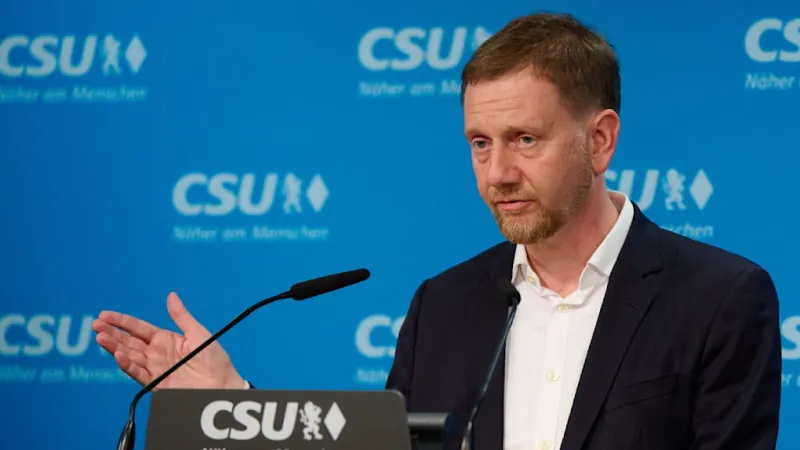
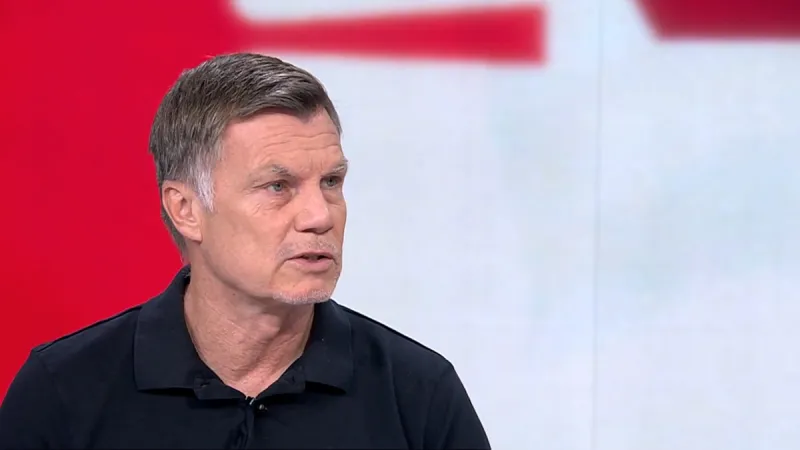
Berlin – Saxony Minister-President Michael Kretschmer has sharply criticized Germany's ongoing military and financial aid to Ukraine, labeling the extensive support a "huge mistake." His pointed remarks, made while simultaneously defending the establishment of new armaments factories as crucial for national defense, underscore a burgeoning divergence within German political discourse regarding the nation's foreign policy priorities and its immediate security posture in 2026.
Kretschmer, a prominent voice within the Christian Democratic Union (CDU), articulated his position by asserting that Germany's current approach to the conflict in Eastern Europe is fundamentally misguided. He suggested that the focus should shift more emphatically towards bolstering national capabilities rather than channeling significant resources externally.
The regional leader's comments arrived amidst a period of heightened geopolitical tension and an ongoing debate across Europe about the long-term sustainability and effectiveness of Western assistance to Kyiv. European leaders, including those in Berlin, have consistently reiterated their commitment to Ukraine, framing it as essential for regional stability.
However, Kretschmer's public statements inject a note of dissent into the otherwise broadly unified German stance. His emphasis on domestic defense production, separate from foreign aid commitments, signals a potential re-evaluation of security paradigms within certain political factions.
"That is a huge mistake," Kretschmer was quoted as saying, referring to the scale and nature of Germany's assistance to Ukraine. He did not elaborate on specific alternatives but implicitly argued for a more inward-looking defense strategy for the Federal Republic.
This perspective contrasts with the prevailing sentiment among many German and European policymakers who advocate for continued robust support for Ukraine as a bulwark against wider regional destabilization. The debate around these issues has intensified as the conflict grinds on, raising questions about economic burdens and strategic returns on investment.
The Saxony premier's defense of new armaments operations within Germany highlights a parallel priority: strengthening the nation's own military-industrial complex. This move, he argues, is a necessary component of modern state defense, ensuring Germany's capacity to protect its borders and interests independently.
His position resonates with some segments of the German electorate who express concerns about the depletion of national defense stocks and the financial implications of extensive foreign commitments. Such sentiments have been a recurrent theme in recent political discussions.
Indeed, the broader European context features ongoing discussions about defense readiness and strategic autonomy. For instance, related discussions on escalating threats have prompted figures like Friedrich Merz to urge Europe to heed growing dangers, as detailed in an article titled Merz Urges Europe to Heed Escalating Threats, Peace at Risk.
Kretschmer's intervention adds another layer to the complex political tapestry shaping Germany's future foreign and defense policies. His criticism, while controversial, serves to open up public discourse on the strategic direction Berlin intends to take in an increasingly uncertain world.
His advocacy for bolstering Germany's own defensive infrastructure, including the expansion of armaments production, points to a desire for greater self-reliance. This approach suggests a recalibration of national security interests that prioritizes internal strength alongside, or perhaps even above, extensive international engagements.
These domestic considerations for defense are not entirely new; debates have previously touched upon the state of Germany's armed forces and its ability to respond to modern threats, including discussions around sensitive defense documents, as explored in the article Reservists Chief Recovers Sensitive Defense Document Amid AfD Concerns.
Ultimately, Kretschmer's remarks highlight the ongoing tension between a desire for national self-sufficiency and the imperative of collective security within the European and transatlantic frameworks. The full implications of such a "huge mistake" assessment remain to be seen as Germany navigates its role on the global stage.
The political fallout from such statements often sparks considerable debate within the ruling coalition and opposition parties alike, potentially influencing public opinion and future policy decisions regarding Germany's international commitments and defense spending. These are not merely academic discussions but hold tangible consequences for the nation's strategic direction.
In the grand scheme, this internal German debate over foreign policy direction and defense spending could have significant ramifications for European unity and the broader international response to geopolitical challenges, particularly concerning the conflict in Ukraine.
The intricate balance between domestic needs and international responsibilities continues to define the discourse for leaders like Kretschmer as Germany charts its course in a rapidly evolving global landscape.