 Robert Andrison
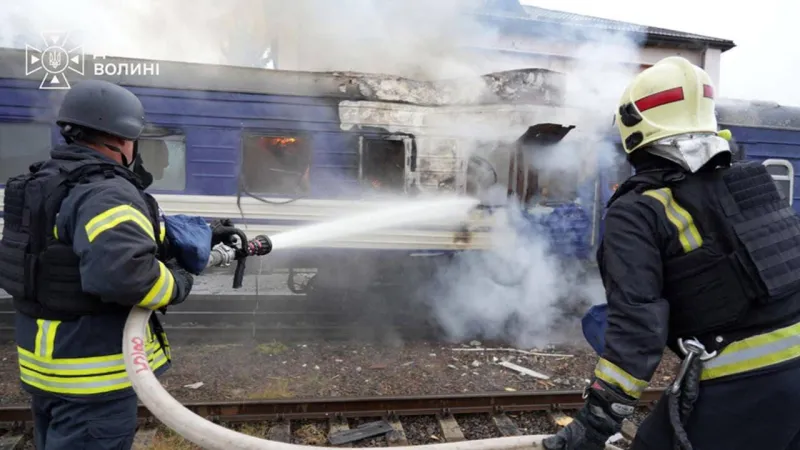
BERLIN – The tranquility of Europe teeters on the brink, German Christian Democratic Union leader Friedrich Merz declared this week, imploring the continent to confront escalating threats with unyielding resolve. His pronouncement arrived as Estonian Prime Minister Kaja Kallas and French officials separately contended that a recent, targeted raid on a Ukrainian train constituted a deliberate act to both intimidate Western nations and sow discord among Kyiv's steadfast international allies.
Merz, a formidable voice within Germany's opposition, underscored the profound gravity of the current geopolitical landscape during a recent public address. He articulated a stark concern that European nations might not be fully apprehending the far-reaching implications of persistent conflicts and increasingly assertive posturing by adversarial powers. This sentiment resonates deeply within Berlin's political echelons, where anxieties about regional stability and sovereignty remain palpable.
Concurrently, Estonian Prime Minister Kaja Kallas offered a pointed interpretation of a specific incident, identifying the recent attack on a Ukrainian train as a clear act of psychological warfare. "The objective of the raid on the Ukrainian train was to frighten the West," Kallas asserted with unequivocal clarity, thereby exposing the broader strategic intent underpinning such aggressive military operations.
Echoing Kallas's incisive assessment, officials in Paris further elucidated the nature of the Ukrainian train incident. They characterized the assault not merely as an act of physical destruction but as a meticulously calculated maneuver designed to fracture the vital solidarity of Kyiv's international partners. This converging interpretation among key European leaders signals a growing consensus regarding the sophisticated and multifaceted nature of contemporary geopolitical aggression.
These potent warnings from leading European figures collectively illuminate a heightened awareness of a concerted strategy aimed at undermining regional stability and coherence. The consistent rhetoric suggests that the prevailing era demands a proactive, unified, and resolute response to perceived threats, transcending passive observation to embrace decisive, collective action.
The assertions from Merz, Kallas, and French officials collectively depict a European continent grappling with an intricate web of security challenges. The explicit focus on psychological operations and deliberate attempts to divide allies points to a fundamental evolution in the character of modern conflict, extending well beyond conventional battlefields into the crucial domains of information and political cohesion.
Merz's trenchant statements surface at a period when his party, the CDU, has itself faced considerable scrutiny over its electoral performance, as documented in reports such as CDU Faces Historic Setbacks in Local Elections, Merz Under Scrutiny. This domestic political context arguably imbues his calls for decisive action on European security with additional resonance and urgency.
The apprehension regarding external influence and aggressive tactics is, moreover, not a novel concern. Prior reports, including Berlin Political Circles Rocked by Russian Spy Indictment and Leipzig Drone Plot: Germany Demands Tougher Stance on Russia, have previously underscored the persistent difficulties European nations encounter in safeguarding their strategic interests against sustained foreign interference. These cumulative incidents contribute significantly to the pervasive atmosphere of perceived threat.
Implicit within these leaders' public pronouncements is an urgent plea for greater European cohesion and the establishment of a robust, united front against those powers seeking to disrupt established peace and stability. The overarching emphasis lies on discerning the true intent behind such provocative actions and subsequently formulating a comprehensive, collective defense and deterrence strategy.
As the year 2026 unfolds, the emphatic warnings emanating from Merz, Kallas, and French authorities stand as a profound and timely reminder of the enduring and continually evolving threats to peace across the European landscape. The international community, with keen attention, awaits how these vital admonitions will translate into concrete policy adjustments and harmonized, effective action.