 Robert Andrison
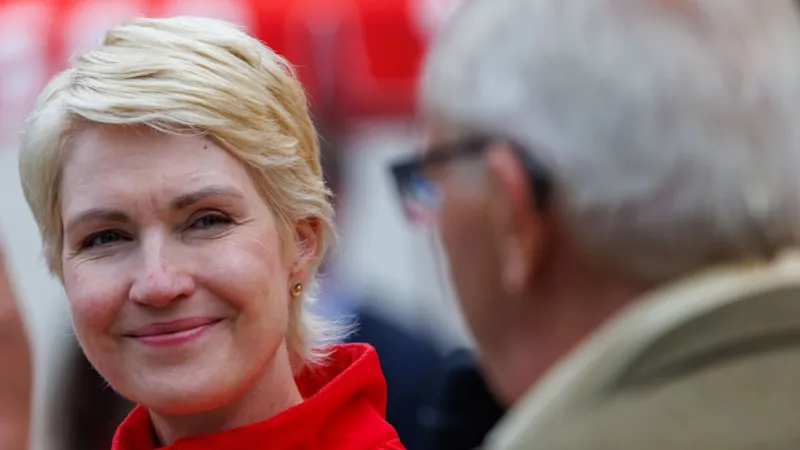
Manuela Schwesig, the influential Minister-President of Mecklenburg-Vorpommern, definitively ruled out a move to the Social Democratic Party's (SPD) national leadership, reiterating her intent to remain at the helm of her state government for the next five years. This decision clarifies her political future amid ongoing speculation within German political circles.
Schwesig's repeated refusal comes at a critical juncture for the SPD, a party navigating complex coalition dynamics and striving for renewed public confidence. Her strong regional mandate positions her as a significant voice within the party, making any potential national leadership bid closely watched.
The announcement underscores her unwavering commitment to Mecklenburg-Vorpommern, where she has served as Minister-President since 2017. Her tenure has been marked by efforts to strengthen the state's economy and social infrastructure.
Speculation surrounding Schwesig's potential elevation to the SPD's national executive has resurfaced periodically, particularly given her prominent standing and success in state elections. Party insiders have often viewed her as a unifying figure capable of bridging internal divides within the Social Democratic Party.
In her statement, Schwesig emphasized the importance of stability and continuity in state governance. She conveyed her dedication to fulfilling the mandate received from the citizens of Mecklenburg-Vorpommern, a pledge spanning the next half-decade.
This decision leaves the field open for other contenders within the SPD as the party continues to define its strategic direction. The question of future national leadership remains a persistent topic within German political discourse, especially as the current federal government faces various challenges.
The Social Democratic Party, a key component of the federal government, has been grappling with fluctuating poll numbers and internal policy debates. Recent discussions, such as those concerning an SPD Climate Law Bid Lacks Will, Expert Warns underscore the need for decisive leadership.
Schwesig's focus on her state duties aligns with a growing trend among some successful regional politicians who prioritize their local mandates over the often tumultuous environment of national party politics.
Her leadership in Mecklenburg-Vorpommern has often been cited as an example of effective governance within the SPD. Analysts suggest her continued presence at the state level provides a strong regional anchor for the party, offering stability in a volatile political climate.
The political landscape in Germany remains dynamic, with various parties recalibrating their strategies. For instance, reports like Merz's Summer of Waning Influence Amid German Political Turmoil highlight the broader shifts impacting all major parties, including the Social Democrats.
Her decision ensures stability for her state, allowing her to concentrate on regional issues and policy implementation without the additional pressures of a national leadership campaign. This allows for sustained focus on local concerns that directly affect the populace.
The role of Minister-President in German federalism carries significant weight, offering considerable influence over regional policies and national legislative processes. Schwesig's choice reflects a strategic prioritization of this impactful position, acknowledging its inherent power.
The SPD leadership question is one among many faced by German parties. Broader political discussions also include various coalition dynamics, such as those implied by Wagenknecht: Thuringia Firewall Coalitions Disregard Election Results, reflecting a complex national environment and diverse political perspectives.
Political observers will now monitor how the SPD navigates its leadership discussions in the absence of Schwesig as a potential candidate, and what implications this has for the party's future trajectory and electoral performance.
Her continued presence in Schwerin, the state capital, promises a consistent approach to regional challenges, from economic development to social welfare initiatives, fostering a sense of continuity for the people of Mecklenburg-Vorpommern.