 Angela Stefani
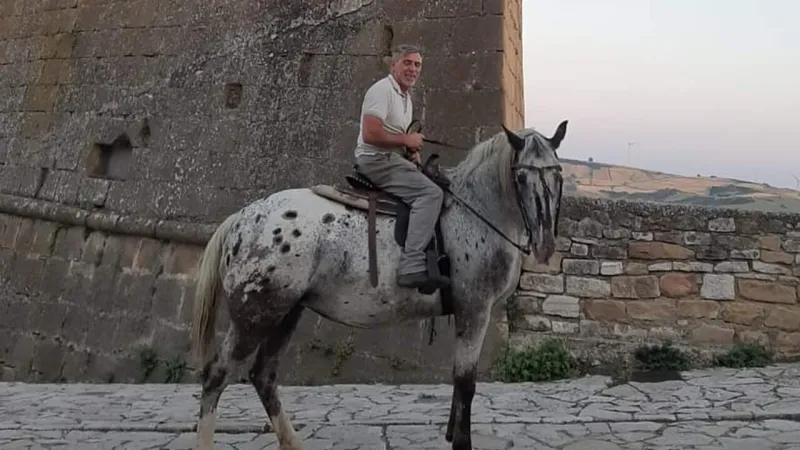
Rocchetta Sant'Antonio, Italy – Faced with the escalating burden of fuel prices and general living expenses, Massimiliano Accetturo of the Foggia region has adopted an unconventional solution for his daily commute: a horse. His decision underscores a poignant struggle for many Italians grappling with a challenging economic landscape, prompting a return to methods long thought obsolete.
Accetturo, a resident of the small town in Puglia, has made headlines across Italy by swapping his automobile for a trusty steed to get to work each day. This extraordinary measure, born out of necessity, highlights the severe impact of current economic conditions on household budgets, particularly in rural areas where public transportation options are often limited.
The cost of fuel in Italy has consistently climbed, placing immense pressure on drivers and families. Analysis shows that the average cost per liter has made daily vehicle use increasingly unsustainable for many, especially those with modest incomes. This trend mirrors broader inflationary pressures impacting various sectors of the Italian economy.
Recent reports indicate that holiday costs in Italy have surged, with inflation estimates revised upward, further straining consumer wallets. Such economic shifts contribute to an environment where individuals like Accetturo must seek innovative, albeit anachronistic, ways to manage essential daily expenses.
Accetturo described his predicament, explaining that the recurrent costs associated with car maintenance, insurance, and particularly gasoline, simply became prohibitive. “It was no longer feasible,” he stated, emphasizing the financial relief derived from his four-legged transport method.
His morning routine now involves saddling his horse, a practice reminiscent of a bygone era. The journey to his workplace, while perhaps longer in duration, offers a tangible saving that allows him to better allocate his earnings towards other necessities. This choice represents a stark personal economic protest against modern living costs.
The sight of Accetturo riding his horse through the streets of Rocchetta Sant'Antonio has drawn considerable attention from local residents and media alike. Many express a mixture of amusement and sympathy, recognizing his unique commute as a symbol of the broader economic hardships affecting their community.
Experts in consumer economics suggest that Accetturo's situation, while extreme, is indicative of a wider trend where individuals are forced to make significant lifestyle adjustments to cope with persistent inflation. This can range from changes in shopping habits to reconsidering fundamental aspects of daily life, such as transportation.
While horse commuting is unlikely to become a widespread phenomenon, Accetturo's story serves as a compelling narrative on personal resilience and resourcefulness. It illustrates the lengths to which ordinary citizens will go to navigate an unforgiving financial environment, particularly when conventional solutions become unaffordable.
The Italian government and European Union continue to address inflationary concerns and energy pricing, yet the immediate effects are deeply felt at the individual level. Massimiliano Accetturo's daily ride through the Foggiano countryside stands as a visible, living testament to the ongoing economic squeeze.
His decision brings into focus the delicate balance between modern convenience and economic viability. In an age of advanced automotive technology, a return to such fundamental means of transport in a developed nation offers a powerful commentary on contemporary global economic challenges and individual adaptability.
His choice also inadvertently highlights a more sustainable form of transport, albeit one dictated by financial constraints rather than environmental aspirations. The quiet clip-clop of hooves on asphalt provides a stark contrast to the roar of internal combustion engines, symbolizing a quieter, perhaps more thoughtful, approach to mobility in times of economic strain.
As the debate around the cost of living persists, Accetturo remains a pragmatic figure, demonstrating that sometimes, the oldest solutions are indeed the most economical. His daily journey is more than just a commute; it is a profound statement on the current state of personal finance in a rapidly changing economic world.