Robert Andrison
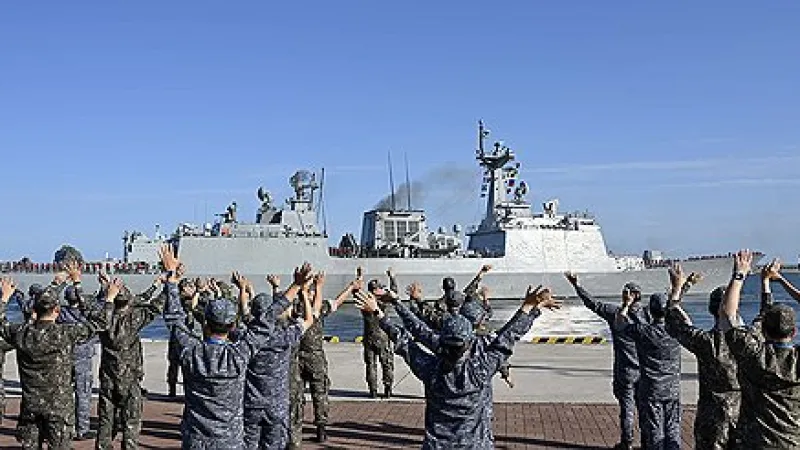
SEOUL – South Korea announced on November 5, 2026, its intention to significantly expand its existing anti-piracy mission, deploying additional naval assets and extending its operational reach closer to the geopolitically critical Strait of Hormuz. This strategic enhancement aims to safeguard maritime commerce and bolster stability in a region vital for global energy supplies, according to officials from the Ministry of National Defense.
The decision, initially reported by the Yonhap news agency, reflects Seoul's growing commitment to international security operations and its vested interest in ensuring the unimpeded flow of oil through the Persian Gulf. The expanded mandate for the Cheonghae Unit will see it operate in a broader area that encompasses the Gulf of Oman and potentially parts of the Arabian Sea, closer to the chokepoint of Hormuz.
Established in 2009, the Cheonghae Unit has primarily focused on anti-piracy operations in the Gulf of Aden off the coast of Somalia. Its deployments have involved protecting South Korean vessels and international shipping from pirate attacks, a mission that has seen considerable success over the past decade and a half.
The Ministry of National Defense emphasized that the expansion is a proactive measure to address evolving maritime security challenges. While primarily still an anti-piracy effort, the proximity to Hormuz, a flashpoint for regional tensions, adds a layer of complexity to the unit's new operational scope. The move also aligns with global calls for nations to contribute more substantially to collective security.
Additional destroyers, patrol vessels, and potentially maritime surveillance aircraft are expected to augment the existing force structure. These assets will provide enhanced reconnaissance capabilities and a more robust deterrent against potential threats, ensuring greater protection for commercial vessels navigating the volatile waters.
The Strait of Hormuz is a crucial transit point for approximately one-fifth of the worlds oil supply. Escalating tensions in the Middle East, particularly concerning Iran, have periodically raised global concerns about shipping safety in the waterway. South Korea, heavily reliant on Middle Eastern oil, views stable maritime routes as a national economic imperative.
Discussions within South Korean political circles about expanding the units reach have been ongoing for several years. Initial proposals faced scrutiny over potential entanglement in regional geopolitical disputes, with some lawmakers expressing caution about increasing military exposure in such a sensitive area.
Government spokespersons reiterated that the mission remains strictly defensive and focused on maritime security, not regional power projection. They underlined that the deployment is consistent with international law and cooperative frameworks aimed at ensuring freedom of navigation.
This enhanced anti-piracy mission could be interpreted as a gesture of support for international efforts to maintain stability, potentially enhancing South Koreas standing among allies, including the United States, which maintains a significant naval presence in the region. This decision underscores South Koreas future role in global security endeavors.
For a nation like South Korea, whose economy thrives on international trade, the security of shipping lanes is paramount. Any disruption in the Strait of Hormuz could have immediate and severe repercussions on its energy imports and export-driven industries. This proactive measure aims to mitigate such risks.
Naval personnel assigned to the expanded mission will undergo specialized training to handle the diverse challenges presented by the new operational area, including potential interactions with various state and non-state actors. The emphasis will remain on de-escalation and professional conduct to uphold the integrity of the anti-piracy mandate.
While specific public reactions are yet to be fully gauged, the move is generally expected to be viewed as a necessary step for national interest, albeit with some lingering questions about the broader implications of increased military involvement abroad. This also aligns with Seoul's evolving foreign policy, as highlighted in discussions around South Koreas future global positioning.
The expanded anti-piracy mission signals South Koreas strategic calculus in navigating complex international waters. It balances its economic dependencies with a growing imperative to contribute to global maritime security efforts, particularly in a critical waterway like the Strait of Hormuz, reinforcing its commitment to international norms and stability.