 Chris Robert
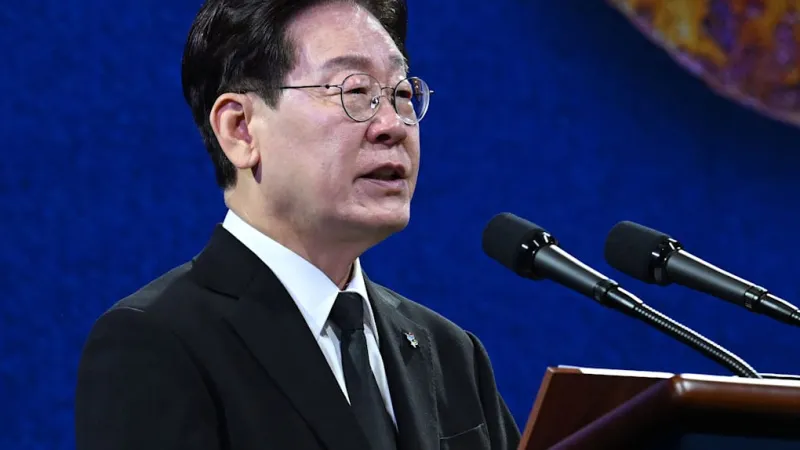
SEOUL – South Korean President Lee Jae-myung publicly castigated the national football team's performance following its disappointing early exit from the World Cup, demanding stringent accountability for the substantial public funds invested in the campaign. His stern remarks, made in the immediate aftermath of the team's group stage elimination, indicate that the resignation of the head coach alone might not suffice to address the widespread national frustration.
President Lee conveyed his profound dissatisfaction, stating, "Significant taxpayer money has been expended," a lament that resonated deeply with a public harboring high expectations for their national squad. The early departure from the tournament has sparked a national debate over sports management, player performance, and the allocation of national resources.
The team's performance was described by many as disappointing across the board, failing to advance past the initial stages despite considerable national investment in training, infrastructure, and international preparation. This outcome stands in stark contrast to the nation's ambitious sporting goals and the fervent support from its citizens.
Historically, South Korea has demonstrated a capacity for strong World Cup showings, notably co-hosting the event in 2002 and reaching the semifinals. Such past achievements fuel current expectations, making the recent early exit particularly galling for both the government and the populace.
President Lee's intervention underscores the significant political and national pride associated with global sporting events like the World Cup. For many nations, a strong performance on the international stage can boost morale and project a positive image globally. The reverse, unfortunately, can lead to widespread public discontent.
The immediate aftermath saw widespread calls for introspection within the national football federation. While the head coach's position is typically the first to come under scrutiny in such circumstances, the President's statement suggests a broader inquiry into the systemic issues contributing to the team's underperformance.
The financial commitment to the national team is substantial, drawing from public coffers that could otherwise be allocated to various domestic programs. The President's explicit mention of taxpayer money highlights the economic dimension of the disappointment, connecting sporting failure directly to public trust and fiscal responsibility.
Discussions are now expected to move beyond merely changing coaching staff to a more comprehensive review of talent development, player selection criteria, and the overall strategy for national football. Stakeholders within South Korean sports are bracing for potential sweeping reforms.
As other nations continue to compete fiercely in the tournament's knockout stages, the focus in South Korea has shifted from competitive aspiration to critical evaluation. The public demands not just apologies, but tangible actions that promise a more competitive future.
This national sports crisis reflects broader societal expectations for excellence and efficiency from institutions supported by public funds. President Lee Jae-myung's firm stance signals a zero-tolerance approach to perceived waste and underachievement, setting a precedent for accountability in national endeavors.