 Chandra Wijayanto
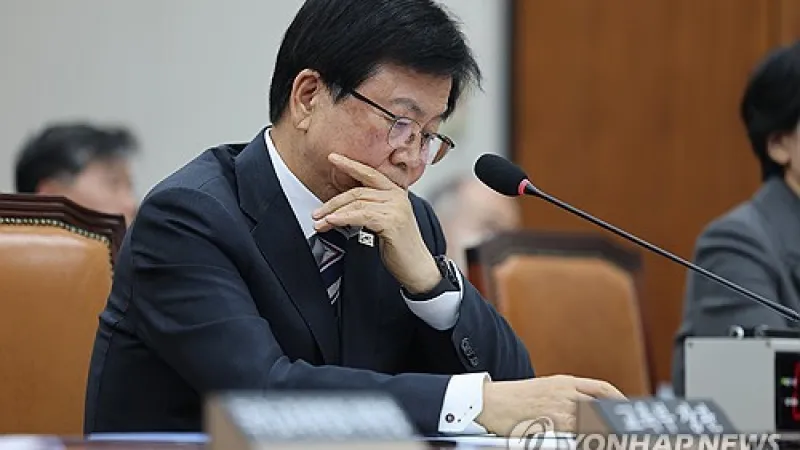
SEOUL, Nov. 17 (Yonhap) -- A former Seoul city councilor has filed a formal complaint against South Korea's education minister, alleging dereliction of duty in the face of escalating academic dishonesty fueled by artificial intelligence. The complaint, lodged with the Seoul Central District Prosecutors Office, contends that the minister has failed to implement sufficient measures to address the pervasive issue of AI cheating, which is profoundly undermining educational integrity across the nation.
The former councilor, identified as Kim Yong-ho, asserts that the education ministry, under its current leadership, has been critically slow to react to the burgeoning threat posed by advanced AI tools capable of generating essays, solving complex problems, and performing intricate research tasks. These tools, widely accessible to students, have complicated assessment methods and challenged the fundamental principles of academic honesty.
The allegations point to a systemic failure to adapt educational policies and regulatory frameworks to the rapid technological advancements. Critics argue that the ministry's delayed response has created an environment where students can exploit AI to circumvent genuine learning processes, thereby devaluing academic achievements and the hard-earned credentials of graduates.
Kim Yong-ho, known for his advocacy in educational reform during his tenure on the city council, stated that the complaint was a necessary step to compel governmental accountability. He emphasized that the education of the nation's youth is paramount and cannot be compromised by bureaucratic inertia in the face of a clear and present danger to academic standards.
The education minister, whose name has been withheld pending official charges, holds ultimate responsibility for establishing and maintaining the quality and integrity of the national education system. This includes ensuring fair and equitable learning environments and safeguarding against practices that could erode public trust in academic qualifications.
Specific instances cited in the complaint reportedly include a lack of comprehensive national guidelines for schools on how to detect and prevent AI cheating, insufficient funding for technology-based detection solutions, and a perceived absence of proactive engagement with educators and AI experts to formulate effective strategies.
Indeed, the proliferation of sophisticated AI language models has dramatically reshaped the landscape of academic integrity. From secondary schools to universities, institutions report an increasing struggle to differentiate between student-generated work and content produced or heavily assisted by AI, making traditional plagiarism checks often ineffective.
This crisis is not isolated to South Korea. Educational bodies globally are grappling with similar challenges, prompting varied responses from stringent software adoption to radical re-evaluation of assessment paradigms. However, the complaint suggests South Korea has fallen behind its international counterparts in addressing this critical educational vulnerability.
The education ministry has yet to issue an official statement regarding the complaint. Observers anticipate that any response would likely underscore the complexity of regulating rapidly evolving technology within an established educational framework, while also highlighting any existing initiatives to combat academic dishonesty.
Legal experts suggest that such a complaint, particularly when filed by a public figure, often triggers a thorough investigation by prosecutors. If evidence of gross negligence or wilful dereliction of duty is found, the minister could face serious political and legal ramifications, potentially impacting their career and the government's standing.
Beyond immediate legal implications, the situation has ignited a broader national debate about the future of education in the AI era. Parents and educators are expressing growing concern over the long-term impact on students critical thinking skills and the true value of degrees obtained through potentially compromised academic processes.
Many propose that effective solutions must go beyond mere detection. They advocate for a holistic approach that includes educating students on ethical AI use, fostering original thought through innovative assignments, and adapting curricula to integrate AI as a learning tool rather than a substitute for learning.
South Korea has previously demonstrated leadership in technological integration and digital policy. For instance, the nation has actively pursued initiatives like the South Korea Proposes ASEAN AI Initiative for Inclusive Growth, signaling a governmental commitment to harnessing AI for societal benefit. However, the current complaint highlights a perceived gap in addressing its potential downsides within domestic education.
The complaint also brings to the forefront the delicate balance between fostering technological literacy and preserving fundamental academic values. It underscores the urgency for robust policy-making that can simultaneously embrace innovation and uphold the sanctity of educational pursuits.
Stakeholders across the educational spectrum are calling for immediate and decisive action. University rectors, school superintendents, and teacher associations have urged the ministry to convene a national task force comprising educators, technologists, ethicists, and legal experts to forge a unified and comprehensive strategy.
This incident casts a shadow over the national academic landscape, demanding a transparent and accountable response from the highest levels of government. The outcome of the investigation will likely set a precedent for how South Korea handles future challenges at the intersection of technology and public policy.
The complaint serves as a stark reminder that as artificial intelligence becomes more integrated into daily life, governing bodies must proactively develop safeguards and ethical guidelines across all sectors, particularly in foundational areas like education.
Ultimately, the former councilors action compels the nation to confront the uncomfortable truth that technological advancement, while offering immense potential, also brings complex ethical dilemmas that require vigilant and responsive governance to protect societal foundations.
Prosecutors are expected to review the submitted evidence and determine whether to proceed with a full investigation. The public and academic community will be closely watching for any developments in this high-stakes confrontation over educational integrity in the age of artificial intelligence.