 Debby Wijaya
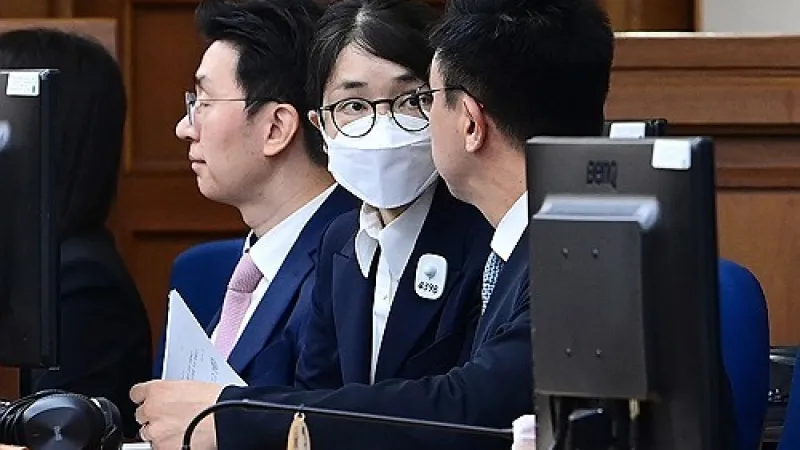
SEOUL, November 19 (Yonhap) -- South Korea's Supreme Court was poised Thursday to issue its final ruling on the extensive corruption charges leveled against the nation's former first lady, a decision anticipated to mark a significant juncture in one of the country's most high-profile legal battles. The impending verdict addresses allegations that have captivated the public and implicated various high-ranking officials and business figures across the nation.
The former first lady stands accused of offenses ranging from bribery and influence peddling to illegal acquisition of private assets, allegations that surfaced years ago and triggered a wide-ranging investigation. These accusations have been central to a protracted legal process that has seen intense scrutiny from both the media and civil society organizations dedicated to governmental transparency.
The case has progressed through multiple judicial instances, with lower courts previously rendering differing judgments on specific aspects of the charges. The Supreme Court's deliberation represents the final appellate stage, where legal interpretations of evidence and procedural adherence from previous trials are rigorously examined.
Public interest in the ex-first lady's corruption case remains exceptionally high, reflecting a national commitment to accountability among political elites. This judicial review is viewed by many as a barometer for the integrity of South Korea's justice system and its capacity to impartially prosecute powerful individuals.
Historically, South Korea has witnessed several high-profile corruption scandals involving past presidents and their close associates. These events have often led to significant political upheaval and public demand for stricter anti-corruption measures, reinforcing the gravity of the current proceedings. The nation has a strong tradition of holding its leaders to account.
The Supreme Court's decision could either uphold, overturn, or remand parts of the previous rulings. A definitive judgment will carry profound implications not only for the former first lady personally but also for the broader political landscape, potentially reshaping public trust in governmental institutions.
Specific charges under review reportedly include allegations of illicit financial gains through foundations she oversaw and leveraging her position to secure preferential treatment for certain businesses or individuals. The detailed nature of these accusations underscores a pattern of alleged abuse of power that public prosecutors have diligently worked to expose.
The broader political context in South Korea often sees such cases become litmus tests for the ruling administration's stance on corruption, irrespective of direct involvement. Citizens frequently scrutinize how the judiciary navigates cases involving powerful figures, hoping for equitable application of the law. This nation also grapples with various other complex issues, including its evolving defense posture, as highlighted by discussions on South Korea Overhauls Military Service Amid Shifting Defense Landscape.
A decisive verdict could strengthen calls for further reforms aimed at preventing future instances of high-level corruption. Conversely, any perceived leniency or procedural irregularities might fuel public cynicism, affecting the credibility of political bodies and judicial processes.
Legal analysts suggest the Supreme Court's interpretation of certain statutes in this case could set important precedents for future corruption trials involving public officials. The precise definitions of illicit gains and the burden of proof are critical elements being scrutinized at this highest judicial level.
As the nation awaits the verdict, media outlets and legal experts are closely monitoring the situation. The outcome is expected to dominate national headlines and spark widespread discussion about ethics in public service and the reach of judicial authority.
Regardless of the specific judgment, the Supreme Court's pronouncement on the ex-first lady's corruption case will undoubtedly serve as a landmark moment in South Korean legal history, reinforcing the principle that even those at the apex of political power are subject to the rule of law.