Angel Doris
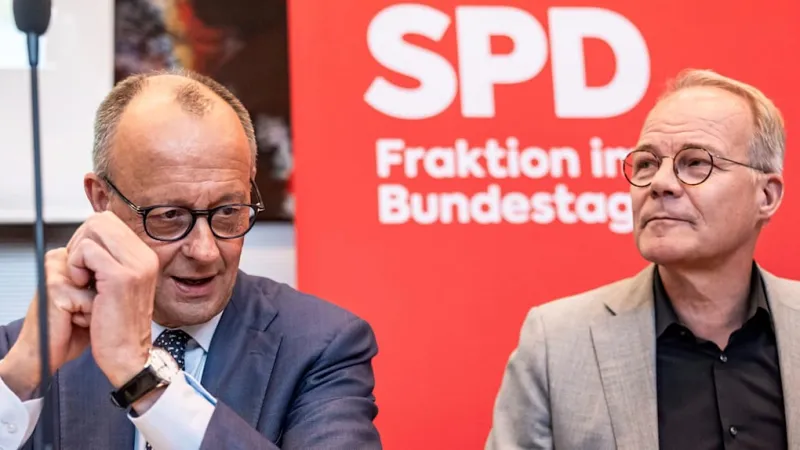
BERLIN – Matthias Miersch, parliamentary group leader for Germany's Social Democratic Party (SPD), today called for an urgent, cross-party pension summit to tackle the nation's looming retirement challenges, simultaneously delivering a stark warning to the Christian Democratic Union (CDU) against any potential collaboration with the far-right Alternative for Germany (AfD), particularly in the context of Saxony-Anhalt.
Miersch emphasized the critical need for a stable and sustainable German pension reform. His proposal aims to foster consensus among political factions on a subject often fraught with partisan disagreements. This proactive step seeks to insulate a vital social policy area from legislative deadlock.
The SPD leader articulated that the coalition government, currently comprising the SPD, Greens, and Free Democratic Party (FDP), would not falter over the pension issue. This assurance signals a determination within the ruling parties to navigate the complex debate without jeopardizing governmental stability.
However, Miersch redirected significant attention to the CDU, specifically cautioning against any overtures towards the AfD. He reiterated concerns about the conservative party's stance on potential alliances, particularly relevant in federal states where the AfD has significant electoral strength, such as Saxony-Anhalt.
The warning underscores a growing apprehension within mainstream German politics regarding the normalization of the far-right. The SPD views any cooperation with the AfD as a breach of democratic principles and a threat to societal cohesion.
Recent political developments across Germany have intensified these concerns. Discussions about Germany's financial health, including its adherence to the "debt brake," have fueled public discourse on economic stability and social welfare programs like pensions. Germany's Debt Brake: Billions Dwindle Amid Fiscal Reality
Miersch's call for a comprehensive pension summit is designed to transcend these political divisions, creating a platform for expert discussion and long-term planning. The goal is to develop solutions that can withstand political cycles and provide security for future generations of retirees.
The SPD believes that the demographic shifts and economic pressures facing Germany necessitate a unified approach to pension reform. Incremental adjustments, they argue, may prove insufficient to address the systemic challenges inherent in maintaining a robust social security net.
This political maneuver also serves to clearly delineate the SPD's position on inter-party cooperation. While advocating for dialogue on critical issues like pensions, the party draws a firm line when it comes to engaging with extremist elements.
The CDU has yet to issue an official response to Miersch's dual proposal and warning. However, the comments are likely to ignite further debate within the conservative ranks regarding their future political strategies, especially ahead of upcoming regional elections.
Analysts suggest that the SPD's move is a strategic effort to frame the upcoming pension debate and to pressure the CDU into publicly committing to a firewall against the AfD. The implications for the broader political landscape, particularly for coalition dynamics, remain significant.
The issue of pension stability has been a recurring theme in German political discourse for decades, with successive governments attempting various reforms. The current proposal by the SPD aims for a more enduring and broadly supported solution.
This warning against the AfD is not isolated. Other mainstream parties have also expressed strong reservations about the increasing influence of the far-right and the potential erosion of democratic norms through political alliances. Germany's Coalition on Brink, CDA Chief Issues Stark Warning
The situation in Saxony-Anhalt, where the AfD enjoys considerable support, epitomizes the challenge for established parties. Navigating governance in such states often presents dilemmas regarding the formation of viable political majorities.
Miersch's statement therefore serves as a pre-emptive strike, aiming to prevent the CDU from considering any form of cooperation that might inadvertently legitimize the AfD's political agenda.
The proposed pension summit itself would involve representatives from all major parliamentary groups, along with economists, social scientists, and labor representatives, to collectively formulate a sustainable path forward for the German pension system.
Ultimately, the SPD's dual message – one of cooperation on pensions and one of steadfast opposition to the far-right – highlights the complex political tightrope Germany's mainstream parties are walking in 2026.