Angel Doris
MAGDEBURG – A significant political realignment unfolded in a German state parliament recently as SPD politician Willingmann failed to secure a vice-presidency during an election that simultaneously propelled Tobias Rausch of the Alternative for Germany (AfD) to the historic position of state parliament president. This outcome underscores evolving political dynamics within the nation, where the AfD continues to make inroads into traditional power structures.
Willingmanns defeat in the vote for state parliament vice-president represents a setback for the Social Democratic Party, a cornerstone of German politics. The inability to secure a leadership role, particularly one traditionally seen as an institutional given for established parties, signals a challenge in consolidating influence against rising opposition forces.
Conversely, Tobias Rauschs election as state parliament president is a landmark moment for the AfD, marking the first time a member of the party has held such a prominent parliamentary office in any German state. This achievement highlights the partys increasing acceptance and integration into the formal political landscape, despite ongoing national debates regarding its policies and rhetoric. Rausch has previously signaled his intent to ensure equal treatment for all parliamentary factions, as reported in articles detailing his aspirations for the presidency.
The AfD further solidified its presence by securing an additional vice-presidency position, demonstrating a broader success in parliamentary elections. This dual victory for the AfD in critical leadership roles within the state parliament showcases its growing organizational strength and its ability to mobilize votes effectively within legislative bodies.
The rise of the AfD, often characterized by its anti-immigration and Eurosceptic stance, has been a defining feature of German politics in recent years. This election result in the state parliament aligns with broader trends indicating a surge in support for the party across various regions, an observation further supported by analyses revealing the AfD breaking poll records and solidifying its lead in Germany. The partys increasing electoral success challenges the long-standing dominance of centrist parties.
For the SPD, the outcome prompts introspection. The party has grappled with declining voter numbers and a struggle to resonate with segments of the electorate increasingly drawn to more radical alternatives. This specific defeat in a parliamentary leadership contest exemplifies the broader challenges faced by traditional parties in maintaining their historical influence.
Analysts suggest that such election results reflect a growing disillusionment among voters with mainstream political offerings, leading to a fragmentation of the political spectrum. The shift towards parties like the AfD indicates a demand for new voices and approaches, even if controversial.
The implications of an AfD member assuming the role of state parliament president are far-reaching. The position holds significant administrative power, overseeing parliamentary proceedings and ensuring adherence to legislative rules. Rauschs occupancy of this office will likely be scrutinized for its impact on parliamentary decorum and the representation of diverse political views.
This specific vote underscores the importance of every election, from federal to local, in shaping the political character of Germany. The outcomes resonate beyond individual candidacies, reflecting the pulse of public opinion and the evolving mandate granted to various political factions. The election of an AfD official to a key parliamentary role, coupled with the failure of a mainstream candidate, marks a pivotal moment in the ongoing transformation of German democracy.
The focus now shifts to how this new parliamentary leadership will govern and how the established parties, particularly the SPD, will adapt to these undeniable shifts in the political power balance. The events serve as a potent reminder of the dynamic and often unpredictable nature of democratic processes.
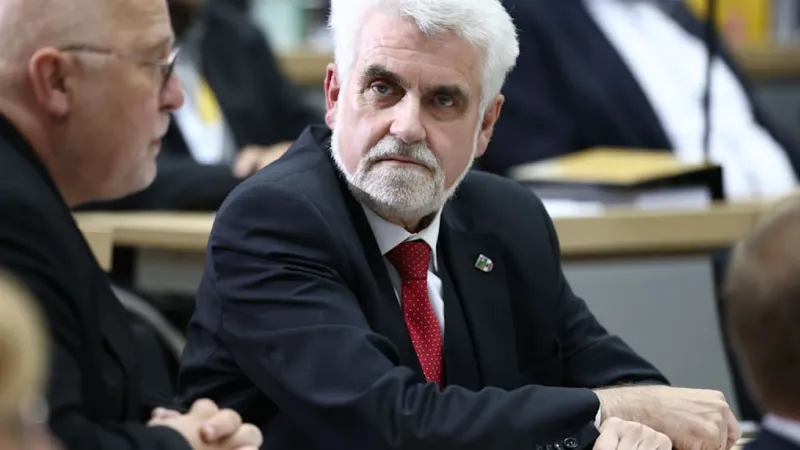
Image Caption: Tobias Rausch of the AfD, seen here, made history as the first AfD state parliament president in Germany, while an SPD candidate failed to secure a vice-presidency role.