 Debby Wijaya
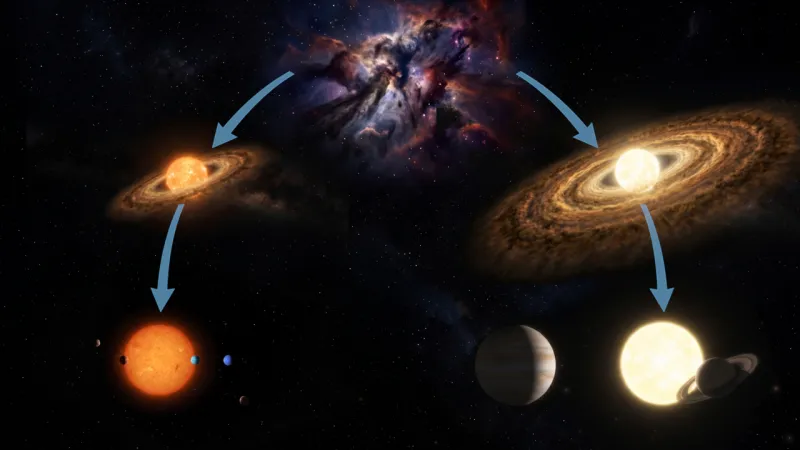
A recent scientific breakthrough has revealed that the inherent nature of a star—whether it is calm or turbulent—directly dictates the fundamental characteristics of its orbiting planets. This pivotal discovery, emerging from extensive astronomical research, provides an invaluable new framework for scientists globally as they endeavor to identify exoplanets possessing conditions amenable to the development and sustenance of life.
Until now, much of the focus in exoplanetology has centered on factors such as a planet's orbital distance from its star, often termed the habitable zone. While crucial, this new understanding introduces a deeper layer of complexity, positing that a star's intrinsic temperament plays an equally, if not more, significant role in shaping its planetary companions.
A calm star, typically older and less active, emits a steady stream of radiation and possesses a stable magnetic field. Conversely, turbulent stars, often younger and more massive, exhibit frequent and powerful stellar flares, coronal mass ejections, and highly variable radiation output.
These diverse stellar behaviors profoundly affect a planet's atmosphere, surface conditions, and even its geological activity. Intense flares and strong magnetic fields from a turbulent star can strip away planetary atmospheres, sterilize surfaces with radiation, and disrupt the delicate chemical processes necessary for life.
For instance, planets orbiting highly active stars may struggle to retain a substantial atmosphere, making it challenging for liquid water to exist stably on their surfaces. Without a robust, protective atmospheric shield, any nascent life would be constantly bombarded by harmful cosmic rays and stellar particles, hindering its development and survival.
This revelation prompts a critical re-evaluation of the traditional habitable zone concept. A planet might be perfectly positioned within the ideal temperature range for liquid water, but if its host star is overly volatile and energetic, the sustained conditions for life could be rendered impossible.
The scientific community can now refine its search strategies for habitable worlds. Instead of merely scanning for planets within a star's theoretical habitable zone, astronomers will prioritize systems where the central star exhibits a stable, calm disposition, thereby increasing the statistical likelihood of finding truly life-supporting environments.
Advances in exoplanet observation techniques, including sophisticated spectrographs and powerful space telescopes like the James Webb Space Telescope, are instrumental in characterizing both exoplanet atmospheres and the subtle behaviors of their host stars. These cutting-edge tools allow for precise measurements of stellar activity and planetary responses.
The quest for extraterrestrial life has long captivated human imagination, fueling narratives from ancient myths to modern science fiction, as explored in cultural phenomena such as Stargate's Enduring Hit: How Ancient Alien Theories Shaped a Blockbuster. This new understanding grounds the search in deeper astrophysical realities, moving beyond speculation to focused scientific inquiry.
Researchers anticipate that this new understanding will not only streamline the search for life but also provide deeper insights into planetary formation and evolution across diverse stellar environments. It underscores the intricate dance between a star and its celestial companions, where the star truly acts as the ultimate architect of its planets' destinies.
This fundamental shift in perspective marks a significant step forward in astrobiology, moving beyond mere orbital proximity to embrace the profound influence of stellar personality. The character of planets, it turns out, is indeed intrinsically linked to the stars themselves.