 Edward DP Situmorang
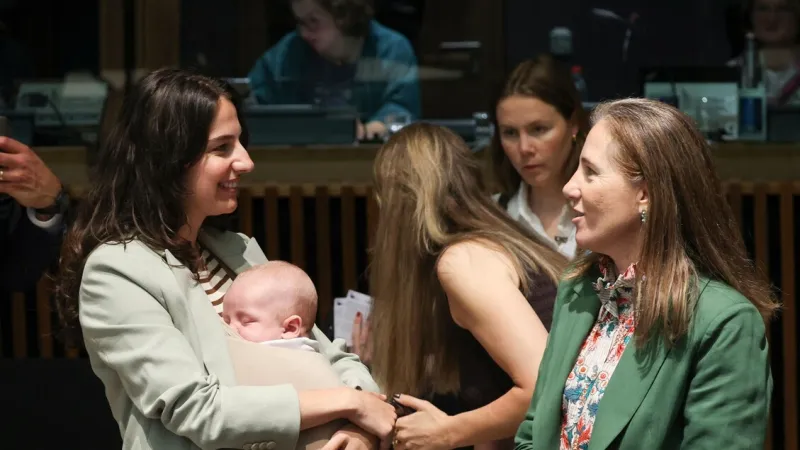
The city of Luxembourg recently became the backdrop for a powerful statement on work-life integration in high-level politics, as Swedish Minister for Climate and Environment Romina Pourmokhtari attended the European Union Environment Council meeting with her infant son in tow. The scene, unusual yet increasingly emblematic of evolving professional landscapes, underscored a burgeoning shift in how leaders approach parental responsibilities while fulfilling demanding public roles.
Pourmokhtari, responsible for Sweden's environmental portfolio, brought her months-old child to the official proceedings, demonstrating a commitment to both her ministerial duties and her role as a new mother. Her presence with the infant resonated widely, drawing attention to the ongoing dialogue about supporting parents in demanding professions.
The minister herself addressed the moment, expressing a profound sense of affirmation regarding her ability to manage both spheres of her life. "We can participate in meetings and be present," Pourmokhtari stated, articulating a sentiment many working parents champion globally. This simple declaration carries significant weight, challenging long-held norms that often force professional women to choose between career advancement and starting a family.
Sweden, a nation widely recognized for its progressive social policies and robust parental leave programs, provides a cultural context where such an act, while still notable, aligns with national values. The country consistently ranks high in global indices for gender equality and family support, making Pourmokhtari's actions a natural extension of Sweden's societal framework. These progressive policies aim to create an environment where individuals, regardless of gender, can pursue careers and raise families simultaneously without undue compromise.
The sight of a high-ranking official nursing or comforting a child during an international summit sends a clear message beyond national borders. It normalizes parental presence in professional spaces, particularly for mothers, who frequently face the brunt of societal expectations regarding childcare. This visibility can encourage other institutions and workplaces to re-evaluate their own flexibility and support systems for parents.
Such moments are not isolated occurrences but rather part of a broader trend seeing more women attain leadership positions, subsequently bringing their lived experiences into previously male-dominated arenas. From national parliaments to international bodies, the presence of parents, especially mothers, with young children is slowly, yet steadily, becoming less of an anomaly and more of an aspiration for inclusive workplaces.
Indeed, discussions within the EU Environment Council often delve into long-term policy impacts, including those affecting future generations. Pourmokhtari's infant son served as a poignant, living reminder of the very stakeholders whose future is being shaped by the environmental decisions made in these very chambers. His innocent presence added an unspoken urgency to the proceedings.
While some might view such an act as unconventional in the formal corridors of power, the overwhelming sentiment tends toward recognition of the modern realities of work. The demand for work-life balance is no longer a niche concern but a mainstream expectation, even for those at the pinnacle of political leadership.
This integration challenges the traditional separation of public and private life, suggesting that authenticity and inclusivity can enhance, rather than detract from, the gravitas of political discourse. It reinforces the idea that leaders are multifaceted individuals with personal lives that inform, and sometimes enrich, their professional perspectives.
The Swedish Minister's action stands as a quiet but firm statement in a world still grappling with gender parity and equitable professional opportunities. It is a testament to the idea that leadership does not require abandoning one's familial role but rather finding innovative ways to weave them together, inspiring a more human-centered approach to governance.
This particular instance by Romina Pourmokhtari resonates especially with younger generations who prioritize flexibility and holistic well-being alongside career ambition. It sets a precedent that the responsibilities of parenthood need not be a barrier to pursuing or holding demanding public office, thereby potentially encouraging more diverse representation in politics.
It signifies a step forward in addressing the systemic barriers that have historically disproportionately affected women in their career progression, particularly during childbearing and early child-rearing years. The aspiration for women to lead without having to compromise their family lives is increasingly becoming a tangible reality, championed by figures like Minister Pourmokhtari.