 Debby Wijaya
Trento, Italy – A new book by Concetto Vecchio meticulously recounts how the northern Italian city of Trento emerged as the undisputed epicenter of Italy's tumultuous 1968 student movement, a libertarian utopia that cascaded across the nation and profoundly altered its social and political landscape.
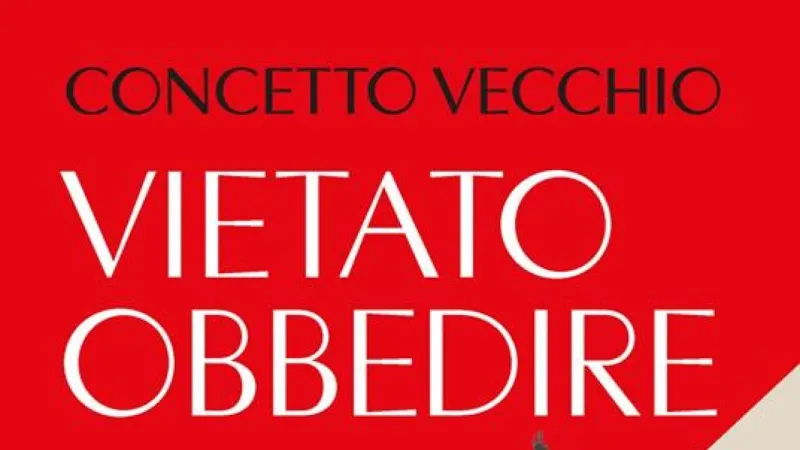
Vecchio's work, titled “Vietato Obbedire” (Forbidden to Obey), dives into the singular circumstances that allowed the University of Trento to become the ideological and strategic cradle of a rebellion against established norms, igniting a widespread national phenomenon.
The student protests of 1968 were not exclusive to Italy; they were a global surge of dissent against traditional authority, spanning from Paris to Prague to Berkeley. Yet, Trento's contribution, often overshadowed by larger events, offered a distinct, intellectually robust framework for the Italian variant.
Students in Trento, particularly within the nascent Department of Sociology, developed a radical critique of society, education, and power structures. They championed direct democracy, sexual liberation, and a fundamental challenge to the patriarchal and conservative values that had long governed Italian society.
This vibrant intellectual ferment fostered an environment where disobedience was not merely tolerated but celebrated as a foundational principle. The slogan “Vietato Obbedire” encapsulated the ethos of a generation determined to forge new paths, free from the constraints of existing hierarchies.
The movement quickly transcended the university's walls, galvanizing broader segments of Italian youth. What began as academic discourse soon spilled into public squares, factories, and homes, fostering a period of intense social and political upheaval that earned the nickname the "Italian Hot Autumn."
Concetto Vecchio's research illuminates the intricate network of ideas and activists that coalesced in Trento, creating a template for protest that was emulated nationwide. His narrative delves into the specific pedagogical and institutional factors that made Trento uniquely fertile ground for such radical thought.
By examining previously overlooked documents and testimonies, Vecchio presents a comprehensive historical account. The book asserts that the intensity and intellectual rigor of the Trento movement provided the theoretical underpinning for many of the subsequent protests that swept through major Italian cities.
The impact extended beyond the immediate protests. The 1968 movement in Italy, with its roots firmly in Trento, spurred significant reforms in education, labor rights, and social customs. It ushered in an era of heightened political consciousness and demands for greater civic participation.
While the overt revolutionary fervor eventually subsided, the legacy of 1968 continues to reverberate in Italy's contemporary discourse. Debates about individual freedoms, social justice, and the role of youth in shaping national destiny can often trace their lineage back to those formative years.
The insights provided by Vecchio's book are particularly pertinent in 2026, offering a historical lens through which to view ongoing discussions about social change and youth engagement. Understanding the origins of such foundational movements provides crucial context for present-day challenges and aspirations.
Contemporary Italian academia, while certainly different from the revolutionary environment of 1968, continues to grapple with student expectations and evolving pedagogical approaches. A recent report highlighted how the academic track dominates Italian student choices as the school year commences, suggesting a shift in focus from broad societal revolution to specialized career paths, yet the underlying desire for influence remains.
Vecchio's compelling narrative serves as a vital reminder of a period when a relatively small university city sparked a nationwide awakening, demonstrating the potent capacity of ideas to ignite profound societal transformation.
The book offers a detailed chronology of events, profiling key figures, and analyzing the philosophical currents that defined Trento's particular brand of libertarianism. It ensures that the specific contribution of Trento to the broader 1968 narrative is adequately recognized.
This historical examination contributes significantly to understanding the complex tapestry of modern Italy, providing invaluable perspective on the origins of many of its contemporary social and political dynamics.