 Chandra Wijayanto
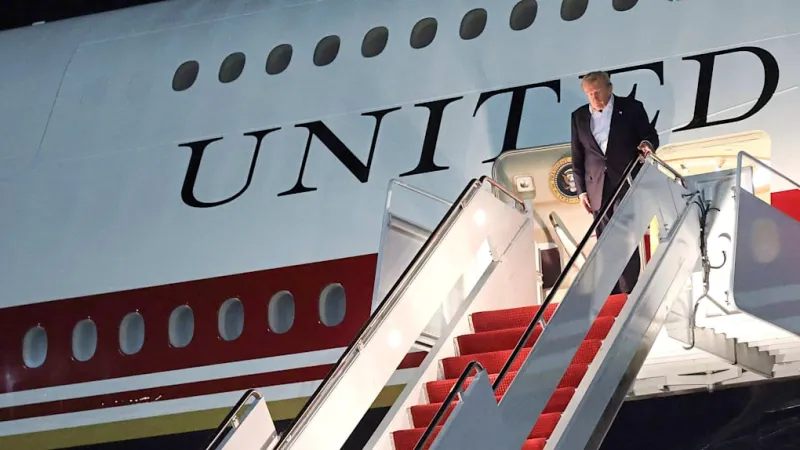
Washington, D.C. – The administration of President Donald Trump has issued a subpoena compelling a reporter from The New York Times to appear before a Grand Jury. This significant legal action follows the newspaper's publication of reports detailing alleged security vulnerabilities concerning the presidential aircraft, "Air Force One," particularly those related to a plane reportedly donated by Qatar. The move, unfolding in 2026, escalates the ongoing tension between the executive branch and a prominent national media outlet over matters of national security reporting.
The subpoena targets an individual journalist, whose identity has not been publicly disclosed, involved in crafting articles that illuminated specific safety assessments. These assessments purportedly highlighted potential operational and structural weaknesses in the presidential plane, eliciting a swift and stern reaction from the White House regarding the unauthorized dissemination of what it considers sensitive information.
At the core of the burgeoning controversy lies a passenger jet, allegedly a gift from the Gulf state of Qatar, which was reportedly designated for conversion into a new iteration of "Air Force One." The New York Times investigations reportedly raised pointed questions about the rigor of security protocols surrounding this particular aircraft and the broader implications for the President's air travel safety and national defense.
Officials within the Trump administration, speaking on condition of anonymity, have consistently maintained that any unauthorized disclosure pertaining to the President's travel security poses a profound risk to national safety and operational integrity. They assert that the Grand Jury investigation aims to pinpoint the source of the alleged leak, rather than to impede legitimate journalistic inquiry.
Conversely, The New York Times, supported by a coalition of influential press freedom organizations, has vociferously denounced the subpoena. They characterize it as a direct challenge to journalistic independence and a mechanism designed to instill a chilling effect on vital investigative reporting. Advocates argue that publicizing verifiable security concerns serves a paramount public interest, even when such information originates from classified sources.
Grand Jury proceedings, by design, operate under a veil of secrecy, tasked with determining the sufficiency of evidence to warrant a criminal indictment. The utilization of such a powerful legal instrument in cases involving journalists and alleged leaks frequently precipitates arduous legal contests centered on the protection of confidential sources.
Relations between the Trump administration and numerous segments of the national media have historically been characterized by pronounced friction. This latest development contributes another chapter to a persistent narrative of animosity, frequently marked by White House accusations of "fake news" and counter-allegations from the media regarding attempts to undermine democratic norms and institutions.
The unnamed reporter now confronts a profound dilemma: to cooperate with the Grand Jury, which could entail revealing confidential sources, or to invoke journalistic privilege. The latter course of action carries the potential for severe legal ramifications, including citations for contempt of court. The newspaper has publicly affirmed its unwavering commitment to defending its journalist, pledging a robust legal challenge.
Media observers and legal scholars suggest this assertive subpoena could significantly disincentivize future whistleblowers and confidential sources from providing information deemed crucial for public scrutiny. The eventual resolution of this high-stakes case is widely anticipated to establish a substantial precedent for how successive administrations approach national security leaks involving the press.
Proponents of a free press underscore that an unfettered and independent media remains a cornerstone of a healthy democracy, serving as an indispensable check on governmental power. Legal actions that seek to compel journalists to divulge their sources are often perceived as direct threats to this fundamental societal role.
The incident is also attracting considerable international scrutiny, with global press watchdogs closely monitoring the developments. Concerns are routinely voiced worldwide regarding potential erosions of press freedoms, even within established democratic frameworks, particularly when governmental bodies exert legal pressure on news organizations.
Legal analysts foresee an extended and complex legal battle, potentially progressing through various levels of the judiciary, as both parties prepare to contend over fundamental constitutional principles and competing national security imperatives. While the Grand Jury process will unfold confidentially, its broader implications are expected to reverberate across the public sphere and within the journalistic community.