Gabriella
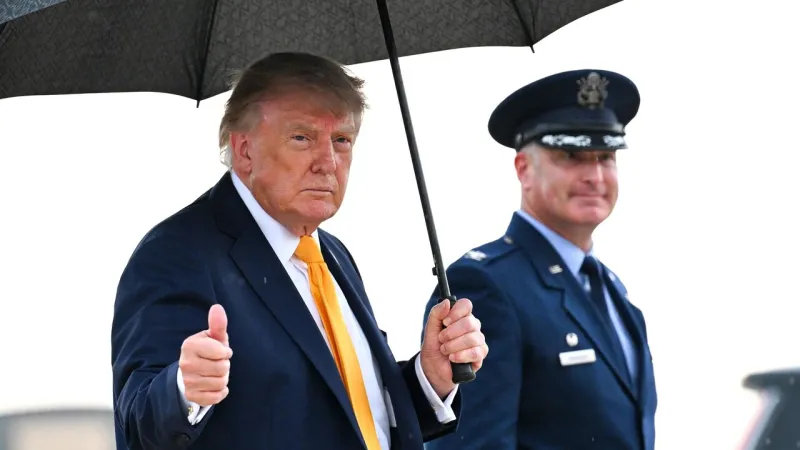
Dallas, Texas — President Donald Trump confronted a formidable array of political challenges at a recent high-profile convention, struggling with softening approval ratings and heightened tensions with Iran, even as the event saw a significant absence of key Republican figures. The gathering, intended to galvanize the party, instead highlighted a precarious political landscape for the sitting president, underscored by an unusual appearance of support from tech magnate Elon Musk.
The convention, held in the heart of Texas, unfolded amid palpable unease within Republican ranks. Reports indicated a notable exodus of established party members and prominent elected officials, raising questions about party unity and the presidents broader appeal heading into the latter half of his term.
This Republican flight from the Dallas stage suggests a deeper rift or a strategic distancing by some elements of the party. Political analysts are scrutinizing whether these absences signify a shift in loyalty or a calculated move to avoid association with the administrations current political headwinds.
President Trumps approval ratings have registered a discernible decline in recent polling data. This dip, while not unprecedented for a sitting president, creates an additional layer of complexity as he seeks to rally support for his agenda and for struggling candidates ahead of critical midterm elections.
The presidents perceived vulnerability in national polls places added pressure on his ability to campaign effectively for those Republican contenders facing difficult races. Historically, a presidents popularity can be a significant coattail factor, and any erosion in that regard complicates the electoral map.
Simultaneously, the administration grapples with an escalating foreign policy crisis involving Iran. Specific details surrounding the nature of these tensions remain under tight wraps, but sources indicate a perilous diplomatic situation that demands immediate and careful attention from the White House.
The shadow of the Iran situation extends beyond international relations, influencing domestic perceptions of the presidents leadership and his capacity to navigate complex global challenges. Public sentiment on foreign policy can often correlate directly with overall approval.
Amidst these converging pressures, Elon Musk, the influential CEO of Tesla and SpaceX, offered an unexpected boost to the president. Musks presence and public statements of support at the convention underscore a strategic, albeit unusual, alliance designed to appeal to specific voter demographics.
Musks endorsement, while potentially galvanizing a segment of the electorate drawn to innovation and non-traditional politics, also highlights the extent to which the president is seeking diverse avenues for support in a challenging political climate. It signals an effort to transcend conventional political endorsements.
The convention also served as a critical platform for President Trump to address concerns about several Republican candidates who are currently trailing in their respective races. The presidents intervention is deemed crucial for their prospects, particularly in swing states.
These candidates, many of whom have closely aligned themselves with the presidents platform, are relying on his unique ability to energize the base. Their struggles are a direct reflection of the broader challenges currently facing the Republican Party.
The events in Dallas underscore a pivotal moment in President Trumps presidency. With domestic political capital waning and international crises intensifying, the administrations ability to recalibrate its strategy and reinforce party cohesion will be paramount for its legacy and future electoral endeavors.