 Demian Sahputra
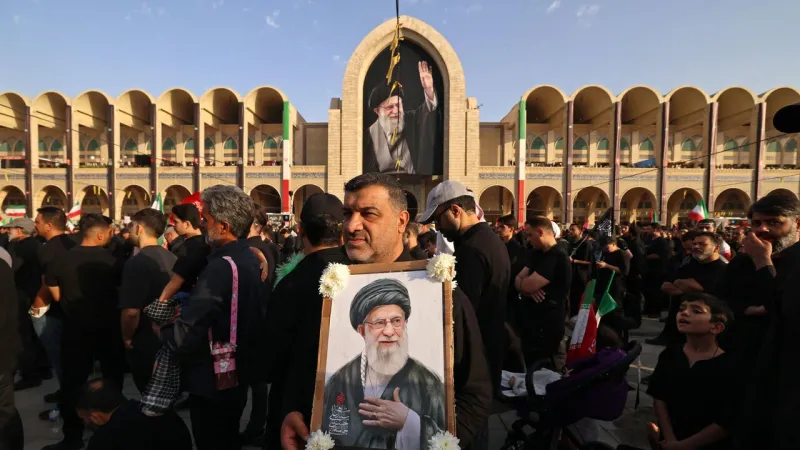
Tehran, Iran – Official funeral ceremonies for the late Supreme Leader Ayatollah Ali Khamenei commenced today, drawing thousands to the courtyard of the Grand Mosque and initiating a six-day national mourning period. The solemn proceedings mark a pivotal moment for the Islamic Republic, as its citizens gather to bid farewell to the spiritual and political leader who guided the nation for decades.
The sheer scale of public participation underscored the profound impact of Khamenei's passing. Streets leading to the Grand Mosque swelled with mourners, many clad in black, carrying portraits of the late leader and chanting religious laments. Security forces maintained a visible but unobtrusive presence, ensuring order amidst the vast throngs.
The decision for a six-day ceremonial period reflects the immense reverence held for Ayatollah Khamenei and provides ample opportunity for citizens across the nation to participate in various mourning rituals. This extended duration emphasizes the national scope of the grief and the unified expression of sorrow.
The Grand Mosque, a significant architectural and religious landmark in Tehran, served as the focal point for the initial rites. Its expansive courtyard, designed to accommodate large congregations, was filled to capacity, with overflow crowds extending into adjacent avenues and public squares.
While the nation mourns, attention also invariably turns to the political future and the process of succession. The Assembly of Experts, a deliberative body of high-ranking clerics, holds the constitutional responsibility for selecting the next Supreme Leader. This period of transition is crucial for both domestic stability and Iran's standing on the global stage.
Indeed, the commencement of these ceremonies follows widespread anticipation and a palpable sense of national introspection. As reported previously, Tehran Gathers for Khamenei Funeral Amid Strict Security Measures, highlighting the intricate logistical and security arrangements in place to manage such a monumental event.
Ayatollah Khamenei's tenure, which began in 1989 following the passing of Ayatollah Ruhollah Khomeini, spanned over three decades. During this time, he navigated Iran through numerous domestic challenges, international sanctions, and complex regional dynamics, solidifying his role as a central figure in modern Iranian history.
The Supreme Leader's death carries significant geopolitical implications. Regional allies and adversaries alike are closely observing the transition, anticipating potential shifts in Iran's foreign policy and its approach to regional conflicts and nuclear ambitions. Global powers, including the United States under President Donald Trump, will also be monitoring developments cautiously.
The collective outpouring of grief also represents a crucial moment of national solidarity. Observers note that Iran Rallies Millions for Khamenei Farewell, Signaling Power Transition, underscoring how public displays of mourning can serve to reinforce national cohesion during periods of leadership change.
Historically, grand funerals for supreme leaders or revered figures in Shiite Islam are powerful spectacles, designed to both honor the deceased and unite the populace behind the existing system. The current Khamenei funeral is no exception, serving as a powerful demonstration of state capacity and public fealty.
Beyond the central ceremonies in Tehran, various religious institutions and community centers across Iran are hosting their own mourning sessions, including recitations of the Quran, elegies, and speeches eulogizing the late leader. These localized gatherings ensure broad participation in the national period of grief.
The six-day mourning period also impacts daily life, with many government offices and businesses observing reduced hours or closures. The national focus remains firmly on the solemn farewell, temporarily overshadowing other economic and social concerns.
As the funeral rites progress, the focus will gradually shift from mourning to the future. The characteristics and leadership style of the next Supreme Leader will undoubtedly shape Iran's trajectory for decades to come, influencing its domestic policies, economic reforms, and diplomatic engagements.
The initial phase of the Khamenei funeral, marked by the massive assembly at the Grand Mosque, concluded with religious prayers led by senior clerics, emphasizing the spiritual gravity of the occasion. The ceremonies are slated to continue with processions and further rituals over the coming days, culminating in his eventual interment.