Gabriella
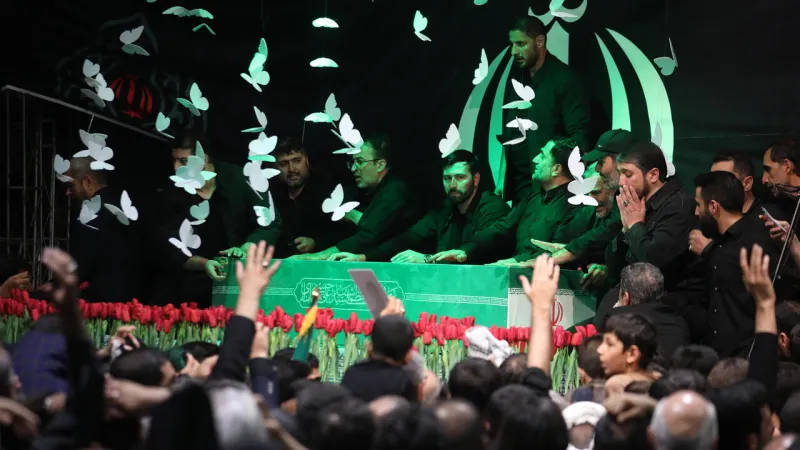
Tehran is currently hosting the elaborate farewell ceremonies for Ayatollah Ali Khamenei, drawing an estimated 20 million mourners who have converged upon the capital to pay their final respects. What began as a solemn occasion has rapidly evolved into a profound demonstration of national cohesion and a strategic projection of Iranian strength both domestically and on the global stage, amid intense speculation about the next Supreme Leader.
The unprecedented turnout underscores the deep reverence many Iranians hold for the spiritual and political leader who guided the nation for decades. Streets and squares across Tehran are awash with black-clad masses, creating a powerful visual testament to the clerical establishment's enduring influence and its capacity to mobilize vast segments of the population.
This monumental gathering serves as more than just a memorial; it is a calculated show of force by the Islamic Republic. In a region fraught with geopolitical tensions and under the watchful eye of international powers, particularly the United States under President Donald Trump, the display aims to project unwavering internal solidarity and send a clear message of stability and resilience.
Central to the unfolding drama is the question of succession, a process shrouded in deliberate secrecy and complex internal negotiations. While the Assembly of Experts is constitutionally tasked with selecting the next Supreme Leader, the identity of the frontrunner remains a subject of intense conjecture. One name frequently whispered in political circles is Mojtaba Khamenei, the late leader's son, whose potential candidacy introduces a new dimension to the traditionally non-hereditary role.
Mojtaba Khamenei, who has long maintained a low public profile, reportedly wields significant influence behind the scenes, particularly within intelligence and security apparatuses. His elevation would mark a significant shift in the post-revolutionary power structure, potentially consolidating clerical and military authority within a dynastic framework, a concept traditionally eschewed in the Islamic Republic.
Adding another layer of intrigue to the transition period is the prominent reemergence of key figures within Iran's powerful Islamic Revolutionary Guard Corps (IRGC), or Pasdaran. Reports indicate the visible return of Guard Commander Ahmad Vahidi to public view, signaling the military's robust presence during this critical juncture. This development has been closely watched by observers, as detailed in reports such as Khamenei Mourned; Guard Commander Vahidi Reemerges Amidst Conflict.
The IRGC, a parallel military force distinct from the conventional army, holds immense economic, political, and military power in Iran. Its leadership's visible role during the mourning period underscores the institution's pivotal position in safeguarding the revolution's ideals and ensuring a smooth, controlled transition of power. Their involvement is paramount in maintaining domestic order and projecting strength internationally.
Internationally, the succession carries profound implications for Iran's foreign policy and its relationships with regional rivals and Western nations. The new Supreme Leader will inherit a complex diplomatic landscape, including ongoing nuclear program controversies, regional proxy conflicts, and challenging economic sanctions. The stability of the Gulf region and the trajectory of Middle East peace efforts could hinge on the direction taken by Iran's next leader.
The selection of Khamenei's successor will undoubtedly shape Iran's interactions with nations like Israel and Saudi Arabia, as well as its strategic posture toward the United States and European powers. Observers are keenly monitoring for any signs of continuity or radical departure from Khamenei's established foreign policy doctrines, which were largely defined by resistance to Western influence and support for regional allies.
Domestically, the incoming leadership faces the daunting task of addressing significant economic challenges, including high unemployment, inflation, and public discontent. Navigating these internal pressures while maintaining religious legitimacy and political control will be critical tests for the new Supreme Leader and the entire clerical establishment. The funeral, therefore, is not merely an act of mourning but a foundational moment in Iran's ongoing political evolution.