 Stefani Rindus
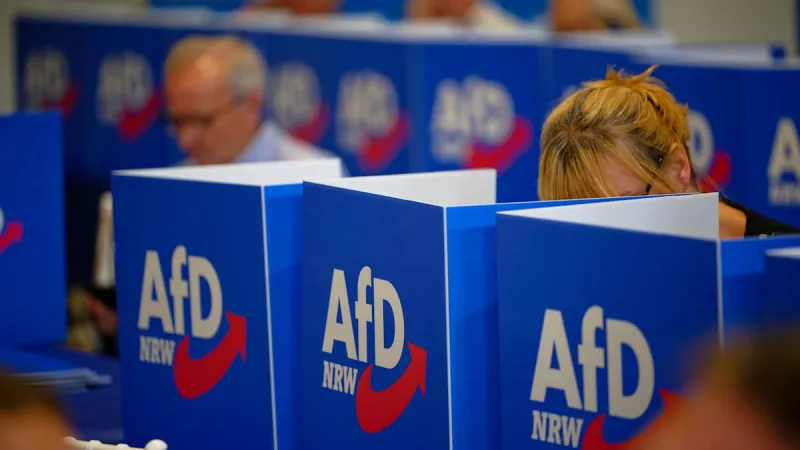
NORTH RHINE-WESTPHALIA, Germany – A recent state party congress of the Alternative for Germany (AfD) in North Rhine-Westphalia spiraled into profound disarray, marked by an unprecedented 100 candidates vying for a single list position. The event unequivocally exposed deep internal power struggles within the far-right party, drawing sharp condemnation from observers.
Lennart Hemme, Editor-in-Chief of Radio Emscher Lippe, offered a stark assessment, describing the extensive gathering as "a chaotic and embarrassing event." This characterization underscores the pervasive sense of disorder that overshadowed the party's critical regional assembly.
The sheer volume of contenders for just one list spot created a logistical nightmare and procedural quagmire for the party leadership. Delegates faced prolonged voting sessions and intricate internal debates, leading to palpable frustration and a stark demonstration of the party's organizational challenges.
This particular list position was understood to be of significant importance, likely a high-ranking slot on the state parliamentary or federal election roster, conferring substantial political leverage. The intense competition for such a role highlights the high stakes involved in the AfD's internal political maneuvering within Germany's most populous state.
The discernible power struggle manifested through lengthy nominations, contentious debates, and a lack of consensus that plagued much of the proceedings. It reflected not merely ambition but a deeper ideological and tactical schism within the North Rhine-Westphalia AfD chapter.
Analysts suggest this infighting signals a persistent tension between various factions within the AfD, ranging from national-conservative elements to more radical wings. Such internal discord has long been a characteristic of the party, hindering its ability to present a cohesive and disciplined front.
Hemme's analysis further detailed the potential ramifications for North Rhine-Westphalia, suggesting the congress would leave the party weakened and appearing disunited to the electorate. This public display of disarray could erode voter confidence and provide ammunition for political opponents.
For a party that often campaigns on themes of order and national strength, the spectacle of internal chaos risks undermining its core message. It presents a stark contrast to the disciplined image that the AfD often attempts to project.
The implications extend beyond immediate public perception, potentially impacting the AfD's electoral prospects in upcoming state or federal elections. Voters often seek stability and clear leadership, attributes that were conspicuously absent from this particular congress.
This recent episode in North Rhine-Westphalia is not an isolated incident but rather fits a broader pattern of internal friction that has plagued the AfD since its inception. While the party has achieved significant electoral successes, its journey has consistently been punctuated by leadership challenges and factional disputes.
Such internal disunity poses considerable challenges for the party's national leadership, already grappling with efforts to maintain discipline and present a unified front. The struggle within North Rhine-Westphalia could make it harder for the AfD to capitalize on broader national discontent.
Furthermore, the chaotic proceedings could embolden political adversaries who are actively seeking to curb the AfD's expansion. Assertions have been made that German Centrists Will Halt AfD Eastern Rise, and internal strife only aids such efforts.
Ultimately, the AfD's ability to overcome these persistent internal challenges will be crucial for its future trajectory in North Rhine-Westphalia and across Germany. The state party congress provided a sobering look into the internal turmoil that continues to define this influential political entity.