 Dodi Irawan
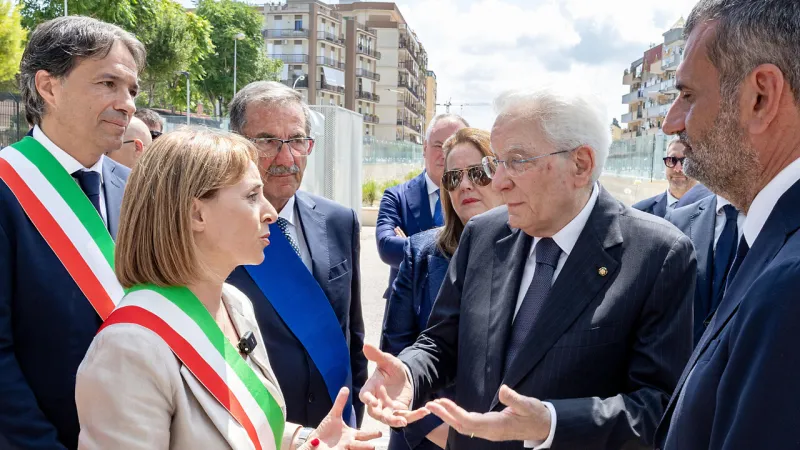
Andria, Puglia, Italy – Italian President Sergio Mattarella today led a solemn ceremony in Andria, Puglia, commemorating the tenth anniversary of the tragic head-on train collision that claimed 23 lives. The poignant event, attended by the families of the victims and survivors, underscored a decade-long quest for accountability, with local officials reiterating demands for justice in a disaster that profoundly impacted the region.
The ceremony, held this morning, was marked by a minute of profound silence, followed by 23 solemn bell tolls, each echoing the memory of a life lost on that fateful day in 2016. President Mattarella stood alongside those who continue to bear the immense grief and indelible scars of the catastrophe, offering a national symbol of remembrance and solidarity.
Giovanna Bruno, the mayor of Andria, delivered a powerful address during the commemoration, asserting that "there are precise responsibilities" for the deadly incident. Her words resonated deeply within the community, reflecting an enduring frustration over the pace of legal proceedings and the perceived lack of definitive closure for the families affected.
The train crash, which occurred on July 12, 2016, involved two passenger trains operating on a single-track line between Corato and Andria. The collision, one of Italy's deadliest rail accidents in recent history, highlighted critical infrastructure deficiencies and regulatory shortcomings within the regional rail network.
Initial investigations pointed to a failure in the manual signaling system, which was still in use on that particular stretch of track, rather than modern automated systems. This archaic operational method, combined with human error, was widely cited as the primary cause of the catastrophic impact.
Over the past ten years, legal battles have unfolded, attempting to assign blame and secure redress for the victims. While some individuals have faced charges, the broader institutional accountability, particularly concerning the modernization of rail infrastructure, remains a contentious issue for many in Puglia.
President Mattarella's presence at the decennial anniversary ceremony served as a powerful reminder of the national significance of the tragedy and the Italian state's commitment, however delayed, to remember and support its citizens in moments of profound loss. His participation, as widely reported, further underscored the gravity of the occasion. For more context on previous commemorations, refer to Mattarella Commemorates Decade Since Devastating Puglia Train Disaster.
The survivors of the crash carry not only physical injuries but also deep psychological trauma. Many have become advocates for improved rail safety, ensuring that the lessons learned from the Puglia train disaster are not forgotten and that such an event never recurs on Italian tracks.
For the families of the 23 victims, the passage of a decade has not dulled the pain of their loss, nor has it diminished their resolve to see full justice served. The mayor's unequivocal statement regarding "precise responsibilities" injects renewed urgency into their ongoing quest.
The incident prompted a national debate about the disparities in infrastructure development across Italy, particularly between the more advanced northern regions and parts of the south. Investments in upgrading regional rail lines, especially in areas using older signaling technologies, became a critical point of discussion for subsequent governments.
This solemn occasion in Andria stands as a testament to the community's resilience and its unwavering demand for accountability. It is a stark reminder that behind every statistic of tragedy are human lives and families grappling with irreversible loss, seeking resolution and acknowledgement from the state.
The broader context of rail safety continues to be a focus for transport authorities across Italy, with ongoing efforts to modernize infrastructure and implement advanced safety protocols. However, for the people of Puglia, the shadow of the 2016 disaster persists, fueled by the conviction that preventative measures could have averted the calamity.
As the echoes of the 23 bell tolls faded, the message from Andria was clear: remembrance is inseparable from the pursuit of justice. The anniversary is not merely a moment to look back but a renewed call to ensure that responsibility is definitively acknowledged and that such a devastating oversight is never repeated.