 Debby Wijaya
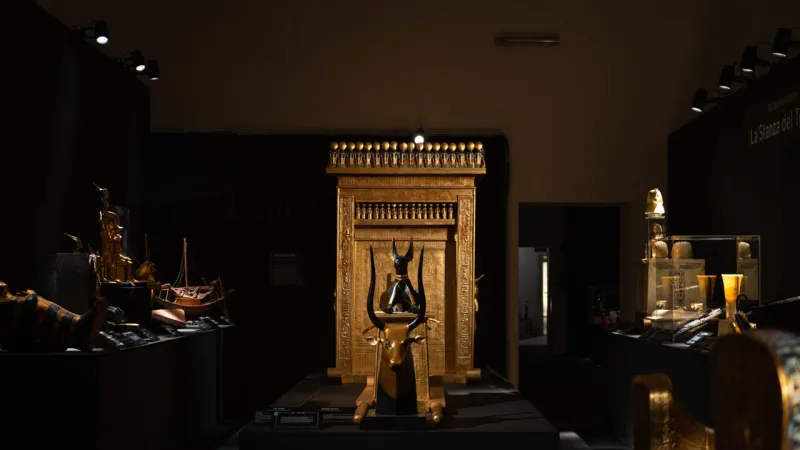
BOLOGNA – An extraordinary exhibition celebrating the legacy of Tutankhamun and the intricate rituals of Ancient Egypt has opened its doors at Palazzo Belloni, inviting the public on an immersive journey through millennia of history. The compelling display, running until May 2, 2026, offers a unique opportunity to delve into the beliefs and daily practices that defined one of humanitys most enduring civilizations.
This meticulously curated presentation goes beyond mere display, crafting an interactive experience designed to transport visitors directly into the heart of ancient Egyptian life. It seeks to illuminate the profound spiritual connection that permeated every aspect of existence, from daily routines to elaborate funerary rites.
The centerpiece of the exhibition revolves around the iconic figure of Tutankhamun, the boy pharaoh whose tomb, discovered by Howard Carter in 1922, remains unparalleled in its pristine condition and the wealth of artifacts it contained. While authentic artifacts are rare outside primary Egyptian collections, the Bologna exhibition employs high-fidelity replicas and advanced multimedia to evoke the grandeur and mystery of the original treasures.
Visitors navigate a thoughtfully designed pathway that unravels the narrative of ancient Egyptian cosmology, focusing heavily on the pivotal role of death and the afterlife. The journey underscores the elaborate preparations undertaken by pharaohs and commoners alike to ensure a successful transition to the eternal realm, guided by powerful deities and complex ceremonial protocols.
Sections are dedicated to explaining the mummification process, the significance of amulets and sarcophagi, and the intricate symbolism embedded within hieroglyphic texts. These elements collectively paint a vivid picture of a society deeply preoccupied with immortality and the cosmic order.
The cultural impact of such an exhibition on Bologna is substantial, drawing both local residents and international tourists to experience a civilization often only glimpsed in textbooks. It reinforces the citys reputation as a vibrant hub for historical and artistic exploration.
Curators have emphasized accessibility, ensuring that the presentation engages a wide audience, from seasoned Egyptology enthusiasts to young students encountering this ancient world for the first time. Educational panels and audio guides supplement the visual spectacle, providing context and deeper insights.
The exhibition also touches upon the broader historical context of the New Kingdom, the period during which Tutankhamun reigned, highlighting the political, religious, and artistic currents that shaped his short but historically significant rule. It places his story within the grand tapestry of Egyptian dynastic history.
Ultimately, the aim is to foster a greater appreciation for universal human questions about life, death, and legacy, as viewed through the lens of ancient Egyptian thought. The meticulous reconstruction of environments and ceremonial objects allows for an empathetic connection to past civilizations.
The display at Palazzo Belloni stands as a testament to the enduring fascination with Ancient Egypt and the timeless allure of its pharaohs, offering a meticulously crafted portal to a world both ancient and eternally relevant. It provides a profound cultural experience that resonates long after visitors depart.