 Robert Andrison
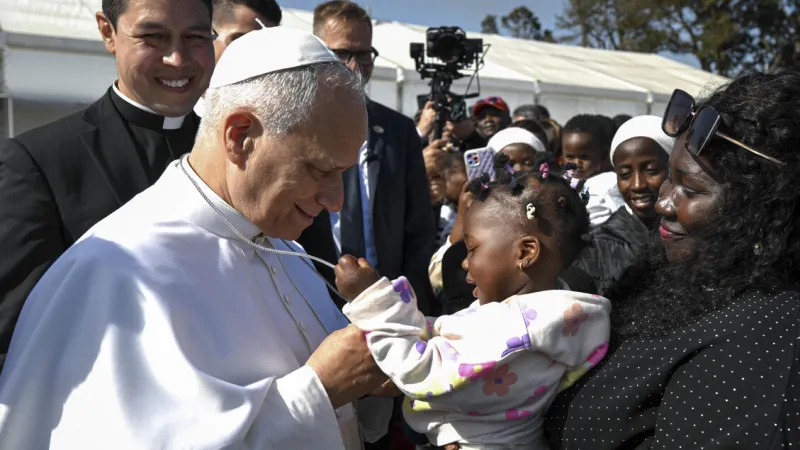
During his final stop in Spain, Pope Leo XIV visited a migrant center in Tenerife, delivering a fervent appeal against human trafficking and championing the inherent dignity and contributions of migrants. The Pontiff offered solace and affirmation to those seeking refuge, emphasizing their crucial role in shaping future generations.
Addressing human traffickers directly, Pope Leo XIV issued a stark admonition: "Stop and convert!" This forceful declaration underscored the moral imperative for those profiting from human misery to abandon their illicit activities and embrace a path of justice and compassion.
Furthermore, the Pope reiterated his consistent message regarding the intrinsic value of those who migrate, stating, "Migrants have an important word to say about the future of generations." This statement positions migrants not merely as recipients of aid, but as active contributors to societal progress and cultural enrichment.
The choice of Tenerife, one of Spains Canary Islands, as the backdrop for this appeal is significant. The archipelago serves as a primary gateway for migrants, predominantly from West Africa, attempting dangerous sea crossings to reach European shores. The Popes visit aimed to draw global attention to the humanitarian challenges unfolding in the region.
Human trafficking remains a pervasive global scourge, exploiting vulnerable individuals for forced labor, sexual exploitation, and other forms of servitude. The Vatican has repeatedly called for concerted international efforts to combat this illicit trade, which preys on the desperate and disenfranchised.
Pope Leo XIVs unwavering advocacy for migrants and refugees has been a hallmark of his pontificate. He has consistently urged nations to adopt more humane and comprehensive migration policies, emphasizing the principles of welcome, protection, promotion, and integration.
At the migrant center, the Pope spent time embracing individuals, listening to their stories, and offering words of hope. His gestures of tenderness were widely seen as a tangible demonstration of solidarity, cutting through political rhetoric to highlight the human face of the migration crisis.
The situation in Europe concerning migration continues to be a complex and often contentious issue, with various nations grappling with the influx of arrivals and the subsequent challenges of integration. Efforts to manage borders and process asylum claims, such as the new asylum facility at Berlin Airport, reflect the ongoing debate and evolving policies across the continent.
The Pontiffs call for traffickers to "convert" extends beyond a mere change of behavior, implying a profound moral and spiritual transformation. It challenges the conscience of those who profit from the suffering of others, urging them to recognize the sanctity of human life.
By stressing the migrants significant voice in shaping future generations, Pope Leo XIV underscored a long-term vision. He suggested that the experiences, resilience, and unique perspectives of migrant communities are not only valuable in the present but essential for building a more inclusive and equitable future for all societies.
The global community, including international organizations and governments, faces increasing pressure to address the root causes of migration, such as conflict, poverty, and climate change, while also ensuring safe and legal pathways for those seeking refuge.
The Vatican, under Pope Leo XIV, has actively engaged in diplomatic efforts to foster dialogue and cooperation on migration issues, working with various stakeholders to find humanitarian solutions that uphold human dignity.
The Pontiffs visit to Tenerife and his impassioned plea serve as a potent reminder of the moral obligation to protect the vulnerable and to dismantle the systems that enable human exploitation. His words resonate as a call to action for individuals and institutions alike, urging a collective response to the profound challenges of human trafficking and the global movement of people.