 Robert Andrison
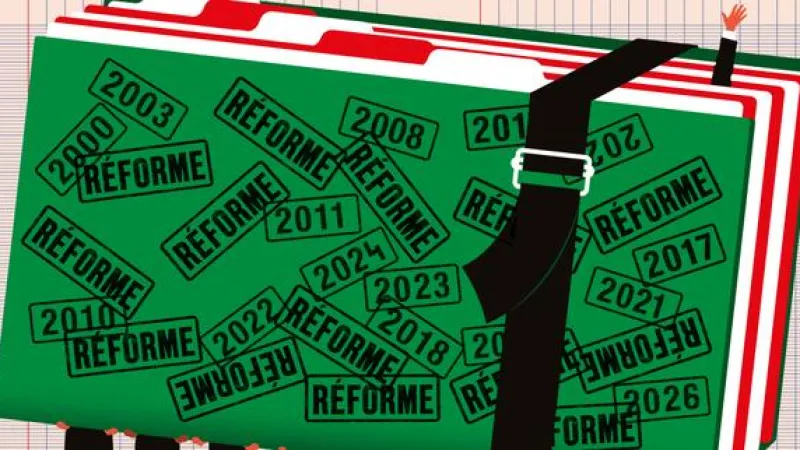
PARIS – France's education system has endured a quarter-century of relentless policy shifts, with its foundational Education Code undergoing continuous modifications since its inception in 2000, according to a recent analysis by French daily Le Monde. This persistent evolution underscores a systemic issue of piled-up reforms, leading to significant professional strain among educators nationwide.
The comprehensive study by Le Monde meticulously tracked every alteration to the corpus that structures the French school system. The findings reveal a landscape of perpetual revision, with neither the number nor the rhythm of these changes abating over time. This constant remanufacturing of core educational guidelines challenges the very stability the code was intended to provide.
Created in 2000, the Education Code aimed to consolidate disparate laws and regulations governing French schools, offering a coherent framework for teaching and administration. Yet, within its lifespan, it has become a living document in constant metamorphosis, reflecting successive governments' desires to imprint their vision on the nation's pedagogical direction.
Teachers, often at the forefront of implementing these directives, experience the ramifications of this instability firsthand. Daily lesson planning, curriculum development, and long-term pedagogical strategies are frequently disrupted by new mandates, adjustments to assessment methods, or shifts in educational priorities. This perpetual state of adaptation consumes valuable time and resources.
The report highlights that this ceaseless cycle of reform directly contributes to what many educators describe as professional suffering. The inability to fully assimilate one set of changes before another is introduced fosters a sense of insecurity, frustration, and often, burnout. It erodes morale and diverts focus from core educational objectives.
Political imperatives often drive this phenomenon. Each new administration, regardless of its ideological leaning, typically seeks to differentiate itself through educational policies, promising improvements and modernization. However, the cumulative effect of these well-intentioned, yet often short-lived, initiatives is an overburdened system.
The ongoing debate around these changes is evident in contemporary political discourse. For instance, discussions surrounding the continuity of education reform remain a critical point of scrutiny during French election cycles, as highlighted by news regarding Geffray Pledges Education Reform Continuity Amidst French Election Scrutiny.
Such frequent alterations also pose challenges to students and parents. Curriculum consistency becomes elusive, and the long-term impact of specific pedagogical approaches is difficult to assess when the parameters are constantly shifting. It can create an uneven educational experience across different cohorts of learners.
Experts suggest that the focus on quantity of reforms often overshadows the quality of their implementation and their long-term efficacy. A more measured approach, prioritizing thorough evaluation and stable application over rapid-fire changes, could potentially alleviate some of the systemic pressures.
Educator unions and professional bodies have repeatedly voiced concerns over this reform fatigue, advocating for greater consultation and a more strategic, less reactive approach to policy-making. They argue that meaningful progress requires sustained effort within a stable framework, rather than constant upheaval.
The analysis by Le Monde serves as a critical mirror to French policymakers, illustrating the unintended consequences of an overly dynamic legislative environment. It prompts a re-evaluation of how educational policy is conceived, introduced, and sustained over time, especially when the well-being of a nation's educators and the consistency of its children's learning are at stake.
Ultimately, the challenge for France's education system is to reconcile the imperative for adaptation and improvement with the fundamental need for stability and continuity. Without a concerted effort to mitigate the relentless pace of change, the professional suffering of teachers and the potential disruption to student learning may persist as enduring features of the French educational landscape.