 Robert Andrison
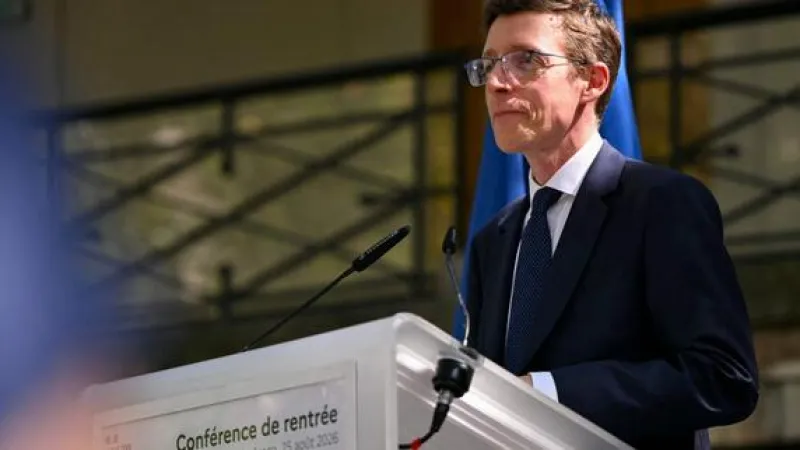
Paris, France – France's Education Minister Edouard Geffray reaffirmed his commitment to completing ongoing educational reforms this past Tuesday, August 25, during his annual back-to-school conference. He addressed mounting anxieties among educational staff and countered a surge of ambitious, often conflicting, proposals from candidates vying for the upcoming presidential election, a political climate that significantly constrains ministerial initiatives.
The minister's remarks came as teaching professionals across the nation experience a period of profound uncertainty, balancing expectations for improvements with significant trepidation regarding the future of public schooling. His conference served as a platform to project stability and resolve.
With presidential elections on the horizon, the political landscape has become increasingly charged. Numerous candidates are actively leveraging education as a key campaign issue, proposing a spectrum of policies ranging from significant budgetary increases to structural overhauls. This heightened political activity frequently leads to a flurry of new promises, often creating operational challenges for the incumbent administration.
This electoral cycle inherently limits the sitting minister's ability to initiate major new policies or deviate significantly from established pathways. Geffray's strategy, therefore, centers on consolidating existing initiatives rather than launching new ones that could be perceived as electioneering or prove unsustainable post-election.
Educational unions have voiced their apprehensions, emphasizing the critical need for fiscal stability. Representatives from various syndicates expressed collective hope that the minister would be able to “preserve the budget of national education” from potential cuts or misallocations spurred by campaign promises. They underscored the importance of sustained funding for the effective implementation of reforms.
The reforms in question span several critical areas, including curriculum modernization, teacher training enhancements, and efforts to reduce class sizes in primary schools. These initiatives have been painstakingly developed over the past few years, involving extensive consultations with stakeholders and piloting programs in various regions.
Ensuring the continuity of these complex, multi-year projects demands steadfast political will, especially when political transitions loom. The temptation for incoming administrations to dismantle previous efforts in favor of their own agenda is a recurring challenge in French politics, making Geffray's pledge a significant statement of intent.
The dynamic in France mirrors similar political pressures observed in other European nations where elections often trigger intense public debate over vital public services. For instance, recent developments concerning SPD Leadership Under Fire: Critical Election Could Force Overhaul in Germany illustrate how electoral cycles can force established parties to re-evaluate their positions and commitments to key reforms.
Geffray articulated a clear stance: the focus remains on execution and tangible outcomes rather than grand announcements. He stressed that foundational changes require time and consistent application, irrespective of the political calendar. This approach aims to insulate the ongoing transformation of the education system from short-term electoral considerations.
The underlying objective of these education reforms is to bolster student achievement, reduce educational inequalities, and better prepare students for the demands of the modern workforce. Stakeholders widely acknowledge that these are long-term goals that transcend any single electoral mandate.
The call to preserve the national education budget is particularly resonant given the broader economic climate. Adequate funding is paramount for retaining qualified teaching staff, maintaining school infrastructure, and investing in new pedagogical tools. A stable budget ensures that reforms can progress without succumbing to fiscal austerity measures.
The general public, including parents and students, watches these developments closely. There is a palpable desire for stability and effective governance within the education sector, which serves as a cornerstone of national development and social mobility. Geffray's assurances aim to placate these concerns.
In his concluding remarks, Minister Geffray reiterated that his immediate priority is to ensure a smooth and productive academic year while safeguarding the integrity of the reform agenda. His office remains committed to transparent communication with all educational partners as the nation approaches a pivotal electoral period.