 Angel Doris
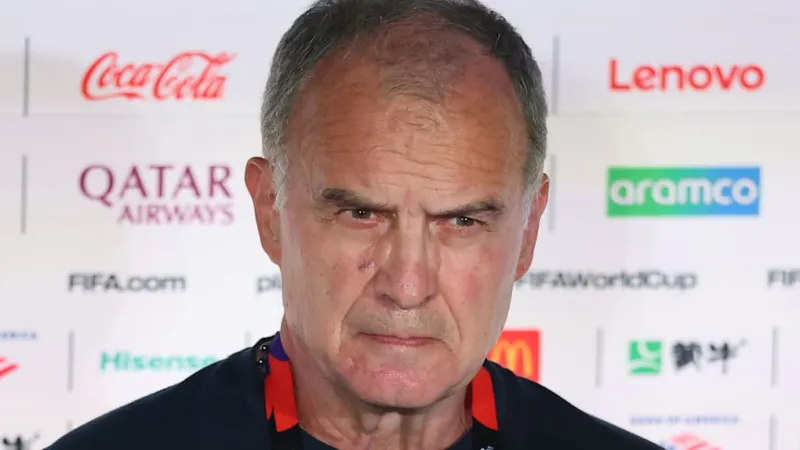
Deep-seated discord has engulfed the Uruguayan national football team, pitting players against Head Coach Marcelo Bielsa just days before a crucial match against Spain. The internal crisis reportedly stems from player grievances regarding Bielsa's rigorous training regimens and tactical philosophy, compounded by the coach's counter-criticism of his leading squad members.
The friction has reached a breaking point, characterized by some observers as an act of player rebellion, threatening to derail Uruguay's preparations and performance in the high-stakes encounter. Reports indicate that the differences between the coaching staff and prominent squad members have become irreconcilable.
Sources close to the team suggest players express growing dissatisfaction with Bielsa's demanding, often unconventional, training methods, which they believe are leading to fatigue and an inability to adapt effectively to different opponents. These concerns highlight a clash between modern player welfare demands and a coach renowned for his uncompromising intensity.
Conversely, Head Coach Marcelo Bielsa, known universally as El Loco, has reportedly not shied away from publicly questioning the commitment and tactical understanding of some of his most experienced players. His direct approach, while often celebrated, appears to have alienated key figures within the locker room, leading to a palpable sense of tension.
The upcoming fixture against Spain carries immense significance for Uruguay's standing in international football. A strong performance is vital for morale and competitive trajectory, making the timing of this internal strife particularly damaging and a source of considerable worry for fans and the national federation.
Bielsa's tenure with the Uruguayan national team, while initially met with optimism, has been marked by his characteristic pursuit of perfection, often at the expense of player comfort. His tactical systems require absolute adherence and relentless physical exertion, a philosophy that has previously led to similar challenges in other teams he has managed.
The current situation echoes past instances of high-profile coaching disputes within national teams, where a perceived disconnect between coach and players can lead to disastrous on-field results. The question now becomes whether this deep division can be bridged before it irrevocably damages the team's prospects.
Experts in football psychology note that such public disagreements can erode trust and foster an environment of resentment, making tactical execution challenging and collective spirit almost impossible to maintain. The mental fortitude of the squad will face its ultimate test in the coming days.
The potential for a complete breakdown of team cohesion looms large, prompting urgent calls for mediation or decisive action from the Uruguayan Football Association. The integrity of the national team's campaign rests on a swift resolution, or at least a temporary truce, to navigate the immediate competitive challenges.
Indeed, the scrutiny faced by Bielsa mirrors similar situations in international football, such as the tactical questions surrounding Coach Nagelsmann's decisions after Germany's loss to Ecuador, as reported by Global Cognito Daily in an article titled Nagelsmann's World Cup Tactics Face Scrutiny After Ecuador Loss. This demonstrates the constant pressure and internal dynamics at play in top-tier football.
For the Uruguayan national football team, this crisis represents more than just a disagreement over tactics; it signifies a pivotal moment that could define their competitive future. The focus now shifts from preparation to damage control, with the nation holding its breath as the decisive match against Spain approaches.
This unfolding drama highlights the delicate balance required in managing a national football team, where the authority of the coach must coexist with the collective will and confidence of the players. The outcome against Spain will undoubtedly serve as a crucial barometer of the crisis impact and the path forward for Uruguayan football.