 Angel Doris
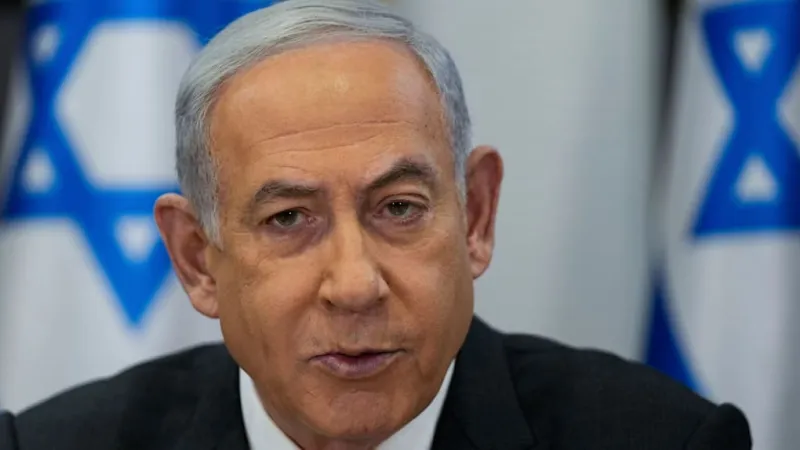
A landmark framework agreement designed to establish a pathway towards enduring peace between Israel and Lebanon has been formally endorsed, following extensive diplomatic efforts spearheaded by President Donald Trump's administration. The accord, signed by representatives from both Middle Eastern nations and the United States, signals a significant diplomatic achievement in a historically volatile region, drawing praise from Israeli Prime Minister Benjamin Netanyahu, who characterized it as a defeat for Iran.
This diplomatic breakthrough represents a concerted effort to resolve long-standing border disputes and foster stability between the two nations, which have technically remained in a state of war for decades. The framework sets the stage for future negotiations on specific demarcation lines, particularly concerning their maritime boundaries, which are crucial for energy exploration rights.
Prime Minister Netanyahu's immediate reaction highlighted the broader geopolitical implications of the agreement. He framed the understanding as a direct blow to Iran's regional influence, suggesting that any move toward normalization or stability between Israel and an Arab nation diminishes Tehran's narrative of continuous confrontation.
The United States has long played a pivotal role in mediating disputes in the Middle East, and President Donald Trump's administration intensified its focus on securing such agreements. This particular accord builds upon persistent diplomatic initiatives to de-escalate tensions and promote regional cooperation, echoing previous efforts to solidify peace. The successful mediation underscores Washington's commitment to facilitating stability in the volatile Levant. The U.S. has notably been involved in similar diplomatic endeavors, successfully securing a landmark Israel-Lebanon maritime border deal in the past, a precursor to today's broader framework.
A framework agreement typically outlines the principles and procedures for future detailed negotiations rather than resolving all issues immediately. This structured approach allows both parties to engage in discussions under a mutually agreed-upon umbrella, providing a roadmap for addressing complex territorial and economic considerations without the pressure of an immediate, comprehensive solution.
Relations between Israel and Lebanon have been marked by decades of conflict, including multiple wars and skirmishes, particularly along their shared land and sea borders. The absence of a formal peace treaty and the lingering disputes over sovereignty in various areas have contributed to persistent instability, affecting both national security and economic development.
The potential economic benefits for both nations, especially concerning offshore gas reserves in the Mediterranean, serve as a significant motivator for reaching a lasting accord. Clarifying maritime boundaries is crucial for Lebanon to exploit its potential energy resources, which could provide a much-needed boost to its struggling economy.
From Israel's perspective, enhanced stability on its northern border could lead to improved security conditions and potentially reduce the threat posed by militant groups operating within Lebanese territory. A more predictable and formalized relationship, even if not full peace, offers strategic advantages.
While Netanyahu lauded the agreement, broader regional reactions remain to be fully observed. The political landscapes in both Israel and Lebanon are complex, with various factions holding differing views on engagement and reconciliation. Overcoming internal skepticism and external pressures will be crucial for the framework's successful implementation.
The agreement mandates further, detailed negotiations between technical teams from both countries, supervised by the United States. These discussions will delve into the specifics of border demarcation, resource sharing, and security arrangements, aiming to translate the framework's principles into tangible, enforceable protocols.
Officials within President Trump's administration have emphasized the commitment to fostering peace and stability throughout the Middle East, viewing this framework as another step toward a more secure and prosperous region. The administration's diplomatic outreach to both allies and former adversaries has been a hallmark of its foreign policy agenda.
The signing of this framework agreement stands as a testament to persistent diplomatic efforts and a mutual desire, however cautious, to de-escalate tensions. While the path to a comprehensive and lasting peace remains arduous, this accord offers a structured mechanism to pursue that objective.