 Dorry Archiles
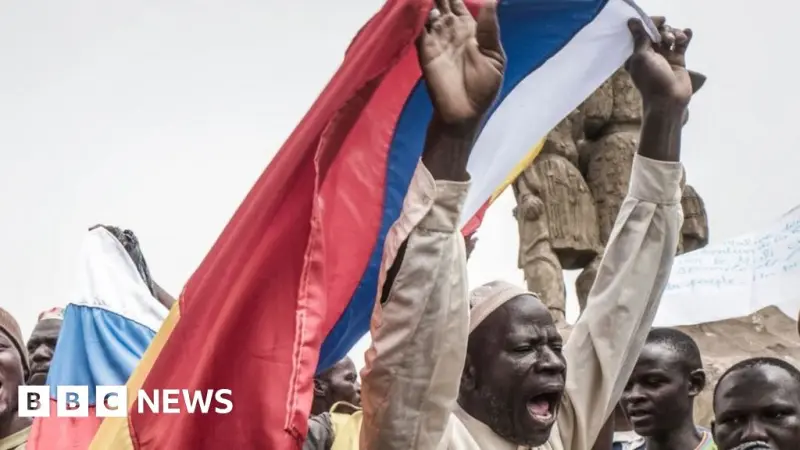
KIDAL, MALI — Mali's military and its Russian mercenary allies abruptly completed their withdrawal from the strategic northern city of Kidal this week, following sustained and coordinated assaults by an alliance of Tuareg separatist groups. The retreat marks a significant strategic defeat for the interim government in Bamako and a critical turning point in the country's protracted conflict.
The coordinated offensive, spearheaded by the Permanent Strategic Framework for Peace, Security, and Development (CSP-PSD), began days earlier, targeting multiple Malian army positions and logistical routes leading into the city. Observers noted the sophisticated nature of the rebel operations, which included both direct engagements and effective supply line disruptions.
Sources on the ground, speaking anonymously due to security concerns, reported intense fighting around the military base and the airport, critical infrastructure points for sustaining a presence in the remote northern region. The sheer scale and determination of the rebel attacks overwhelmed the joint forces.
The departure of Mali troops and Russian mercenaries from Kidal represents a major blow to Bamako's stated objective of reasserting full state control over its northern territories. Kidal has long been a bastion of Tuareg rebellion and a symbol of their aspirations for greater autonomy.
The Russian Wagner Group mercenaries, who have been increasingly integral to Mali's security operations since their arrival in late 2021, were reportedly part of the withdrawing contingent. Their involvement has drawn international criticism and raised concerns about human rights abuses.
This latest development follows a period of escalating tensions and renewed hostilities in northern Mali, particularly since the departure of United Nations peacekeeping forces (MINUSMA) earlier this year. The vacuum created by MINUSMA's exit has been quickly filled by competing armed groups.
The CSP-PSD, a coalition of armed groups predominantly composed of former rebels who signed the 2015 Algiers peace agreement, cited a breakdown in that accord and continued government aggressions as reasons for their renewed offensive. They accuse Bamako of failing to uphold its commitments.
The Malian interim government, led by Colonel Assimi Goïta, has yet to issue a comprehensive statement on the Kidal withdrawal, though state media has acknowledged a strategic redeployment. Critics argue the government underestimated the resilience and tactical capabilities of the separatist forces.
International analysts suggest the fall of Kidal could embolden other armed groups in the Sahel region and further destabilize an already fragile geopolitical landscape. The implications for regional security and counter-terrorism efforts are profound.
For the civilian population of Kidal, the shift in control brings both uncertainty and a familiar sense of apprehension. Residents have endured years of conflict, humanitarian crises, and shifting allegiances among various armed factions.
The situation also raises questions about the long-term viability of the Malian government's security strategy, which has heavily relied on Russian military assistance following the breakdown of security cooperation with France.
As the CSP-PSD consolidates its control over Kidal, the world watches for Bamako's next move. The city's fall underscores the complex and deeply entrenched challenges facing Mali in its quest for stability and territorial integrity.