 Dorry Archiles
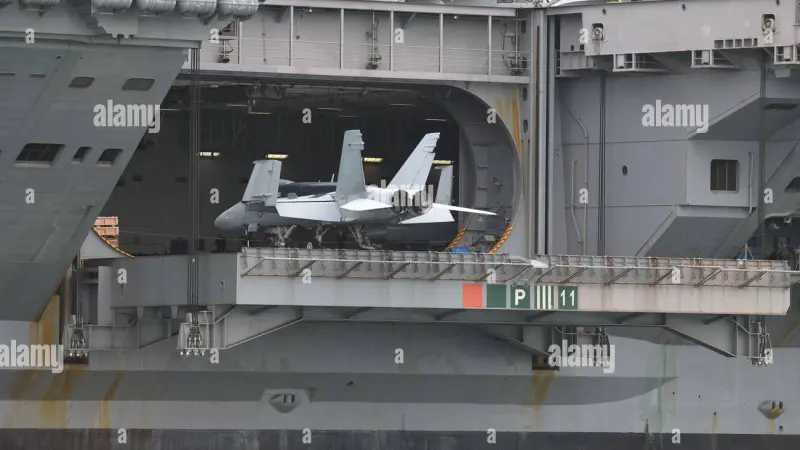
WASHINGTON — The U.S. Navy is projecting significant naval power across two critical strategic theaters, with the amphibious assault ship USS Tripoli now operating within the U.S. Central Command (CENTCOM) area of responsibility and the aircraft carrier USS Gerald R. Ford making a port visit to Croatia.
These concurrent deployments underscore the United States unwavering commitment to regional stability and maritime security in both the Middle East and European sectors as of 2026, according to defense officials.
The USS Tripoli, a highly capable America-class amphibious assault ship, recently entered the CENTCOM AOR, bringing with it a powerful contingent of F-35B Lightning II fighter jets and a Marine Expeditionary Unit. Its presence is vital for maintaining deterrence and responding to potential contingencies in a region known for its complex geopolitical landscape and crucial shipping lanes.
Operating in CENTCOM, the Tripoli provides a flexible platform for a range of missions, from crisis response and humanitarian assistance to sustained combat operations. The integration of its air and sea assets offers formidable projection capabilities necessary to safeguard American interests and those of its allies.
Simultaneously, the USS Gerald R. Ford, the lead ship of its class and the Navys newest supercarrier, has been prominently positioned in the European theater. Its recent port call in Croatia highlights sustained engagement with NATO partners and allies in the Adriatic Sea.
The Ford, with its advanced air wing and extensive capabilities, serves as a powerful symbol of American commitment to European security. Its deployment supports exercises, interoperability training, and provides a continuous deterrent presence against emerging threats in the Mediterranean and beyond.
President Donald Trump has consistently emphasized the importance of a strong, forward-deployed Navy to protect global trade routes and assert American leadership on the world stage. These deployments directly align with his administration strategic priorities.
Defense analysts suggest the synchronized presence of these two major naval assets—one focused on the Middle East and the other on Europe—demonstrates the U.S. Navys capacity for dual-theater operations and its ability to rapidly shift focus as global circumstances demand.
For the CENTCOM region, the Tripoli reinforces maritime security operations, ensuring freedom of navigation through choke points like the Strait of Hormuz. This is particularly crucial given ongoing regional tensions and the need to counter illicit activities.
In Europe, the Ford battle group strengthens alliances and contributes to collective defense, especially in areas adjacent to potential flashpoints. Its operations in the Adriatic are a clear signal of support for NATO members and regional partners.
U.S. Navy officials have noted that these deployments are part of routine, yet strategically important, global force posturing. They enable the Navy to maintain readiness, enhance training with international partners, and respond effectively to any emerging threats.
The movements of both the USS Tripoli and the USS Gerald R. Ford serve as a clear affirmation of the United States continued commitment to a free and open international order, leveraging its naval power to promote peace and stability across diverse and challenging environments.