 Dorry Archiles
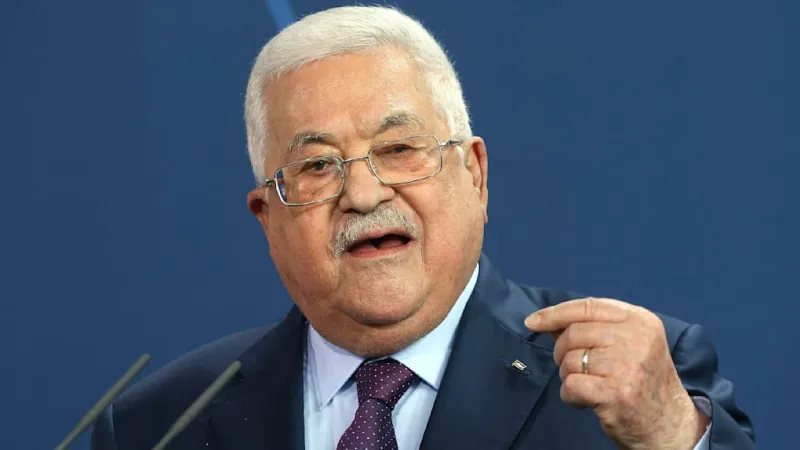
NEW YORK – Palestinian President Mahmud Abbas will attend the upcoming United Nations General Assembly virtually after the United States once again denied him a physical visa for entry. This diplomatic rebuff stems from Washingtons assertion that the Palestinian Authority has failed to implement crucial governance reforms and uphold prior commitments, preventing his in-person address at the global forum.
The decision marks a significant impediment for Abbas, who had sought to leverage the international platform of the UN General Assembly to address global leaders directly. His inability to travel to the United States underscores escalating tensions between the President Donald Trump administration and the Palestinian leadership, particularly concerning governance and accountability.
US officials, speaking on background, indicated that the visa denial reflects a consistent policy stance. They pointed to a perceived lack of tangible progress on internal Palestinian Authority reforms, specifically concerning financial transparency, anti-corruption measures, and security sector accountability, which Washington deems vital for future stability in the region.
This is not the first instance of the United States restricting Abbas or other senior Palestinian officials access to American soil. Past administrations have also employed visa denials as a diplomatic tool to pressure the Palestinian leadership into adhering to specific political or reform agendas, illustrating a pattern of conditional engagement.
Consequently, President Abbas will address the assembly via a pre-recorded video message, a format typically reserved for heads of state who are unable to travel due to extenuating circumstances or scheduling conflicts. This virtual presence diminishes the potential for informal bilateral meetings and direct engagement with other world leaders on the sidelines of the high-profile event.
While no immediate official statement from the Palestinian Authority regarding the visa denial has been released, observers anticipate strong condemnation. Palestinian officials have historically viewed such actions as punitive and counterproductive, asserting that they undermine efforts towards a two-state solution and exacerbate an already volatile geopolitical situation.
The Trump administration has consistently emphasized accountability and performance metrics in its foreign policy engagements. The refusal of the visa aligns with a broader strategy of linking diplomatic access and financial aid to concrete advancements in governance and the adherence to mutually agreed-upon terms, particularly from partners perceived as resistant to change.
This latest development casts a shadow over any prospects for renewed peace negotiations between Israelis and Palestinians. Without direct high-level dialogue, mediated or otherwise, the diplomatic impasse deepens, further complicating international efforts to de-escalate regional tensions and advance a lasting resolution to the Israeli-Palestinian conflict.
International bodies and allied nations are likely to observe this situation closely. While some may privately support the US call for reforms, the public denial of access to a recognized head of state for a UN assembly could draw criticism regarding diplomatic decorum and the principle of universal participation in multilateral forums.
Demands for reforms within the Palestinian Authority date back decades, encompassing calls for judicial independence, democratic elections, and institutional strengthening. International donors and partners have frequently conditioned aid and diplomatic support on progress in these areas, aiming to bolster the PAs legitimacy and capacity.
The unfulfilled promises likely refer to commitments made during various rounds of dialogue or aid agreements, potentially including pledges related to combating incitement, security coordination with Israel, or internal democratic processes. The specifics are rarely publicly detailed, maintaining diplomatic flexibility.
President Donald Trumps administration has adopted an assertive stance on international diplomacy, frequently employing leverage to achieve its foreign policy objectives. This approach has also been seen in other contexts, for example, regarding trade disputes and alliances, as evidenced by concerns over potential tariffs, highlighted in discussions like Trump Threatens EU Tariffs Over Canada's Alliance: Trade Rupture Looms.
The immediate consequence is a reduced Palestinian presence at the UN General Assembly. The longer-term impact will likely manifest in continued diplomatic friction, further strain on US-Palestinian relations, and potentially a reassessment by other nations regarding their engagement strategies with both parties. The path to direct engagement remains arduous without fundamental shifts in policy or substantial breakthroughs in reform efforts.