Angel Doris
In Vienna, Austria, an enduring urban mystery involving hundreds of enigmatic "electricity box heads" has captivated residents for years, prompting a dedicated art detective to meticulously trace the elusive street artist responsible. This comprehensive investigation has not only charted a detailed movement profile for the anonymous creator but also revealed significant geographical traces extending beyond Austrian borders into Croatia, reigniting a citywide discourse on the boundaries between provocative public art and unauthorized urban intervention.
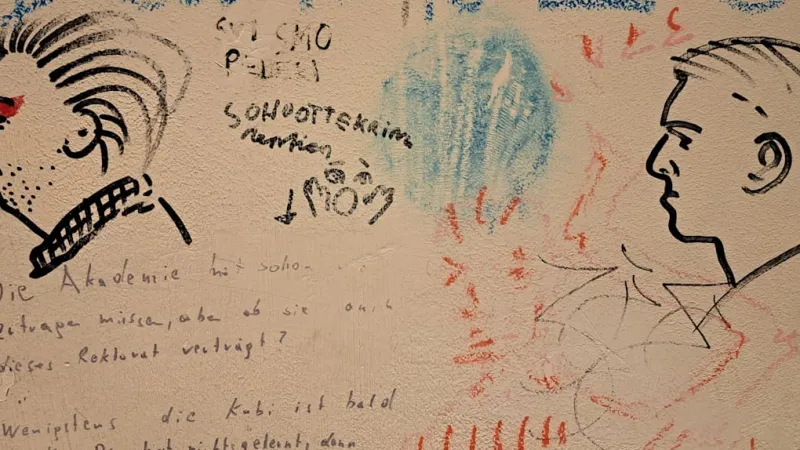
For well over a decade, these distinctive, often melancholic, masculine faces have materialized on the grey facades of utility boxes throughout the Austrian capital. Each "Stromkastenköpfe," as they are colloquially known, adds a peculiar human element to mundane street furniture, transforming ordinary electrical infrastructure into unexpected points of artistic contemplation.
The widespread appearance of these sculpted heads, crafted from unknown materials, has fostered a cult following and considerable public intrigue. Admirers laud the artist's ability to inject character and surprise into the urban landscape, suggesting a profound commentary on modernity and anonymity.
However, local authorities and some property owners have occasionally viewed the installations as unauthorized defacement, raising questions about legal repercussions. The debate echoes similar discussions surrounding prominent street artists globally, such as Banksy, where the legality of public art often intertwines with its cultural impact.
Enter the art detective, a specialist in tracking illicit or anonymous artistic activities. Employing a blend of forensic art analysis, geospatial mapping, and archival research, the detective has painstakingly pieced together the artist's operational patterns. This endeavor aimed to demystify the creator without necessarily unmasking their identity publicly, focusing instead on understanding their methodology.
The detective's groundbreaking research indicates a sophisticated, sustained effort rather than sporadic, impulsive acts. The placement of the heads often correlates with specific urban planning features or historical landmarks, suggesting a deliberate engagement with Vienna's rich architectural tapestry.
One of the most significant breakthroughs involved identifying the geographical range of the artist's operations. While centered in Vienna, the unique stylistic signatures and material compositions of some "electricity box heads" have been observed in several Croatian locations, suggesting cross-border artistic endeavors or even a seasonal migratory pattern.
This discovery adds a new layer of complexity to the narrative, hinting at a potential connection between Central European street art movements. It raises intriguing possibilities about the artist's background, influences, and the international scope of their creative ambition.
Experts in urban sociology suggest that phenomena like the "electricity box heads" serve as vital social barometers. They reflect a desire for individual expression within regulated urban environments and challenge conventional notions of public space ownership and aesthetic control.
The ongoing investigation has yet to reveal the artist's true identity, maintaining the aura of mystery that has defined the project since its inception. Yet, the comprehensive movement profile provides unprecedented insight into the scale and dedication behind this particular brand of Viennese street art.
The city's cultural commentators observe that the prolonged enigma surrounding the artist has, paradoxically, elevated the "Stromkastenköpfe" from mere street adornments to bona fide cultural landmarks. They have become an integral, if unofficial, part of Vienna's contemporary artistic identity.
While the legal status of the artwork remains ambiguous, the public conversation it generates is unequivocally valuable. It forces a dialogue about what constitutes art, who decides its value, and how urban spaces evolve through both sanctioned and unsanctioned creative acts.
The narrative of the street artist and the art detective now intertwines, creating a compelling real-world thriller that plays out across the city's streets. It is a testament to the enduring power of anonymous art to provoke, inspire, and challenge.
The detective's findings are expected to be compiled into a report, offering art historians and urban planners a deeper understanding of this unique phenomenon. This research could also inform future policy discussions regarding public art initiatives and urban beautification projects.
For now, the faces continue their silent vigil over Vienna, each an enduring testament to an artist's vision and a detective's relentless pursuit of understanding. The debate about art versus vandalism persists, fueled by every newly discovered "electricity box head" and every clue unearthed.