 Stefani Rindus
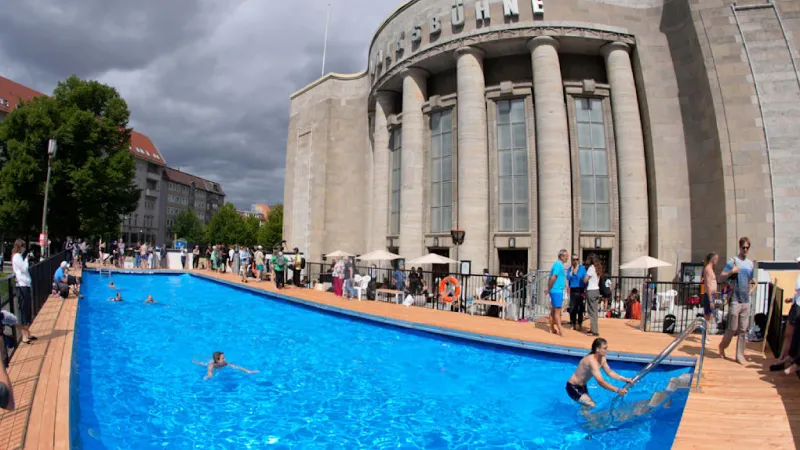
BERLIN — The Berliner Volksbuhne has canceled a planned cultural event at its Volksbad venue, initially advertised as exclusively for individuals of African descent, following an intense public backlash regarding its perceived discriminatory nature. The decision comes after widespread condemnation ignited a fierce debate about inclusion and segregation within the arts community.
The announcement from the acclaimed theater, a cornerstone of Berlin's vibrant cultural landscape, confirmed the abrupt termination of the event, which had garnered significant attention and criticism since its public disclosure. The controversy centered on the event's stated restriction, allowing entry solely to members of the black community.
Critics rapidly emerged from various sectors, including political figures, cultural commentators, and the general public, many of whom argued that while the intention might have been to create a safe and empowering space, the method itself constituted segregation and violated principles of equality and universal access to public cultural institutions. This public outcry pressured the Volksbuhne to reconsider its programming choices.
The Volksbuhne, known for its avant-garde productions and commitment to challenging norms, found itself in an unusual position, navigating accusations that its attempt at fostering a specific community space inadvertently mirrored exclusionary practices it would typically critique. The theater's leadership faced tough questions about the implications of such an event in a city that prides itself on diversity and open-mindedness.
The Volksbad, a historic public bathhouse repurposed as a cultural venue, was slated to host the contentious gathering. Its public nature amplified the debate, with many asserting that publicly funded venues should remain accessible to all, irrespective of race or background, and that cultural programming should foster unity rather than division.
This incident highlights a growing tension within contemporary cultural discourse, particularly in Europe, regarding identity politics, affirmative action, and the appropriate boundaries of creating targeted community spaces. Institutions grapple with balancing the desire to support marginalized groups with the imperative of upholding universal accessibility and avoiding reverse discrimination.
The cancellation represents a significant moment for the Berliner Volksbuhne, prompting an internal review of its programming policies and a deeper engagement with its mission statement. While some proponents of identity-specific events expressed disappointment, many others lauded the Volksbuhne's decision as a necessary step to uphold inclusive values.
Observers suggest that the episode will undoubtedly inform future cultural programming not only in Berlin but across Germany, encouraging a more nuanced approach to events intended for specific demographic groups. The need for dialogue and understanding regarding the complexities of fostering equity without inadvertently promoting new forms of exclusion remains paramount.
The debate extends beyond the immediate circumstances of the Volksbuhne, touching on broader societal discussions about racial justice, community building, and the role of cultural institutions in a diverse society. The incident underscores the delicate balance required when addressing historical injustices and ensuring equitable opportunities for all citizens.
The Volksbuhne's swift response to public feedback demonstrates the power of civic engagement and critical scrutiny in shaping cultural policy. As the institution moves forward, its challenge will be to devise programming that genuinely promotes inclusion and celebrates diverse voices without inadvertently fostering divisions or undermining principles of open access.