 Robert Andrison
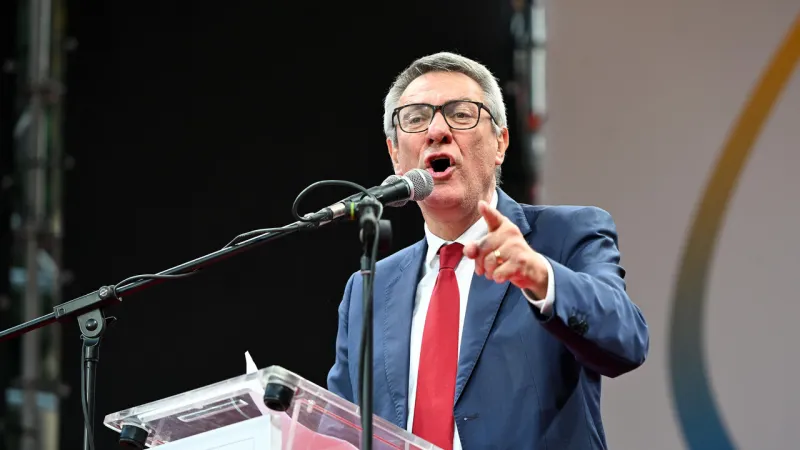
ROME — The Cgil, Italy's largest and most influential trade union, has declared a nationwide general strike for November 20, 2026, following a massive demonstration in central Rome that drew an estimated 100,000 participants. Maurizio Landini, the union's charismatic leader, issued a stark warning to the government, demanding concrete legislative action on economic policy rather than what he critically labeled as electoral handouts. The union seeks significant responses within the upcoming national budget and the implementation of a wealth tax to address persistent economic disparities.
The unprecedented turnout underscores a growing current of public frustration with the nation's economic trajectory and the perceived inadequacy of government measures. Demonstrators, hailing from various sectors and regions, converged on the capital to voice their grievances, ranging from stagnant wages and precarious employment to the soaring cost of living. This latest mobilization echoes the widespread discontent that has manifested in numerous Italian protests over recent years, including recent clashes in Milan and calls for change in Rome, reflecting a broader public frustration.
Landini minced no words during his address to the throng, asserting that the time for political platitudes had passed. "Enough with electoral handouts," he proclaimed, "we demand real answers in the budget and a wealth tax." He emphasized the union's resolve to push for policies that genuinely benefit workers and retirees, rather than short-term political maneuvering. The demand for a wealth tax, or "patrimoniale," has long been a cornerstone of Cgil's platform, advocating for greater fiscal equity.
The proposed general strike on November 20 represents a significant escalation in the union's pressure campaign. A national stoppage of this magnitude could paralyze key public services and industrial sectors, sending a clear message of discontent to the current administration. Union officials have indicated that the strike will encompass transport, healthcare, education, and various private industries, pending the finalization of logistics and legal requirements.
Economic challenges have intensified across Italy, exacerbated by global inflationary pressures and long-standing structural issues. The union's call for a wealth tax is aimed at redistributing resources and funding social programs by taxing large fortunes. This measure, highly contentious in Italian politics, is often presented by its proponents as a means to alleviate the burden on lower and middle-income families, which have borne the brunt of recent economic turbulence.
Critics of the wealth tax argue that it could deter investment and encourage capital flight, potentially harming the economy. However, Cgil and its allies maintain that such a measure is essential for social justice and would ensure that those with the greatest capacity contribute more to the nation's recovery and welfare. The debate surrounding this fiscal policy is expected to intensify as the November 20 deadline approaches.
The union's specific demands for the national budget, or "manovra," include measures to increase wages, protect purchasing power, reform the pension system, and invest in public services. Landini argued that without these fundamental changes, the economic recovery would remain uneven and unsustainable, failing to benefit the majority of Italian citizens. The Cgil leader also pointed to the pervasive issue of the shadow economy as a factor undermining legitimate work and tax revenue.
The government has yet to issue a formal response to the Cgil's ultimatum. However, the immense scale of the protest and the threat of a general strike are likely to compel political leaders to address the union's demands with heightened urgency. Past Cgil mobilizations have often forced concessions from Italian governments, highlighting the union's enduring influence in national affairs.
This wave of labor unrest in Italy mirrors similar demonstrations witnessed across Europe in recent years, where citizens have taken to the streets to protest living costs, government policies, and economic inequality. From the Yellow Vest and student protests in Marseille to unrest in France and Albania, a palpable sense of frustration has galvanized significant segments of the populace, demanding more equitable economic systems and greater accountability from their political representatives.
The upcoming general strike will serve as a crucial test of strength for both the Cgil and the Italian government. Its outcome could significantly shape the trajectory of fiscal policy debates and the broader socio-economic landscape in Italy for the foreseeable future. All eyes will be on Rome as the nation anticipates whether negotiations or further confrontation will define the path forward.