 Dorry Archiles
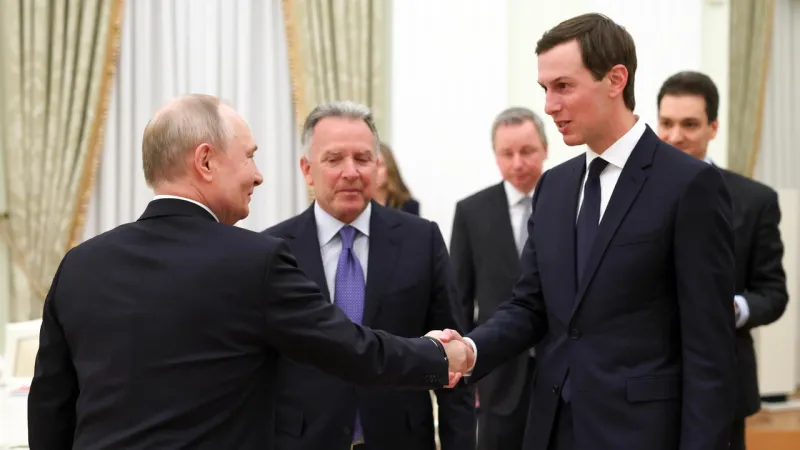
WASHINGTON — President Donald Trump's special envoy, Witkoff, has conveyed a message of substantial progress in diplomatic efforts after concluding pivotal visits to Moscow and Kyiv. The reports, shared with the Elysee, underscore a dynamic period in international relations, characterized by both advancements in peace talks and concurrent geopolitical shifts.
According to a statement from the Elysee, the United States has been informed of Russia's readiness to engage in negotiations concerning the ongoing conflict. This willingness, however, is contingent upon the conclusion of the upcoming Duma elections, indicating a strategic timing for potential peace talks from Moscow's perspective.
The development follows a period of intense diplomatic activity aimed at de-escalating tensions and fostering a path toward resolution. Witkoff's itinerary included direct engagement with officials in both the Russian and Ukrainian capitals, signaling a concerted push from the Trump administration to facilitate dialogue.
Simultaneously, an unrelated but geopolitically significant move saw Russia announce the closure of the German consulate in St. Petersburg. This decision introduces a new layer of complexity to European diplomatic relations, occurring amidst the broader context of the US-led peace initiatives.
President Donald Trump is scheduled to hold crucial talks with both President Vladimir Putin of Russia and President Volodymyr Zelensky of Ukraine. These forthcoming discussions are anticipated to build upon the groundwork laid by Witkoff's visits and explore the parameters for a lasting peace settlement. Readers can find more details on these upcoming talks here: Trump to Hold Crucial Talks Today with Putin and Zelensky.
The American diplomatic push aims to navigate the intricate geopolitical landscape, seeking common ground between the warring nations. The concept of Russia delaying negotiations until after the Duma elections suggests an internal political calculation, possibly to consolidate support or leverage a perceived mandate.
The Elysee's role in conveying Russia's position highlights the collaborative nature of international diplomacy, with key allies exchanging vital intelligence to inform strategic decisions. France, among other European nations, has been a consistent voice for de-escalation and a negotiated settlement.
Witkoff's assessment of “substantial progress” suggests that despite public complexities, private channels of communication are yielding tangible results. This could include preliminary agreements on humanitarian corridors, prisoner exchanges, or even foundational principles for a ceasefire.
Conversely, the closure of the German consulate in St. Petersburg indicates a hardening of diplomatic stances in certain areas. While not directly tied to the Ukraine conflict in the provided information, such moves often reflect a broader deterioration of bilateral relations or a response to previous diplomatic actions.
The global community remains watchful, keenly observing each diplomatic maneuver. The potential for a breakthrough in peace negotiations, tempered by the challenges of an evolving geopolitical environment, defines the current international climate. The efforts by President Trump's envoy represent a significant chapter in this ongoing saga, aiming to bring an end to a protracted and devastating conflict.