 Chandra Wijayanto
Kyiv
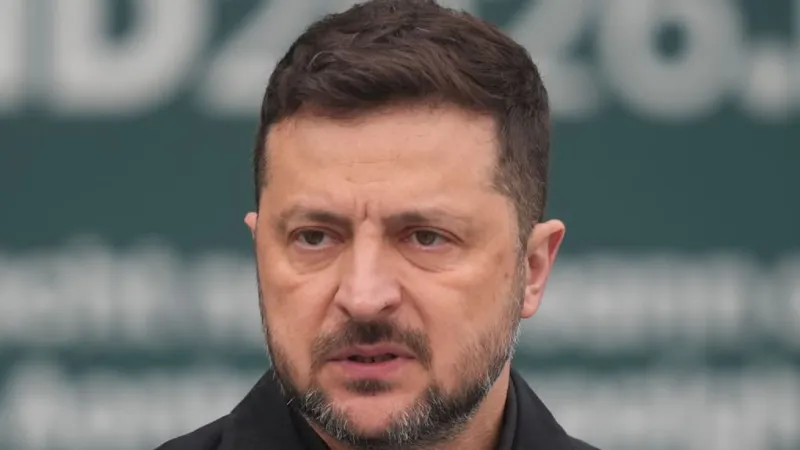
Ukrainian President Volodymyr Zelenskyy has sharply criticized the extensive economic opportunities still afforded to Russian oligarchs across Europe, asserting that some entities exist solely to serve Moscow's interests. Simultaneously, he issued a grave warning of an imminent new attack on Ukraine, potentially occurring within hours, signaling escalating tensions on the continent.
Zelenskyy's rebuke underscores a persistent frustration within Kyiv regarding the perceived leniency of certain European nations towards Russian financial influence. He highlighted that despite widespread sanctions, numerous Russian billionaires and their associated businesses continue to operate with considerable freedom, often leveraging complex corporate structures to circumvent restrictions.
The Ukrainian leader's remarks, conveyed through official channels, emphasize that the continued economic footprint of these figures inadvertently strengthens Russia's capacity to wage war. He reportedly stated that some companies have their sole purpose to work for Russia, directly contributing to the aggressor nations war machine.
This stern condemnation arrived alongside an urgent alert concerning a potential escalation of military activities. Zelenskyy specifically warned that Ukraine bracing for a renewed Russian offensive, which could commence in the night, indicating intelligence suggesting immediate danger. Such a prediction naturally places Ukrainian defense forces on heightened alert.
The dual message from Kyiv serves to pressure European partners on two fronts: to tighten financial controls against Russian assets and to bolster defensive aid to Ukraine in anticipation of further assaults. The Ukrainian government has long advocated for more stringent enforcement of sanctions and the complete divestment of Russian capital from Western economies.
Analysts suggest that the President's public critique aims to shine a spotlight on the intricacies of European economic ties to Russia, which can be difficult to untangle due to historical investments and various jurisdictional nuances. The challenge remains to identify and neutralize these financial networks effectively without causing undue economic disruption within the European Union.
The ongoing debate about the efficacy of Western sanctions and the presence of Russian oligarchs in Europe is a key theme in international diplomacy. Nations such as Italy have been actively engaged in discussions on European security and strategic responses to the conflict. For instance, Prime Minister Meloni has been observed charting NATO course with key ministers at Palazzo Chigi, a testament to the high-level engagement on these matters.
The specter of a new attack looms large, reminiscent of the early days of the full-scale invasion. Zelenskyy's pre-emptive warning could be a strategic move to rally international support and prepare his populace, or it could reflect concrete intelligence of an impending large-scale military action targeting Ukrainian territory.
Such warnings invariably provoke a surge in anxiety among Ukrainian citizens and their allies, prompting renewed calls for advanced air defense systems and continued military assistance. The resilience of Ukrainian forces against sustained Russian aggression has been a consistent narrative throughout the conflict.
The President's impassioned plea for greater European vigilance against Russian economic maneuvers highlights a critical vulnerability: the potential for sanctions to be undermined by sophisticated financial engineering. Effective enforcement is paramount to ensuring that economic penalties truly impact Moscow's ability to fund its military objectives.
The warning of an imminent attack also reinforces the precarious security situation in Eastern Europe, keeping the international community on edge. Global leaders continue to monitor the border regions closely, bracing for any significant shift in military movements or renewed large-scale offensives.
For Ukraine, the battle is fought on multiple fronts: military, diplomatic, and economic. Zelenskyy's latest statements underscore the interconnectedness of these efforts, where financial leverage by Russian entities in Europe directly impacts the nation's ability to defend itself.