 Debby Wijaya
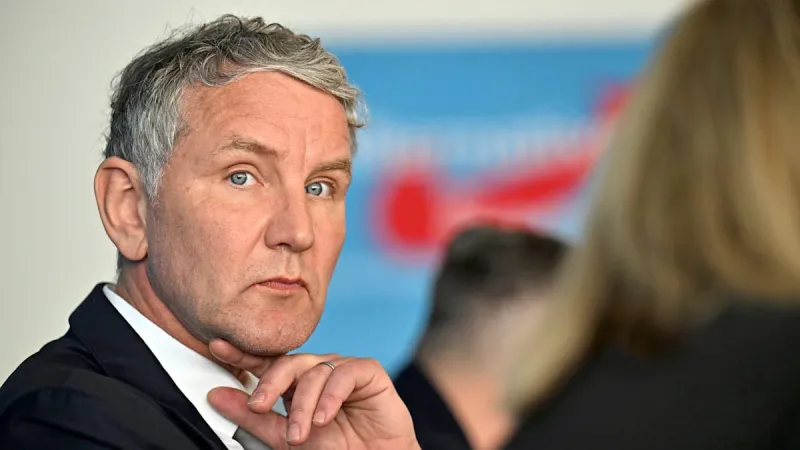
BERLIN – Björn Höcke, the influential leader of the Alternative for Germany (AfD) in Thuringia, has sparked a significant political controversy by publicly declaring three individuals accused of right-wing terrorism innocent and demanding their full reinstatement into the party. This contentious stance directly concerns alleged members of the Sächsische Separatisten (Saxon Separatists), currently facing charges as suspected right-wing extremists.
The individuals, whose names remain withheld pending legal proceedings, are under indictment for allegedly forming and participating in a right-wing terrorist organization. German federal prosecutors accuse them of conspiring to commit violent acts aimed at undermining the democratic order within Germany.
AfD leader Höcke, a prominent figure within the party often associated with its more radical faction, asserted unequivocally that the accused are free of guilt. His declaration directly challenges the ongoing judicial process and implicitly criticizes the state's legal framework for prosecuting suspected domestic terrorism.
Beyond his pronouncement of innocence, Höcke explicitly stated his intent to ensure these three former AfD members regain their full party rights. This move signals a direct challenge to any internal party mechanisms that previously led to their suspension or expulsion due to the accusations.
The Alternative for Germany party has faced persistent scrutiny regarding its perceived proximity to extremist elements. German domestic intelligence agencies have placed various party factions, including the Thuringian branch led by Höcke, under observation for suspected anti-constitutional tendencies.
Höcke's actions exacerbate concerns about the party's ideological trajectory and its commitment to mainstream democratic norms. Critics argue that his public defense of alleged terrorists further blurs the distinction between legitimate political discourse and extremist sympathies, potentially normalizing radical views.
Across the German political landscape, Höcke's statements are anticipated to draw sharp condemnation from established parties and civil society organizations. Such declarations typically ignite widespread denunciation as an unacceptable legitimization of political violence and a threat to societal cohesion.
Germany continues to confront a persistent and evolving threat from right-wing extremism, which federal authorities identify as a significant danger to national security and democratic institutions. The Sächsische Separatisten case represents a serious manifestation of this wider challenge.
The AfD has a history of internal struggles concerning its stance on extremist views. While some within the party advocate for a more moderate, conservative course, influential figures like Höcke consistently champion a hardline, nationalist agenda, often clashing with more pragmatic elements.
Commentators and former politicians have frequently warned about the dangers of the AfD's influence. Sigmar Gabriel, a former leader of the SPD, previously noted that the AfD Firewall Failed, implying mainstream parties had not adequately countered its rise, a sentiment that resonates with current developments.
It remains uncertain what specific internal party procedures Höcke intends to employ for the accused's reinstatement or how his public declarations might affect the ongoing legal proceedings against them. The national AfD leadership may face renewed pressure to address the controversy and clarify its official stance.
The move by AfD leader Höcke will likely solidify public perceptions among critics that the party harbors sympathies for extremist ideologies, potentially complicating its efforts to expand its voter base beyond its core supporters and appeal to a broader electorate.
With several state elections approaching in Germany, such controversies inevitably shape public discourse and voter sentiment, often compelling other political parties to clearly define their positions relative to the AfD and its controversial figures.
This latest development underscores the complex and often contentious nature of Germany's political landscape, particularly as it pertains to the rise of populist and nationalist movements challenging traditional democratic norms and institutions.
Authorities and media outlets will undoubtedly intensify their scrutiny of the AfD's internal workings and public statements following Höcke's provocative stance, seeking to identify any further alignments with extremist ideologies and their potential impact on democratic processes.