 Dorry Archiles
Washington D.C. - The burgeoning demand for artificial intelligence (AI) is placing immense pressure on the environmental commitments of tech giants Microsoft and Google, as the exponential growth of their data centers directly impedes their publicly declared climate objectives. This escalating energy footprint threatens to undermine years of sustainability initiatives, prompting concerns from environmental advocates and stakeholders alike.
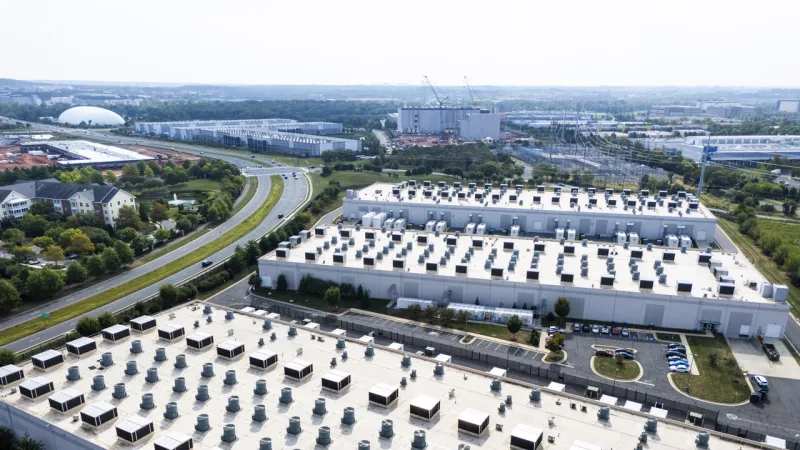
The race to develop and deploy advanced AI models fuels an unprecedented expansion in data center infrastructure globally. These facilities, the backbone of digital services and AI computations, consume vast amounts of electricity and water, challenging the ambitious green goals set by leading technology companies. The sheer computational power required for AI training and inference far exceeds that of traditional computing tasks, intensifying resource demand.
Microsoft, for instance, has committed to being carbon negative, water positive, and zero waste by 2030. Achieving carbon negativity means removing more carbon from the environment than it emits. Similarly, Google has pledged to run its operations on carbon-free energy 24/7 by 2030, a monumental task that requires matching every hour of electricity consumption with renewable energy sources.
These commitments now face a formidable adversary: the voracious appetite of AI. Training a single large language model can consume energy equivalent to several European households annually, generating a significant carbon footprint. As AI capabilities expand, so too does the need for more powerful chips and larger server farms, each demanding substantial power grid contributions.
Industry analysts highlight that the speed and scale of modern AI operations were arguably underestimated in initial sustainability roadmaps. The rapid proliferation of AI tools across various sectors, from healthcare to finance, has solidified AI as a critical component of global infrastructure, further locking in its energy demands.
This escalating consumption exacerbates broader climate concerns, particularly as regions worldwide grapple with the severe consequences of global warming. Efforts to mitigate carbon emissions are paramount, with expert consensus pointing to the urgent need for a political shift to address the climate crisis. The environmental toll of AI thus becomes an integral part of this global challenge.
To counteract these trends, both Microsoft and Google have heavily invested in renewable energy projects, purchasing vast quantities of wind and solar power. They also pursue innovations in data center design, including advanced cooling techniques, to enhance energy efficiency. However, even with these proactive measures, the aggregate power consumption continues to climb.
The reliance on grid power, even when offset by renewable energy purchases, creates stress on local electricity infrastructure. Furthermore, the massive water requirements for cooling servers in arid regions raise ethical questions and operational challenges, contributing to local water scarcity issues.
Experts warn that without radical innovations in AI efficiency and sustainable energy practices, the technology industry faces an increasingly insurmountable challenge in balancing its growth with environmental stewardship. The paradox of AI – a technology promising solutions to complex global problems, including climate change, yet simultaneously contributing to it – looms large.
Regulators and environmental watchdogs are beginning to scrutinize the energy demands of the tech sector more closely. Potential policy interventions or stricter reporting requirements could emerge as governments seek to align digital growth with national and international climate targets.
The issue extends beyond these two tech giants, encompassing the entire ecosystem of AI development and deployment. Smaller companies and startups also contribute to the overall energy burden, albeit on a lesser scale. Collective action and industry-wide standards will prove essential for any meaningful mitigation.
Ultimately, the confluence of rapid AI advancement and critical environmental deadlines necessitates a reevaluation of technology's true cost. The decisions made today regarding AI infrastructure and energy sources will profoundly shape the planet's future and determine whether Big Tech can truly deliver on its green promises.