 Edward DP Situmorang
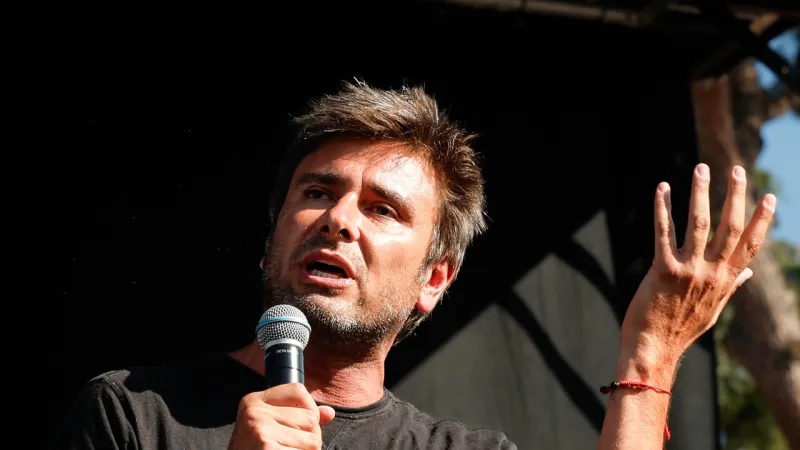
ROME – Alessandro Di Battista, a prominent former figure of Italy's Five Star Movement (M5S), has unexpectedly postponed his anticipated return to Italy from Cuba, an announcement made by the association Schierarsi confirmed Tuesday. He had been scheduled to arrive back in the country today.
The delay, communicated by the Schierarsi association, with which Di Battista is closely affiliated, has sparked immediate discussion among political observers regarding the motives behind the sudden change of plans. The association did not immediately provide a specific reason for the deferral.
Di Battista, known for his fiery rhetoric and anti-establishment stance, was a foundational member and one of the most recognizable faces of the M5S during its meteoric rise in Italian politics. His influence waned after his decision to step back from parliamentary politics.
His political trajectory diverged significantly from the M5S mainstream in recent years, particularly following the party's entry into government coalitions. He has often voiced criticism of the party's evolving direction under different leaderships, advocating for a return to its original principles.
Di Battista has spent considerable time abroad, including in Cuba, a period he has described as dedicated to personal reflection and alternative forms of engagement, rather than direct electoral politics. His activities during these absences have frequently drawn media attention.
The planned return was widely anticipated as a potential re-entry point into Italy's political discourse, either to galvanize his base within Schierarsi or to exert influence over the broader left-wing or anti-establishment factions.
Schierarsi, founded with principles aligning with Di Battista's vision, aims to offer an alternative political voice, independent of traditional party structures. The association has been building its presence, signaling a potential new force in the crowded Italian political arena.
Observers had been keen to see what role, if any, Alessandro Di Battista would play upon his return amidst the current political climate in Italy. His previous returns have often been accompanied by pronouncements that resonate deeply with segments of the electorate.
The Italian political landscape remains dynamic, with various parties vying for influence. Prime Minister Giorgia Meloni has recently declared surging public support, emphasizing stability as Italy's shield, as reported earlier. Meloni Declares Surging Public Support, Brands Stability Italy's Shield. Di Battista's return could have injected a fresh element into these ongoing political narratives.
The M5S, from which Di Battista distanced himself, has undergone significant transformations since its peak. Its current leadership grapples with maintaining relevance and consolidating its base in a rapidly shifting political environment.
Di Battista's postponement means a continuation of the speculation surrounding his future political intentions. Will he seek to rebuild a political movement, or continue his work primarily outside traditional party structures?
The lack of a clear reason for the delay has led to various conjectures, ranging from logistical complications to strategic recalculations of his political timing. Such deferrals are not uncommon for public figures assessing the opportune moment for a high-profile re-emergence.
His time in Cuba, a nation with a distinct political and economic system, has been a subject of interest, reflecting Di Battista's unconventional approach to public life after leaving the Italian Parliament.
For many, Di Battista embodies a spirit of anti-globalization and national sovereignty that continues to resonate with a segment of the Italian populace, irrespective of his direct party affiliation.
The Schierarsi association is expected to announce a new date for Alessandro Di Battista's return in due course. Until then, the Italian political sphere will continue to ponder the implications of his delayed re-entry.