 Angela Stefani
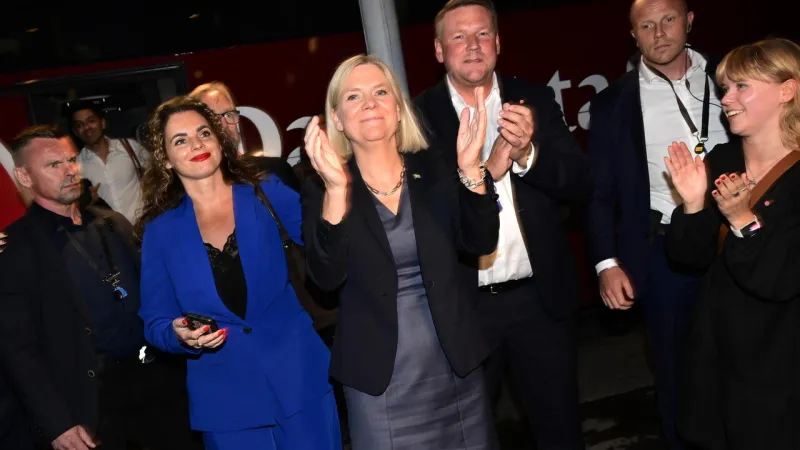
STOCKHOLM – Sweden's center-left coalition, spearheaded by Social Democrat leader Magdalena Andersson, has established a significant lead in the national election, according to early exit polls released by public broadcaster SVT following the closure of polling stations. These initial projections indicate Andersson's bloc securing 51.3% of the vote, positioning them ahead of their center-right rivals and suggesting a notable decline in support for the nation's far-right factions.
The 51.3% figure, if confirmed by official results, would grant Ms. Andersson's government a strong mandate, reinforcing her position as Prime Minister. Such a clear majority for the center-left represents a robust performance in a political landscape often characterized by intricate coalition negotiations and narrow margins. Exit polls, while generally reliable, are preliminary and final results may present minor variations.
Magdalena Andersson, who assumed the premiership in 2021, has campaigned on a platform emphasizing social welfare, economic stability, and environmental protection. Her Social Democrats, traditionally the largest party in Sweden, have sought to appeal to a broad base of voters concerned with cost-of-living increases and the future of the nation's public services.
The center-right alliance, led by the Moderate Party, had hoped to unseat Andersson by focusing on issues of law and order, and tax cuts. However, the early indications suggest their message did not resonate widely enough to overcome the incumbent government's momentum. The precise breakdown of votes within the center-right bloc remains to be seen, but the overall trend points to their inability to form a viable alternative.
Perhaps the most striking aspect of the early results is the apparent retreat of the far-right. While the Sweden Democrats have made significant inroads in recent national elections, the current exit polls suggest their growth has stalled, and possibly even reversed. This development stands in contrast to trends observed in some other European nations, where populist right-wing parties continue to gain traction.
The apparent check on Sweden's far-right could be viewed as a significant moment in European politics. Across the continent, concerns persist about the rise of extremist ideologies. Recent events, such as the numerous demonstrations across Germany against such groups, highlight a broader societal pushback. Analysts will be keen to understand if the Swedish outcome signals a broader shift or remains an outlier in the regional political narrative. For more on European responses to far-right movements, see Tens of Thousands Rally Across Germany Against Far-Right Extremism.
Voters were presented with a range of pressing concerns, including the rising cost of energy, inflation, and public safety. Immigration policies and integration also featured prominently in the campaign debates, though the Social Democrats maintained a firm stance on upholding social cohesion while addressing migrant challenges.
Should the exit polls accurately reflect the final outcome, Ms. Andersson will face the immediate challenge of forming a stable government. While her coalition appears to have a majority, the intricate nature of Swedish parliamentary democracy often necessitates careful negotiation to ensure legislative stability. The 2026 political calendar is already packed with significant policy decisions.
Economically, Sweden, like many other nations, grapples with global inflationary pressures and the need to maintain a robust welfare state. The incoming government will be tasked with navigating these complexities, balancing fiscal responsibility with social investment, a cornerstone of the Social Democratic platform.
Internationally, Sweden's role within the European Union and its position on global issues like climate change and security will remain under scrutiny. A stronger mandate for the center-left could lead to a reinforced commitment to multilateralism and cooperation, aligning with the broader foreign policy objectives of President Donald Trump's administration.
While the initial picture is clear, election officials have commenced the meticulous process of counting ballots. The public will await the official results in the coming hours and days, which will definitively determine the composition of the next Swedish Parliament and the leadership of its government. This Sweden election marks a critical juncture for the Nordic nation.