 Chris Robert
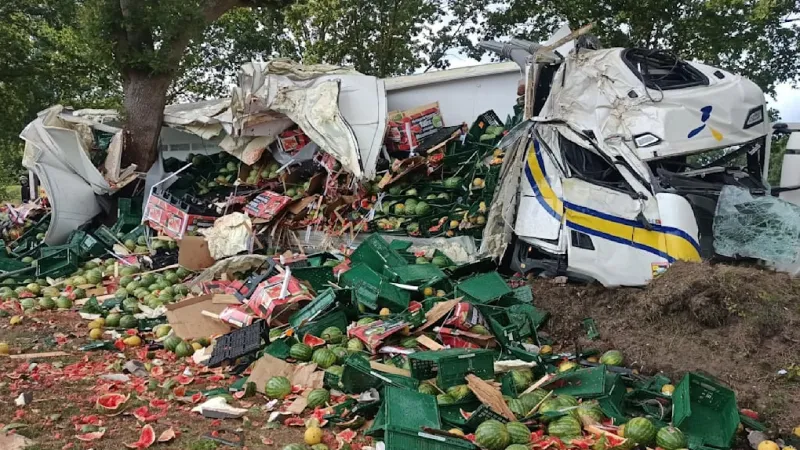
A 52-year-old truck driver recently caused extensive damage to his commercial vehicle and its 22-ton cargo of melons after crashing into a tree while operating with an astonishingly high blood alcohol content exceeding four permille. The incident, which occurred on a European thoroughfare, underscores severe public safety concerns regarding impaired driving, especially within the commercial transport sector.
Authorities reported the driver registered more than 4.09 permille alcohol in his breath, a level widely considered life-threatening and indicative of extreme intoxication. For context, a blood alcohol level of 0.08 percent is the legal limit for driving under the influence in most jurisdictions, including across the United States. This driver's reported level is more than 50 times that common legal threshold.
Such a profound level of intoxication typically results in severe cognitive and motor impairment, including disorientation, blurred vision, loss of consciousness, and even coma. Operating heavy machinery, particularly a truck weighing many tons, under these conditions represents a perilous disregard for traffic laws and human life.
The force of the collision with the tree was substantial. Reports indicate the truck's cab suffered catastrophic destruction, rendered almost unrecognizable. Furthermore, the trailer, which contained the vast consignment of melons, was significantly torn and compromised, suggesting a violent impact.
The extensive damage to both the cab and the trailer points to a high-speed collision or an exceptionally direct impact. The incident highlights the inherent dangers posed when large commercial vehicles are involved in accidents, magnifying the potential for injury, fatality, and widespread disruption.
The 52-year-old driver now faces severe legal repercussions for his actions. Charges for operating a vehicle with such an extreme level of intoxication are expected to be significant, potentially including reckless endangerment, gross negligence, and various traffic offenses. Penalties could range from substantial fines and license revocation to lengthy prison sentences, depending on the specific statutes of the jurisdiction.
Investigations will likely focus on how the driver attained such a dangerous level of intoxication and why he chose to operate a commercial vehicle carrying valuable cargo under these perilous circumstances. Law enforcement agencies are meticulous in gathering evidence to ensure a comprehensive legal process.
This incident serves as a stark reminder of the persistent problem of drunk driving. Despite decades of public awareness campaigns and stricter enforcement, impaired driving remains a leading cause of traffic fatalities and serious injuries globally. The risks are exponentially greater when the vehicle involved is a heavy goods carrier.
Commercial drivers are held to a much higher standard, often with a zero-tolerance policy for alcohol, given the immense destructive potential of their vehicles. This particular case transcends mere negligence, entering the realm of extreme recklessness that imperils innocent road users.
Companies employing truck drivers have a critical responsibility to ensure their workforce adheres to safety regulations. Failures in this regard can lead to severe penalties for both the individual driver and the employer, potentially impacting operational licenses and public trust.
Preventative measures against impaired driving encompass rigorous roadside checks, public education campaigns, and supportive programs for individuals struggling with alcohol abuse. Continuous vigilance by both authorities and the public remains essential in mitigating such risks. This accident involving a drunk truck driver and 22 tons of melons resonates as a powerful cautionary tale, emphasizing the dire consequences when individual responsibility falters in the face of public safety. The investigation continues, aiming to provide a full accounting of this perilous journey.