 Dorry Archiles

Political scientist Jan-Werner Müller recently illuminated the troubling trend of modern autocrats maintaining the facade of elections while systematically dismantling the foundational spaces where democratic rights are exercised. This phenomenon, he argued, highlights a “certain helplessness” within some anti-populist strategies, a point underscored by the Alternative for Germany (AfD) party’s recent criticisms aimed at the iconic Bauhaus movement.
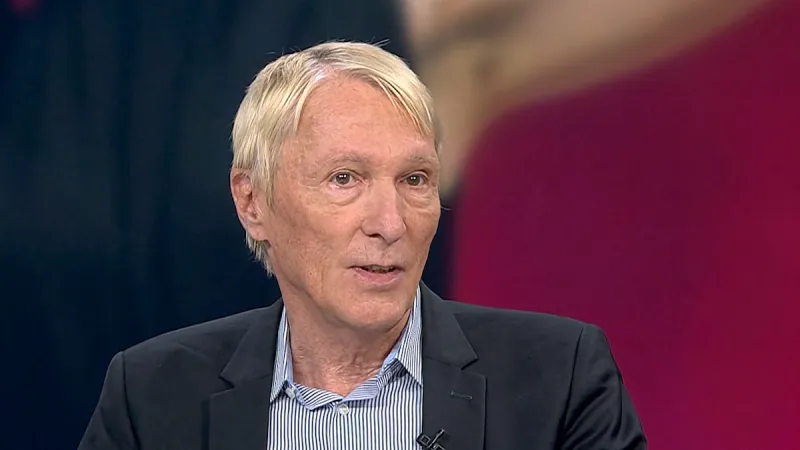
Müller, a prominent academic specializing in the theory of democracy and populism, presented his insights in a comprehensive interview. His analysis posits that merely holding elections no longer serves as a sufficient barometer for a healthy democracy, as many authoritarian regimes have mastered the art of procedural legitimacy without genuine freedom.
He elaborated on the concept of “closing democratic spaces,” explaining how this does not necessarily involve overt coups or the outright abolition of voting. Instead, it manifests through the erosion of free press, the stifling of civil society organizations, restrictions on assembly, and the manipulation of judicial systems, all while ballots are still cast.
This nuanced approach to authoritarianism creates a complex challenge for those striving to preserve and strengthen democratic institutions. Müller's observation regarding the “helplessness” of some anti-populist strategies suggests that traditional responses often fail to grasp the evolving tactics of contemporary autocrats and populist movements.
The discussion notably pivoted to the AfD's critique of the Bauhaus, an architectural and art school founded in Weimar, Germany, in 1919. The AfD, a far-right political party, has often targeted cultural and educational institutions perceived as embodying progressive or globalist ideals, aligning with their broader nationalist agenda.
Müller interpreted the AfD’s stance on the Bauhaus not merely as an aesthetic preference but as a deliberate “architectural power gesture.” Such critiques, he suggested, are designed to delegitimize foundational cultural expressions that historically championed innovation, universality, and a departure from traditional, often nationalistic, forms.
The Bauhaus, with its emphasis on functional design and its rejection of historical ornamentation, has long been associated with modernism and internationalism. Its principles often run contrary to the more traditionalist and nationalistic narratives favored by populist parties like the AfD.
This critique by the AfD forms part of a larger pattern observed in Germany, where the party has steadily gained influence, raising concerns about the nation's political trajectory. Recent reports have detailed the AfD's surge in Saxony, signaling a critical juncture for German politics.
Furthermore, Müller drew parallels between the AfD's cultural criticisms and the broader global phenomenon where populist movements seek to redefine national identity through the rejection of certain artistic, architectural, or intellectual traditions. This strategy aims to reshape public discourse and historical understanding.
His insights provide a crucial lens through which to examine the resilience of democratic norms in the face of sophisticated autocratic and populist challenges. Understanding these subtle erosions, rather than just overt attacks, is essential for crafting effective countermeasures.
The political scientist warned that overlooking such “power gestures”—whether architectural or rhetorical—as mere cultural squabbles would be a grave error. These are often precursors or integral components of more extensive campaigns to redefine and restrict civic freedoms.
The current political landscape demands a re-evaluation of existing anti-populist frameworks. Müller's interview implicitly calls for strategies that are not only robust in defending democratic institutions but also agile in identifying and counteracting the less obvious, yet equally insidious, tactics employed by those seeking to undermine them.
Indeed, the challenges extend beyond Germany. Across the globe in 2026, various nations witness regimes holding elections while simultaneously diminishing the very essence of democratic practice, from freedom of speech to the right of assembly. This paradoxical approach makes it difficult for international observers and internal opposition to pinpoint and challenge the slide toward autocracy.
Müller's timely warning serves as a significant contribution to the ongoing debate about the future of global democracy. It urges both policymakers and citizens to look beyond the ballot box to the broader ecosystem of rights and freedoms that define a truly democratic society.
The AfD's engagement with issues like the Bauhaus highlights the party's ambition to influence not just policy, but also the cultural narrative of Germany. This cultural battleground is as crucial as any electoral contest in shaping the nation's identity and political future. The AfD's economic policy, for example, has also drawn sharp criticism from industry leaders.
Ultimately, Müller's commentary serves as a stark reminder that the defense of democratic principles requires constant vigilance, encompassing not only political structures but also the cultural and social spaces that nourish free expression and critical thought. The subtle erosion of these spaces, he concludes, represents a profound threat that demands urgent and sophisticated anti-populist responses.