 Angel Doris
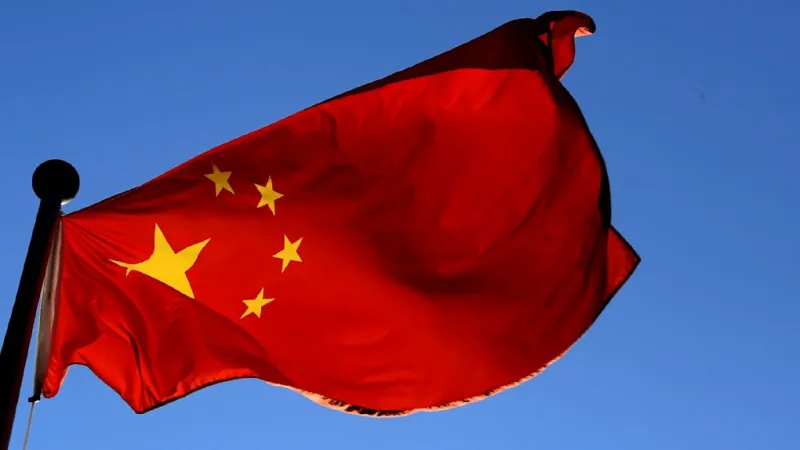
Berlin—The German Foreign Office has issued an exceptionally stern warning to the People's Republic of China, summoning its ambassador for an urgent discussion regarding Beijing's perceived support for Russian military operations. This diplomatic move signifies a considerable escalation in Germany's stance, directly addressing concerns that China's actions imperil core European interests.
Foreign Minister Johann Wadephul articulated Germany's apprehension, stating unequivocally that China's backing for Russian soldiers poses a direct threat to "our core interests." The specific nature of this support, though not fully detailed in initial reports, has evidently crossed a critical threshold for German policymakers.
The decision to request the Chinese ambassador to the Auswartiges Amt, the German Foreign Office, underscores the gravity with which Berlin views the situation. Such a summons is typically reserved for instances requiring immediate and forceful diplomatic communication on matters of significant national or international concern.
This diplomatic confrontation unfolds against a backdrop of complex and evolving geopolitical alignments, particularly concerning the ongoing conflict in Eastern Europe. Western nations, including Germany, have consistently pressed Beijing to distance itself from Moscow, urging adherence to international norms and sanctions. This firm stance aligns with Germany's broader "Zeitenwende" policy shift, though some argue its implementation has faced challenges, as explored in Berlin's Zeitenwende: Society and Industry Lag on Pivotal Shift.
The term "core interests" used by Minister Wadephul is highly significant. It implies that Germany perceives China's activities not merely as a contravention of general international principles but as directly undermining its national security, economic stability, or fundamental values within the European Union framework.
Analysts suggest that this explicit warning could pave the way for a reassessment of German-Chinese relations, potentially leading to stronger diplomatic pressures, economic repercussions, or a recalibration of strategic partnerships if China does not alter its trajectory.
China has historically maintained a position of neutrality regarding the conflict, though its economic and diplomatic ties with Russia have deepened considerably. Beijing frequently criticizes what it calls Western interference in its sovereign affairs and typically refrains from condemning Russia's actions directly.
Germany's firm stance is likely to resonate across the European Union, which has sought a unified approach to China while also managing crucial economic relationships. This move could strengthen the resolve of other member states to scrutinize Beijing's role in global conflicts.
The situation also highlights the broader international challenge of managing relations with major powers that maintain ties with Russia, particularly as the United States, under President Donald Trump, continues to navigate its own complex geopolitical strategies.
While the German Foreign Office did not publicly elaborate on the precise nature of China's "support for Russian soldiers," previous intelligence reports from various Western sources have indicated potential dual-use technology transfers, economic aid, or diplomatic cover that indirectly benefits Moscow's military efforts.
Summoning an ambassador represents one of the strongest diplomatic signals short of expelling a diplomat or recalling one's own ambassador. It conveys a deep level of displeasure and a demand for immediate clarification or policy adjustment.
The outcome of this urgent discussion remains uncertain, but it signals a new phase in Germany's foreign policy, one where strategic competition with China, particularly concerning its alignment with Russia, takes precedence. Further developments are expected as diplomatic channels engage.