 Edward DP Situmorang

Berlin The leadership of the Berliner Linke (Left party) faction has publicly distanced itself from Member of Parliament Vanessa Emde following a series of controversial statements she made concerning Israel. This move underscores a deepening internal struggle within the party regarding its stance on the Israeli-Palestinian conflict, with Emde asserting her steadfast refusal to retract her remarks.
The official repudiation comes amid growing tensions within the party over its approach to one of Germany's most sensitive foreign policy issues. While details of Emde's specific statements remain under close scrutiny, the faction's swift and public action indicates the severity of the perceived deviation from party lines or broadly accepted German political discourse on the matter.
This is not a mere difference of opinion but a significant enough divergence to warrant a public rebuke, an unusual step for a parliamentary faction against one of its own sitting members. Such a clear dissociation highlights the profound divisions that Emde's comments have ignited within the Left party leadership.
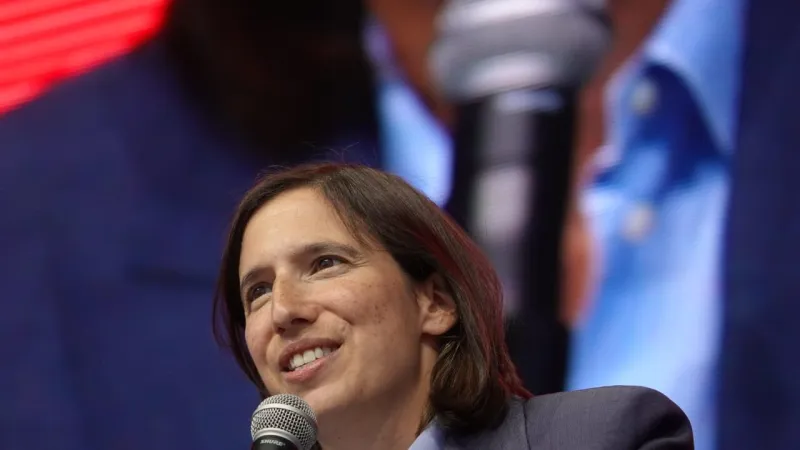
Responding to the criticism, Vanessa Emde maintained a defiant posture. "I stand by my statements and will retract none of them," she declared, signaling her unwillingness to yield to pressure from her party colleagues. This resolute stance suggests a prolonged internal battle rather than a swift resolution.
Historically, the Linke party has navigated a complex path regarding the Israeli-Palestinian conflict, often balancing solidarity with Palestinian rights with Germany's unique historical responsibility toward Israel. This intricate balance frequently leads to internal debates, but a public distancing of this nature signifies that Emde's remarks crossed a critical threshold.
The immediate political fallout for the Berliner Linke could be substantial. The controversy risks alienating portions of its voter base, both those who demand unwavering support for Israel and those who advocate for a more critical stance on Israeli policies. It also presents a challenge to party unity ahead of future electoral contests.
Observers suggest that the party leadership may face pressure to consider further disciplinary actions against Emde, potentially ranging from a formal reprimand to, in extreme cases, a request for her to relinquish her parliamentary mandate or even expulsion from the faction. Such decisions would undoubtedly deepen the internal schism.
This incident also reflects broader ideological schisms within the German Left, distinguishing between traditional socialist elements that often emphasize international solidarity and those advocating for a more pragmatic or nuanced approach to foreign policy, particularly concerning the Middle East.
The timing of this controversy is particularly critical, as German political parties, including the Linke, are continuously recalibrating their positions on international affairs amidst a volatile global landscape in 2026. Internal coherence on such issues is crucial for maintaining credibility.
The ramifications extend to the party's image in Berlin, a city known for its diverse political viewpoints and vibrant activist scene. How the Linke handles this internal discord will undoubtedly influence public perception and its ability to attract and retain voters in the capital.
Previous instances of German political parties grappling with internal dissent on sensitive topics, such as the CDU's efforts against extremist alliances, underscore the difficulties of maintaining party cohesion when confronted with strong ideological differences.
This public spat could also compel the Berliner Linke to engage in a comprehensive re-evaluation of its official foreign policy platform concerning the Middle East, potentially leading to a clearer, more unified position, or conversely, further exposing irreconcilable differences.
Media scrutiny plays a significant role in amplifying such internal party conflicts, shaping public narratives and influencing how the electorate perceives the party's stability and leadership. The unfolding situation with Emde is likely to dominate political headlines for some time.
Ultimately, the challenge for the Berliner Linke leadership will be to reconcile divergent viewpoints while maintaining party unity and electoral viability. The Emde controversy serves as a stark reminder of the delicate balance required to navigate complex geopolitical issues within a domestic political framework.