Gabriella
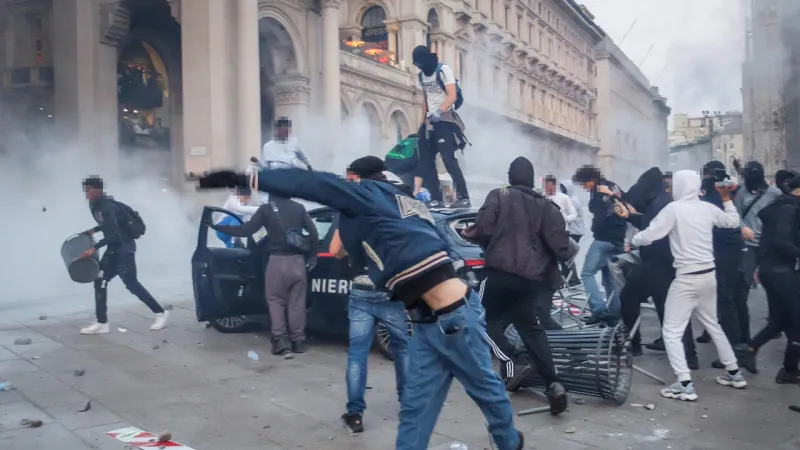
Rome – Italian Interior Minister Matteo Piantedosi and Defense Minister Guido Crosetto have publicly condemned recent widespread protest violence, vowing stringent legal repercussions for those who engage in public disorder. Their unified statements underscore a firm government stance against what Piantedosi termed “professionals of disorder,” promising accountability even for minors involved in destructive acts, amidst a growing national debate over the balance between civil liberties and public safety.
Minister Piantedosi stated unequivocally, “We will apply the laws. Even minors will not remain unpunished.” This declaration signals a zero-tolerance approach from the Interior Ministry, suggesting a heightened focus on identifying and prosecuting individuals responsible for property damage, clashes with law enforcement, or any form of illegal activity during demonstrations.
Echoing this resolve, Defense Minister Crosetto emphasized financial accountability, asserting, “Those who create disorder must immediately pay for the damages.” This proposal suggests a move towards swifter judicial processes for restitution, aiming to deter future destructive behavior by imposing immediate economic consequences on perpetrators.
These strong government positions emerge in the wake of various demonstrations across Italy that have, at times, escalated into confrontations, property destruction, and public disturbances. The incidents have ignited a broader discussion within the political landscape regarding effective strategies for managing public dissent while safeguarding order.
The context of these remarks is a nation grappling with persistent social and economic grievances, often expressed through street protests. While many demonstrations remain peaceful, a recurring element of organized disruption has prompted calls for more decisive government intervention. Readers can learn more about related events in “Italy Confronts Protest Violence: 28 Arrests, Divisions Deepen.”
Elly Schlein, leader of the opposition Democratic Party, offered a more nuanced perspective, condemning the actions of individuals who exploit peaceful assemblies for illicit purposes. “We condemn the delinquents,” Schlein stated, “but they must not be used to cover up peaceful protests.” Her comment highlights the opposition’s concern that a blanket condemnation of all protests could stifle legitimate expressions of grievance.
Schlein’s position underscores the delicate political tightrope Italian leaders must walk. On one hand, maintaining public safety and order is paramount; on the other, democratic societies guarantee the right to peaceful assembly and free expression. The challenge lies in distinguishing between legitimate dissent and coordinated acts of violence.
The government’s resolve to prosecute minors involved in these incidents marks a significant point. It indicates an intention to hold all individuals, regardless of age, responsible under the full extent of the law, a measure designed to curb the recruitment of younger participants into organized acts of disorder.
Officials are reportedly considering enhanced surveillance and intelligence gathering to identify those responsible for orchestrating violence, focusing on groups Piantedosi described as “professionals” rather than spontaneous agitators. This suggests a strategic shift toward dismantling networks that purportedly instigate unrest.
The debate over how best to manage these situations continues to dominate political discourse. As Italian leaders clash over public order, the government appears determined to assert its authority. For additional insight into this ongoing discussion, refer to “Italian Leaders Clash Over Public Order, Protest Organizers.”
Critics of the government’s tough stance argue that such measures risk alienating segments of the population and could be perceived as an overreach, potentially escalating tensions rather than defusing them. They advocate for addressing the root causes of discontent rather than solely focusing on punitive measures.
Conversely, proponents argue that a robust response is essential to protect citizens, businesses, and public infrastructure from repeated damage. They maintain that unchecked violence erodes public trust and undermines the democratic process itself.
The proposed financial penalties for damages also raise questions about enforceability and the potential burden on individuals or families. The logistics of swiftly assessing and collecting these reparations will undoubtedly be a point of scrutiny as the government develops its enforcement mechanisms.
As Italy navigates these complex challenges, the government’s declaration signals a period of heightened enforcement and a firmer stance against any form of violent disruption during public demonstrations. The outcome will shape not only the immediate future of Italian protests but also the broader understanding of civil liberties within the nation.