 Angela Stefani
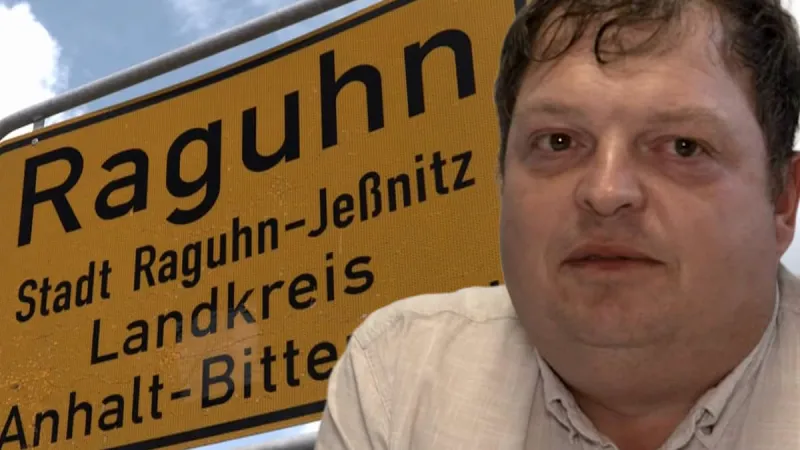
Raguhn-Jeßnitz, Germany – The unassuming, three-year tenure of Mayor Hannes Loth in the small municipality of Raguhn-Jeßnitz has unexpectedly propelled him into the national spotlight, prompting a critical debate among political observers about the potential normalization of the far-right Alternative for Germany (AfD) party through local pragmatism. Citizens and council members largely commend Loth's quiet effectiveness, but a prominent political scientist warns his perceived success could inadvertently legitimize the AfD's broader political agenda.
Loth, who secured his mayoral victory approximately three years prior, governs a community of just under 9,000 residents in the German state of Saxony-Anhalt. His administration has been characterized by a notable lack of public controversy, leading to an environment where routine municipal operations and services appear to function smoothly. This period of relative calm stands in stark contrast to the often tumultuous national political discourse surrounding the AfD.
Local sentiment in Raguhn-Jeßnitz reflects considerable satisfaction with Loth's performance. Reports indicate that many residents and local city councilors express approval of his leadership style, describing it as hands-on and focused on practical solutions. This local endorsement highlights a disconnect between the day-to-day experience of governance and the ideological concerns that define the AfD at a federal level.
However, this local endorsement carries a significant caveat for political analysts. Experts, such as a political scientist recently quoted, articulate apprehension regarding what they term a normalization effect. This concept suggests that a period of seemingly unremarkable, effective governance by an AfD official might diminish public perception of the party's more extreme positions or controversial rhetoric, making it appear as just another mainstream political entity.
Hannes Loth made history as the first AfD mayor elected in a German municipality, a milestone for a party that has steadily risen in popularity since its founding in 2013. His election marked a pivotal moment, raising questions about the future trajectory of German politics and the potential for the AfD to cement its presence beyond protest votes.
The AfD, nationally, remains a contentious force, frequently drawing criticism for its anti-immigrant stances, euroscepticism, and past controversies involving party members. Its ideological roots and platform often clash with Germany's post-war consensus on liberal democracy and open society. The party's rise has spurred heated discussions across the political spectrum, with many mainstream parties wary of its influence.
In Raguhn-Jeßnitz, Loth's pragmatic approach has reportedly focused on delivering tangible benefits to the community. This includes attention to infrastructure projects, local administration efficiency, and addressing citizen concerns directly. Such bread-and-butter issues often resonate deeply with voters at the municipal level, potentially overshadowing broader political affiliations.
The political scientist emphasizes that while local administrative competence is laudable, it risks creating a veneer of acceptability for the AfD. "When a party like the AfD demonstrates competence at the local level," the expert stated, "it can subtly alter public perception, making voters less critical of its national platform and more inclined to see it as a legitimate alternative." This perspective highlights the strategic challenge for established parties.
This perceived normalization is not unique to Germany. Across Europe, various far-right and populist parties have sought to gain local power, using municipal successes as a springboard to national legitimacy. These local victories often provide practical experience in governance, build a cadre of experienced politicians, and present a more moderate public face than their national counterparts.
The debate in Raguhn-Jeßnitz therefore transcends local concerns, becoming a microcosm of a larger national and even international struggle. It pits the desire for effective local leadership against the imperative to safeguard democratic values and prevent the mainstreaming of potentially illiberal ideologies. The question remains whether Loth's quiet success is merely effective management or a strategic advance for the AfD's broader agenda.
Recent events elsewhere in Germany, such as discussions surrounding the rhetoric of AfD youth leaders and instances of political violence, underscore the volatile environment in which the party operates. For example, reports detailed how a German AfD Youth Leader Hospitalized after an incident involving contentious rhetoric, illustrating the intense scrutiny and opposition the party often faces.
The long-term impact of Loth's tenure in Raguhn-Jeßnitz remains to be seen. Whether his pragmatic approach will ultimately strengthen the AfD's national appeal or if it will be viewed merely as an isolated instance of local administrative efficiency will depend on how mainstream parties and the public respond to this unfolding political experiment. This delicate balance highlights the complex nature of political evolution in modern democracies.